Delhi's Literary Elite Gathers for Pavan Varma's Thought-Provoking Novel Launch
The India International Centre in Delhi became the epicenter of intellectual discourse on a serene evening as the city's literary cognoscenti assembled for the much-anticipated launch of Pavan K. Varma's latest novel, 'The Lady Who Carried the Monk Across the River'. The event featured erudite conversations infused with sophisticated humor and subtle philosophical jabs, creating an atmosphere where serious ideas were explored with both depth and levity.
A Zen Parable Reimagined Through Indian Philosophy
Published by Penguin Random House, Varma's slender yet ambitious novel draws inspiration from a famous Zen parable about a monk who carries a woman across a river, upsetting his younger companion. The elder monk's response—"I set her down... why are you still carrying her?"—becomes the foundation for Varma's creative reinterpretation.
In Varma's version, the narrative transforms into an engaging debate between Guru Brihaspati and his celibate disciples Kevala and Gyan. The novel examines the eternal conflict between spiritual aspiration and human desire, questioning whether these seemingly opposing forces must remain mutually exclusive or can coexist harmoniously.

The Art of Civilized Discourse Takes Center Stage
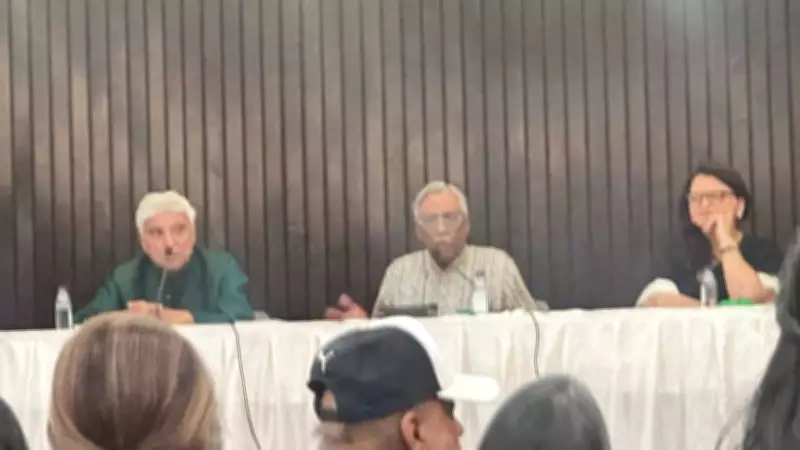
The book was formally unveiled by renowned poet-lyricist Javed Akhtar, followed by a stimulating conversation between Akhtar and Varma, skillfully moderated by author Advaita Kala. Varma explained his novel's central theme: "My book addresses the great dilemma in human beings between spirituality and desire. It's a love story that revives the dying tradition of shastrarth—the art of philosophical debate—and sabyasamvad, the practice of civilized discourse."
Set against the backdrop of Himalayan foothills, the story follows a celibate monk confronting unexpected stirrings of human longing. Rather than providing simplistic answers, the novel stages an intellectual and emotional dialogue between the monk and his guru, featuring a series of arguments and counter-arguments that gradually reveal deeper unity beneath apparent contradictions.
Javed Akhtar Praises Varma's Innovative Literary Approach
Javed Akhtar offered high praise for Varma's literary innovation, noting: "Pavan Varma has invented a new genre. While most novels are based on incidents, this one is built upon ideas. Yet it remains accessible and engaging—you turn each page anticipating the next argument and its counterpoint."
The on-stage conversation mirrored the book's spirit of inquiry, with Varma and Akhtar engaging in a thoughtful debate about happiness versus joy. Varma suggested happiness is transient while joy can become permanent through spiritual evolution, to which Akhtar countered that joy appears in flashes while happiness can be sustained during pain-free periods.
Humor Meets Philosophy in Audience Interaction
The evening balanced serious philosophical exploration with moments of genuine laughter. When an audience member questioned why the elder monk in the original parable carried the woman himself rather than delegating the task, Akhtar responded with characteristic wit: "Because the younger monk would have actually carried her away!" The quip sent both the audience and Varma into peals of laughter before moderator Advaita Kala gently steered the conversation back to philosophical territory.
Exploring Desire Within Hindu Spiritual Tradition
Beneath the humor lay profound questions that the novel examines with considerable nuance. Varma emphasized that "there is no concept of sin in Hinduism," explaining that alongside Dharma and Artha, Kama (desire) is recognized as one of life's legitimate pursuits. The challenge, according to Varma, lies not in denying desire but understanding its proper place within a larger spiritual journey.
The event itself embodied the ancient tradition of sabyasamvad—civilized conversation—where ideas were proposed, questioned, and occasionally teased with humor, yet always with respect for the subject's complexity. In an age of polarized debates, the evening offered a refreshing reminder of how intellectual exchange can illuminate rather than divide.

A Literary Event That Transcended Mere Book Launch
Ultimately, the gathering represented more than just a book launch—it served as a revival of India's rich tradition of philosophical inquiry, where sacred and profane, rational and emotional, human and divine are not enemies but companions in the search for understanding. As Varma's novel suggests, the most interesting territory lies precisely at this intersection of apparent opposites, where genuine wisdom emerges through respectful dialogue and open-minded exploration.