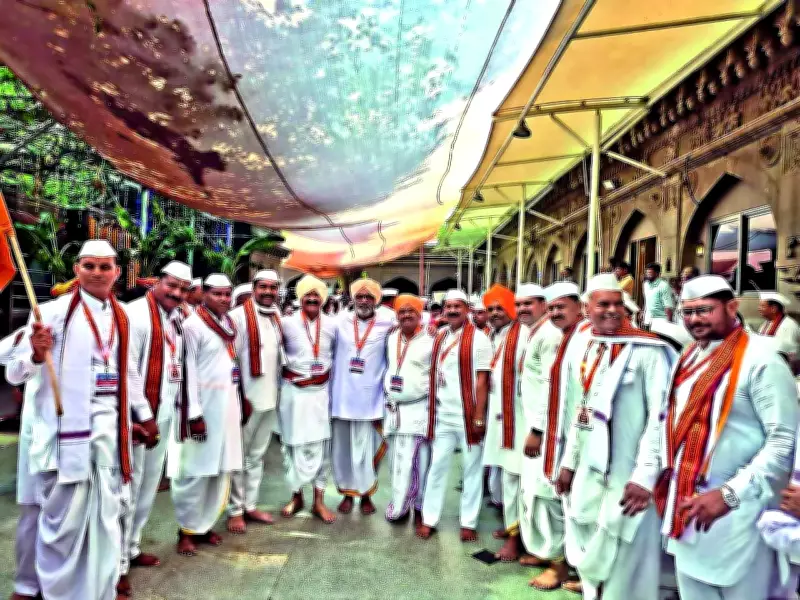
Pune Veterans Discover Spiritual Solace Through Ancient Dnyaneshwari Recital
For men who once navigated the perils of gunfire, endured the harshness of icy frontiers, and engaged in intense counter-terror operations, silence and peace were rare commodities. Today, a growing number of veterans in Pune are uncovering both through the profound path of spirituality. In a remarkable fusion of military discipline and deep devotion, nearly 150 ex-servicemen and their families recently convened for a week-long recital of the Dnyaneshwari, an interpretation of the Bhagavad Gita penned by Sant Dnyaneshwar Maharaj in 1290 CE.
A Transformative Journey from Battlefield to Bhajans
The seven-day event, titled 'Granthraj Dnyaneshwari Parayan Sohala', concluded on Thursday, marking its fourth edition and offering participants what they describe as a deeply transformative journey. For retired Brigadier Sunil Bodhe, the transition from commanding troops to leading devotional singing was not abrupt but rather an inevitable evolution. "We have witnessed life in its most brutal forms. After such experiences, one naturally begins to seek something deeper, something permanent. Spirituality provides that anchor, calming the mind in ways nothing else can," he reflected.
Bodhe, who once led the 3rd Battalion of the Jat Regiment and later commanded a mountain brigade, now dedicates his time to performing kirtans and bhajans. "The uniform instills discipline, but spirituality guides you toward detachment. Rank and achievements become secondary in this pursuit," he added, highlighting the shift in priorities.

Structured Routine and Inner Reflection
The event adhered to a strict daily schedule, including:
- Recitations of the Dnyaneshwari
- Haripath sessions
- Kirtans and devotional singing
- Community meals fostering camaraderie
Retired Colonel Venkantrao Khadge shared his perspective: "We were trained to combat external enemies. Now, we are learning to understand our inner selves. Where we once focused solely on tackling adversaries, we now contemplate concepts like forgiveness and inner peace."
Cultural Roots and Visible Transformation
A significant portion of the ex-servicemen hail from rural Maharashtra, where the teachings of eminent saints are intricately woven into everyday life. This cultural foundation, they noted, makes their spiritual transition both natural and fulfilling. A participant from Ahmednagar district explained, "Since childhood, we have heard about saints and their wisdom. However, during active service, there was little time for reflection. In retirement, we finally grasp their meanings, altering our outlook on life profoundly."
Some veterans have even become kirtankars, spreading the teachings of saints and guiding communities through spiritual discourse. The transformation is not merely internal but visibly apparent. Men who once donned olive green uniforms now appear in traditional warkari attire—white dhoti, kurta, and Gandhi cap—symbolizing humility and devotion.
Community Impact and Continued Service
Local residents, accustomed to viewing these individuals as soldiers, are often surprised to hear them singing bhajans. Khadge, who commanded a Corps of Signals regiment in the Baramulla sector of Jammu & Kashmir, remarked, "This is another form of service to society, one that nurtures the soul and fosters community harmony."
The week culminated in a devotional procession to a temple dedicated to Sant Dnyaneshwar. Bodhe emphasized the timeless relevance of these teachings: "Our saints have elucidated human psychology, emotions, and life's purpose in a manner that even modern literature cannot match. It is crucial to understand this wisdom in the right perspective for personal and collective well-being."
This event underscores a broader trend among veterans seeking meaning beyond their military careers, blending their disciplined backgrounds with spiritual practices to find lasting peace and purpose.