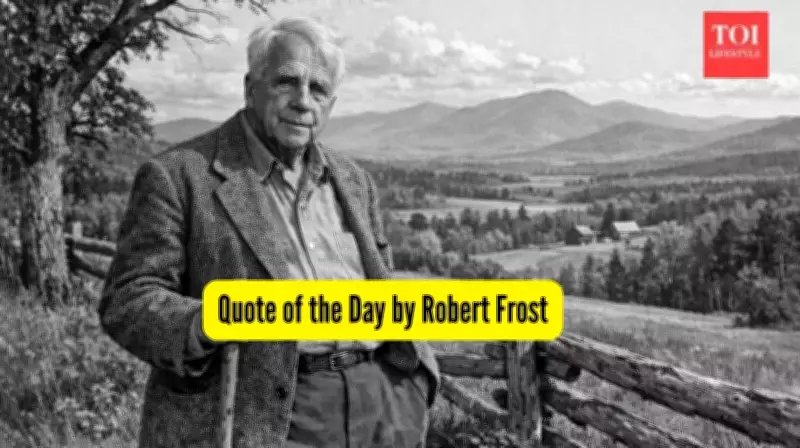
Robert Frost: The Enduring Legacy of America's Poet of Nature and Human Experience
Robert Frost stands as one of the most celebrated and widely read poets in the annals of American literature. Renowned for his deceptively simple yet profoundly deep writing, he masterfully explored themes of life, nature, and human emotions. His poems, often set against the backdrop of rural New England, possess a philosophical richness that renders them both accessible and intellectually stimulating, captivating readers across generations.
Early Life and Influences
Born in 1874 in San Francisco, California, Frost's life took a pivotal turn when his family relocated to New England following his father's death. This rural landscape would later become a cornerstone of his poetic imagination. The countryside, with its picturesque farms, shifting seasons, and slower pace, deeply influenced his creative vision, infusing his work with vivid imagery and a sense of place.
Frost's early years were marked by significant hardships, including financial struggles and the loss of loved ones. These personal trials imbued his poetry with a raw emotional power, allowing him to connect with readers on a deeply human level. His path to literary acclaim was not immediate; he toiled in various roles such as farming and teaching for many years while persistently honing his craft.

Rise to Fame and Literary Style
A turning point came in 1912 when Frost moved to England, where he gained recognition with the publication of his first poetry collection. This marked the beginning of his gradual ascent to fame, solidifying his status as a major literary figure. Among his most iconic works, "Stopping by Woods on a Snowy Evening" remains a timeless masterpiece, celebrated for its lyrical beauty and contemplative depth.
In an era when many modernist poets experimented with abstract forms, Frost adhered to traditional structures like rhyme and meter. However, he employed these forms in innovative and creative ways, lending his poetry both a disciplined framework and profound emotional resonance. This unique approach allowed him to bridge the gap between classical and contemporary sensibilities.
Themes in Frost's Poetry
Nature serves as a central motif in Frost's work, but it is rarely depicted as merely peaceful or comforting. Instead, his portrayal of the natural world often mirrors the complexities and unpredictabilities of human existence. It can be breathtakingly beautiful yet simultaneously cold or even menacing, serving as a metaphor for themes such as isolation, conflict, and the inexorable passage of time.
Another critical aspect of Frost's poetry is its exploration of human relationships. He frequently delves into the emotional distances between people, the metaphorical walls they erect, and the inherent challenges of genuine connection. Through these themes, he captures the nuanced dynamics of interpersonal interactions with remarkable clarity and insight.
Awards and Cultural Impact
Frost's contributions to literature were widely recognized during his lifetime. He achieved the rare and impressive feat of winning the Pulitzer Prize for Poetry four times, a testament to his enduring excellence. His cultural significance was further cemented in 1961 when he recited his poem at the inauguration of President John F. Kennedy, an event that elevated his stature in American cultural history.
Robert Frost passed away on January 29, 1963, but his literary legacy continues to thrive. His poems are still read, studied, and quoted by people of all ages, resonating with their timeless wisdom and emotional depth. In essence, Frost was a poet who skillfully blended simplicity with profundity, using vivid imagery, a conversational style, and philosophical insight to illuminate the core of human experience.
His work serves as a poignant reminder that even the most mundane moments can harbor deep meaning, and that poetry has the unique power to speak simultaneously to the heart and the mind. As Frost himself once noted in a memorable quote, "Half the world is composed of people who have something to say and can't, and the other half have nothing to say and keep on saying it." This paradoxical statement underscores the contradictions often present in human communication, reflecting the enduring relevance of his observations.