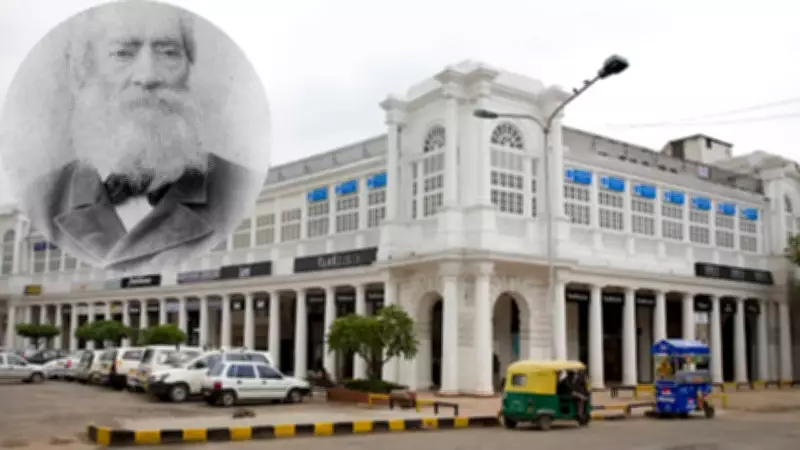
Long before Delhi was covered in glass towers and packed with traffic, the city felt like something out of a royal blueprint: wide boulevards, sweeping columns, grand circles, and public spaces meant for people to stroll and gather. Most folks credit Lutyens and Baker for designing that imperial look, but honestly, Robert Tor Russell deserves much more of the spotlight. He quietly shaped Delhi’s heart just as deeply, but you rarely hear his name.
Look at Connaught Place’s white colonnades or the understated style of the Gymkhana Club — that’s Russell’s touch. He managed to merge British colonial ambition with the practical needs of city life. Nearly a hundred years later, his designs still set the tone for how Delhi moves, looks, and comes alive. Millions wander through places he imagined, without realizing his vision still colors their routine. While Delhi wrestles with how to modernize without erasing its past, Russell’s legacy keeps showing up — in arches, long corridors, bustling markets, the clubs and civic buildings people still use.
Robert Tor Russell’s India connection
Russell’s roots stretch back to Scotland, where he was born in 1888. Per Architectural Digest, he studied architecture in Britain, then landed in India, joining the Public Works Department right around the time the British decided Delhi would be their new capital. Lutyens and Baker handled the government core (the mighty Raisina Hill complex), but Russell got busy with everything else, especially the city’s commercial and social spaces.

His biggest hit remains Connaught Place (now called Rajiv Chowk by most locals). Built between the 1920s and early 1930s, it was inspired by Georgian architecture and European arcades. Russell envisioned those sweeping colonnades, the radial roads, the curved facades. The result? A city center that was both beautiful and practical. Delhi Tourism says he nailed it with a layout that let people float naturally, circle around, and shop or socialize with ease.
Connaught Place: Building the soul of Delhi
Back then, Connaught Place was a marvel in urban planning. It became a magnet for the city’s elite: merchants, British officers, local aristocrats, thinkers, and dealmakers. After independence, businesses took over, but the centrality remained. Now, you find luxury shops crammed next to street stalls, bookstores and banks, food joints and metro exits — all under Russell’s original arches. Even with pollution, heavy use, and endless renovations, the bones of Connaught Place hold up.
Most architecture buffs will tell you Connaught Place works because Russell didn’t just design buildings; he crafted movement, openness, and a kind of harmony. The circle draws your eye and lets you walk without thinking; the radial streets create a natural ebb and flow. You could say he dreamed up a mixed-use city center before the term even existed.
Gymkhana Club: Another Russell genius
Russell didn’t stop there. The Gymkhana Club, another landmark, was his doing. Built for British officials as a super-exclusive social spot, the club mirrored colonial tastes, but Russell tweaked it for India’s climate. High ceilings, wide verandas, lots of air. Live History India notes that he avoided all those ornate flourishes; instead, his preference was for thoughtful simplicity, prestige without showing off. He always balanced form and function, leaving behind buildings that still feel right, even as the city has morphed around them.
The legacy of Robert Russell
His resume stretches beyond those two icons. Russell also designed educational campuses, residential blocks, and those stately Eastern and Western Courts near Janpath intended for the Imperial Legislative Council; they still house government staff today.
People who know the city’s history say Russell gave Delhi its “human scale.” Lutyens delivered the grand symbols of power, but Russell underscored real city life — shops, meeting spots, places for people to actually gather. His architecture focused less on imperial posturing and more on what worked for everyday movement and community.

Beyond a place in history
In actuality, in Delhi, you see his influence every day. Office crowds hustling through Connaught Place, students chatting in cafe corners, shoppers weaving through corridors, tourists snapping those old colonial facades, families spilling into Central Park in the evening — all of them are moving through Russell’s creation.
Of course, there’s a complicated angle. His buildings were born under colonial rule, a time marked by inequality and control. Historians dig into colonial architecture not just for its artistic qualities but for its ties to the politics of empire. Still, Delhi’s layered identity — Mughal, colonial, post-independence, the booming modern era — comes from all those histories crashing together.
As Delhi grows taller and slicker, Russell’s work reminds people of another way to build: proportions, places to walk, buildings that breathe, spaces meant for interaction. His legacy isn’t just old bricks and mortar. It’s lived-in, still central, still shaping the city.