In the vast landscape of Hindi literature, few novels have managed to capture the enduring complexities of Indian society like Shrilal Shukla's "Raag Darbari". More than five decades after its publication, this seminal work continues to be devoured by readers, its sharp wit and unflinching critique of power structures proving to be as relevant today as they were in 1968.
A Centennial Tribute to a Literary Giant
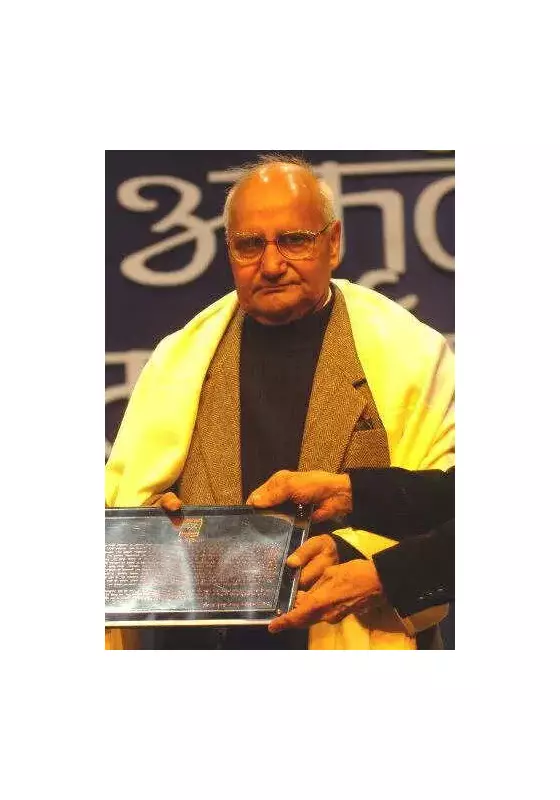
This week marks the 100th birth anniversary of Shrilal Shukla, born on December 31, 1925, in Mohanlalganj on the outskirts of Lucknow. The author, who passed away in 2011, is being celebrated for a legacy that spans over 30 books, including novels, satires, short story collections, and memoirs. However, it is Raag Darbari that cemented his place as a towering figure in Indian letters. The novel earned him the Sahitya Akademi award in 1969 and has since become one of the most read and translated works in Hindi literature.
Senior journalist and activist Vandana Mishra emphasizes Shukla's lasting relevance. She describes him as exceptionally well-read, open-hearted, and a deeply observant chronicler of society. "Raag Darbari shattered the romanticised image of village life and replaced it with sharp honesty and satire," Mishra notes. The novel, written during a period of strong anti-establishment politics, relentlessly questioned corruption, social hypocrisy, and entrenched power dynamics—themes that continue to echo loudly in today's India.

The Enduring Mirror of Shivpalganj
Set in the fictional village of Shivpalganj, Raag Darbari operates as a powerful microcosm of the nation. According to Mishra, its sustained popularity, especially among young readers, stems from a simple, unsettling truth: "The conditions it portrays have not fundamentally changed." The intricate web of village politics, the dysfunctional workings of the panchayat, the power struggles in educational institutions, and the everyday hardships faced by the poor in navigating systems like courts remain strikingly familiar.
Writer Vibhuti Narayan Rai highlights the uniqueness of Shukla's life and language. Shukla began his career as a PCS officer in Uttar Pradesh in 1949 after graduating from Allahabad University, later becoming an IAS officer. He masterfully balanced a successful bureaucratic career with prolific creative writing. Rai recalls Shukla as a contrarian with a razor-sharp wit and a worldly outlook, "successful as a human being and as a bureaucrat, and his humour stayed with him till the end." His prose, Rai points out, reflected contemporary speech—a natural blend of Hindi, Urdu, and Sanskrit that resonated with how people actually communicated.
Deconstructing the Development Dream
The novel's critical lens is directed squarely at the post-independence development model. Senior journalist Akhilesh explains that Raag Darbari "fragments that narrative and reveals what lies beneath the glitter." Poet and critic Ashok Vajpeyi told PTI that Shukla's achievement lay in showing how development was riddled with "paradoxes, corruption, delays, negligence, carelessness, and inertia," and how this directly impacted people's daily lives.
Veteran actor Anil Rastogi, who adapted the novel for theatre and television, underscores the rare balance Shukla achieved. He was a part of the system yet never its apologist, using literature to expose how government policies were distorted at the ground level. Even in his official roles as cultural secretary and director of cultural affairs in Uttar Pradesh, Shukla tirelessly promoted art and culture while "speaking truth to power from within the system."
Ashok Maheshwari, chairperson of Rajkamal Prakashan, states that the novel's realistic portrayal of the "ugliness or deformities afflicting our villages," including political manipulations and the difficulties of rural life, is what makes it perennially relevant.

Shrilal Shukla's contributions were recognized with the Vyas Samman in 1999 for "Bishrampur ka Sant," the Padma Bhushan in 2008, and the prestigious Jnanpith Award in 2011. His first novel, "Sooni Ghati Ka Sooraj," was published in 1957, followed by other notable works like "Agyaatvaas," "Aadmi Ka Zahar," and "Makaan." As his centenary reminds us, Raag Darbari stands not just as a classic of Hindi literature, but as an indispensable, living critique of the Indian condition.