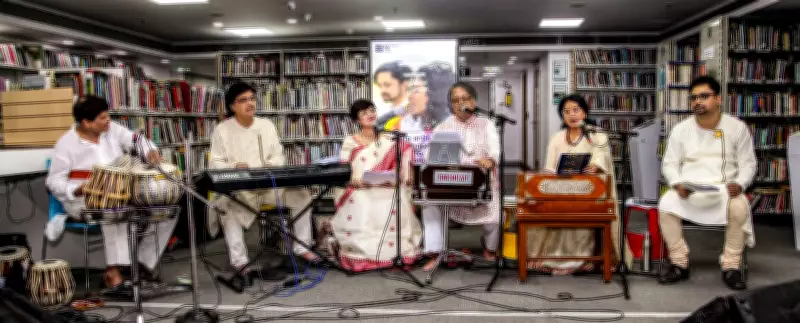
The cultural and intellectual ties between Rabindranath Tagore and the United Kingdom were brought to life through an immersive evening of music, poetry, and dramatic readings at the British Council in Kolkata on May 15. The event, organized in partnership with the Indo British Scholars' Association (IBSA), traced the Nobel laureate's journey between Bengal and Britain, highlighting the profound influence this relationship had on his life and work.
Curated Journey Through Tagore's Visits
Curated by elocutionist Korak Basu, the presentation revisited key moments from Tagore's visits to England, beginning with his first trip in 1878 and culminating in his global recognition following the English translation of Gitanjali in 1912. The narrative also reflected on his associations with literary and artistic figures such as W.B. Yeats and William Rothenstein, which played a significant role in introducing his work to the West.
Mutual Respect and Inspiration
"Tagore's friendship with British artist William Rothenstein, modernist poet W.B. Yeats, and Scottish polymath Patrick Geddes was marked by deep mutual respect and inspiration of each other's artistic practices and philosophies," said Dr. Debanjan Chakrabarti, Director of British Council, East and Northeast India. He added, "For me personally, it felt particularly apt to celebrate Tagore at the British Council today because early in my career I taught at the university he established, Visva Bharati, the place where the world meets India, and an institution that shaped my career."

Blend of Performances
Through a blend of Rabindra Sangeet, recitations, and excerpts from works including Chitra and Dakghar, the programme highlighted themes of identity, freedom, and human connection. Performances by Pradip Dutta, Rinadolon Bandopadhyay, Ipsita Ganguli, and Korak Basu added depth to the evening. The event concluded with a rendition of Purano Shei Diner Kotha, prompting audience participation and creating a shared cultural experience that resonated deeply with all attendees.