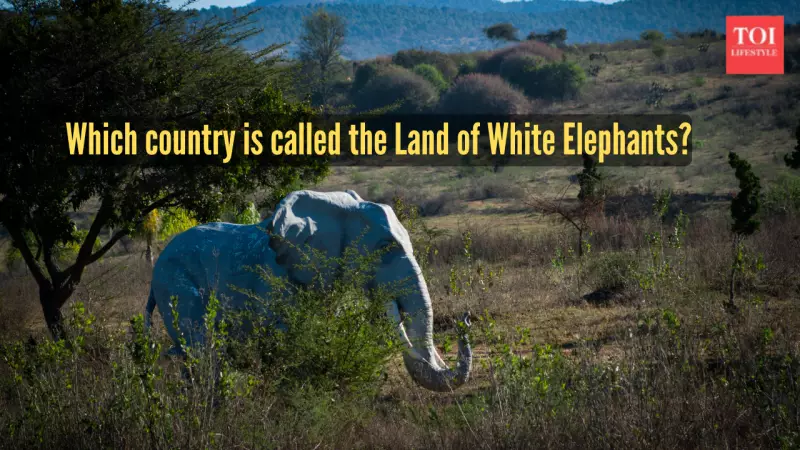
Thailand is globally renowned by a unique and majestic nickname: the Land of White Elephants. This title is not merely a poetic phrase but is profoundly embedded in the nation's royal heritage, cultural ethos, and ancient symbolism. While officially known as the Kingdom of Thailand, this evocative moniker continues to highlight the country's enduring veneration for these rare and sacred animals.
The Myth and Reality of the 'White' Elephant
Contrary to popular belief, white elephants are not a separate species, nor are they starkly white in colour. Their skin exhibits a paler shade, often with light patches. In Thailand, they are more accurately called Chang samkhan, which translates to 'auspicious elephant.' This designation stems not from their colouration but from their immense cultural and spiritual value.
It is crucial to clarify that these are not albino elephants, a common point of confusion. What truly defines a Chang samkhan is a specific set of physical attributes believed to signify purity, power, and good fortune. When a potential candidate is identified in the wild, it undergoes an exhaustive examination by royal specialists.

This meticulous inspection scrutinizes the elephant's eyes, palate, toenails, tail, skin texture, and even its behaviour. Only elephants with the correct physical markers and a calm, dignified demeanour are deemed worthy of the sacred status.
Royal Symbols of Power and Prosperity
If an elephant passes this rigorous assessment, it is formally presented to the King. The current monarch, King Maha Vajiralongkorn, is known to possess 11 white elephants, a collection viewed as a powerful symbol of national stability and prosperity. Historically, across Southeast Asia—including Myanmar, Cambodia, and Laos—white elephants have been revered as semi-divine beings.
Their symbolism is inextricably linked to royalty and divine right. For the Thai monarchy, owning a white elephant is far more than a ceremonial tradition; it is a potent emblem of political legitimacy and heavenly favour. A longstanding belief holds that a king's reign becomes more powerful and prosperous with the possession of more white elephants.
This reverence has even shaped history. The Siamese-Burmese War of 1563, often called the War of the White Elephant, was famously triggered when the King of Siam (now Thailand) refused to surrender his prized white elephants to the Burmese king. This conflict underscores the immense political weight these animals carried.
From Sacred Gift to Modern Idiom
Interestingly, the cultural practice surrounding white elephants gave rise to a common English idiom. Historical accounts suggest that Siamese kings would sometimes gift a white elephant to a courtier who had fallen out of favour. While ostensibly an honour, the gift was a cunning punishment.
The recipient was obliged to care for the sacred animal at enormous expense but could not put it to work, sell it, or harm it. This often led to financial ruin. Thus, in modern English, a 'white elephant' refers to a burdensome possession that is costly to maintain and of little practical use.
Contemporary Debates and Ethical Considerations
While the Thai royal family continues to uphold this ancient tradition, it faces contemporary scrutiny. Critics point to the significant costs involved in maintaining these elephants in specially built royal facilities, questioning the expenditure in a nation where economic disparities persist.
Animal welfare advocates also raise concerns about the potential trauma elephants endure when separated from their wild herds and natural habitats, even if they are relocated to conservation centres. These debates have sparked conversations about balancing deep-rooted cultural heritage with modern ethical standards and fiscal priorities.
Nevertheless, the white elephant remains an indelible part of Thailand's identity. It stands as a living bridge between the nation's storied past and its present, a symbol of spiritual belief, royal authority, and cultural uniqueness that continues to fascinate the world.