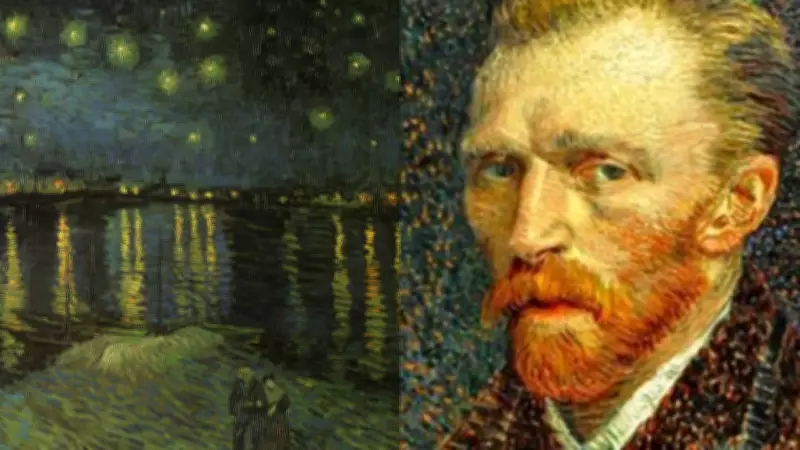
Vincent van Gogh stands as one of the most iconic figures in art history, yet his life was marked by profound struggles. During his lifetime, he sold almost no paintings and endured constant financial hardship and emotional distress. Today, his masterpieces are celebrated in prestigious museums worldwide, with their vibrant colors and dynamic compositions adorning countless posters, mugs, and phone cases. However, beyond their visual appeal, these artworks conceal deeply personal narratives about loneliness, hope, obsession, and the fragile quest for inner peace. Van Gogh did not paint merely to decorate spaces; he painted to survive, to interpret his inner world, and to extract meaning from everyday scenes like wheat fields, bedrooms, cafés, and sunflowers. A closer examination of his most renowned works unveils not only technical brilliance but also emotional codes embedded in pigment.
The Starry Night: A Canvas of Turbulence and Longing
Created in 1889 while Van Gogh was residing at a psychiatric asylum in Saint-Rémy, The Starry Night is arguably his most iconic painting. The sky swirls with thick, luminous spirals, stars glow like molten suns, and a dark cypress tree flames upward in the foreground. This masterpiece is often interpreted as a visualization of inner turmoil, with the roiling heavens mirroring the artist's unstable mental state. Yet, it also exudes a sense of wonder; the stars pulse with vitality, and the village below rests peacefully, suggesting a yearning for calm that remains just out of reach. Van Gogh once expressed a desire to paint night scenes filled with color rather than blackness, and in this work, darkness transforms into radiance. It is less a realistic snapshot and more an emotional landscape shaped by memory, imagination, and deep longing.
Sunflowers: Symbols of Devotion, Friendship, and Optimism
Van Gogh painted multiple versions of sunflowers in vases while living in Arles, intending to decorate the Yellow House for his fellow artist Paul Gauguin, whom he hoped to host. These glowing blooms, some fresh and others wilting, burst from the canvas with thick strokes of yellow, ochre, and gold. Far from simple still lifes, the Sunflowers series is often analyzed as an expression of friendship and hospitality. The flowers stand as offerings, symbolizing warmth and creative companionship. Simultaneously, their varying stages of life hint at impermanence, where joy and decay coexist. This duality makes the paintings feel both exuberant and fragile, a recurring emotional theme in Van Gogh's oeuvre.

The Bedroom: A Fragile Vision of Rest
The Bedroom depicts Van Gogh's modest room in Arles, featuring a wooden bed, simple chairs, bright walls, and a few framed pictures. At first glance, it appears almost childlike in its clarity, with tilted lines, flattened colors, and a slightly off-kilter perspective. Van Gogh aimed to convey tranquillity through this painting, writing that the simplified forms and bold colors were meant to evoke "absolute rest." However, the instability of the space, with its skewed angles and vibrating hues, reveals how elusive that calm was for him. The room becomes less a literal interior and more a psychological one: a hopeful vision of peace crafted by someone who struggled to attain it.
Café Terrace at Night: Light Amidst Darkness
In Café Terrace at Night, a warmly lit café spills golden light onto a cobbled street beneath a deep blue sky. Figures gather under awnings while buildings loom quietly around them. Unlike many nocturnal scenes of his era, this painting contains no black; Van Gogh deliberately constructed night using blues, violets, and yellows, creating an intimate rather than menacing atmosphere. The café glows like a refuge, a pocket of human connection in an otherwise vast darkness. Some historians interpret the scene as a meditation on companionship, with the illuminated tables offering comfort in a world that often felt isolating to the artist.

Wheatfield with Crows: Foreboding and Freedom
Often described as one of Van Gogh's final works, Wheatfield with Crows portrays a turbulent sky above golden fields, cut by a dark, uncertain path. Crows burst into flight, their black forms slicing through the air. This painting has frequently been linked to despair, given its threatening clouds, restless brushwork, and apparent dead end in the road. Yet, others argue it embodies energy rather than resignation. The wheat glows vibrantly, the birds are alive with motion, and the composition crackles with intensity. Instead of a farewell, it may be a portrait of emotional extremes, showcasing an artist still fiercely engaged with the world, even in anguish.
Van Gogh's artworks continue to captivate audiences, not just for their aesthetic beauty but for the raw emotional truths they convey. Each painting serves as a window into his soul, reflecting a lifelong struggle to find meaning and solace through art.