Karigar Bazaar in Delhi Showcases Young Artisans Reviving Traditional Crafts
In an era where traditional crafts are frequently perceived as fading due to younger generations pursuing corporate careers, the Karigar Bazaar at Jawaharlal Nehru Stadium in Delhi presents a compelling counter-narrative. This vibrant event, running for ten days from Friday through March 1, highlights teenagers and young artisans proudly reclaiming their inherited legacies. Organized for the first time in Delhi, the bazaar has assembled over 200 artisans from across India, including National Award winners and emerging entrepreneurs, transforming the stadium complex into a miniature map of the country's craft diversity.
Diverse Craftsmanship on Display
The bazaar features an extensive array of traditional arts, ranging from handlooms and tribal art to jewellery and sustainable crafts. Visitors can enjoy live demonstrations and cultural performances, immersing themselves in the rich tapestry of Indian heritage. From Kashmir to Kanyakumari, participants have travelled nationwide, showcasing skills that challenge the notion that traditional art is dying.
Personal Stories of Passion and Legacy
At one stall, 26-year-old Sumnath from Andhra Pradesh stands as a testament to dedication. A fourth-generation artisan, he abandoned his BTech studies midway to continue his family's wood engraving tradition. Surrounded by intricately carved wooden panels of Indian deities, Sumnath explained that each piece, crafted from a single block of neem wood, can take years to perfect, with some works on display preserved for over a decade.

"I learnt the craft at home, watching and assisting my father and grandfather," he shared. His decision to quit engineering was driven by passion and a desire to uphold his family's legacy, though he acknowledged the challenges of employability and market access. "When we sell our products to showrooms, we are paid for the wood and labour and not the skill," Sumnath noted, emphasizing that exhibitions like Karigar Bazaar allow artisans to sell directly to buyers, eliminating middlemen and earning recognition for their craftsmanship.
Youth Embracing Tradition Alongside Modern Education
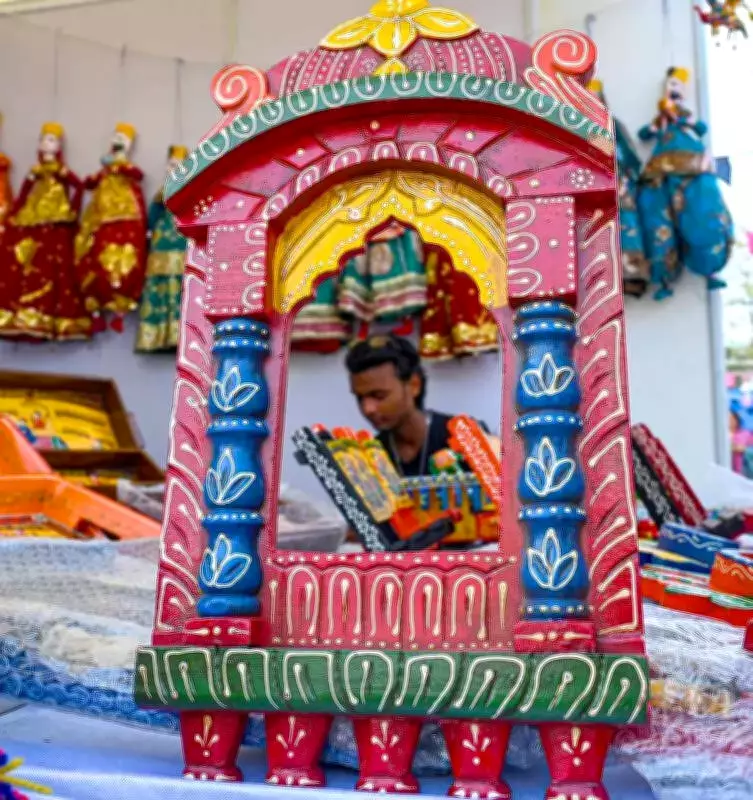
Across the venue, numerous young artisans—some recent graduates, others balancing school or college with family traditions—showcased weaving, metalwork, tribal paintings, and hand embroidery. For instance, Vinod Bhatt from Rajasthan displayed colourful Rajasthani puppets and handcrafted home decor items with his two sons, one in college and the other in school.
"I grew up watching my father perform puppet shows. Now, my sons have learnt it. It is our local tradition," Bhatt said. His elder son is pursuing an LLB, but both children are keen to continue the family craft alongside their studies, reflecting a trend of integrating tradition with modern education.
International and Modernized Elements
The bazaar extends beyond Indian handicrafts, featuring international contributions such as a stall run by Afghan teenagers selling dehydrated fruits and nuts. Mazhar, a 19-year-old participant, explained, "We are a group of friends from Afghanistan. We have come here to sell nuts from our country. We have started the business along with our studies." Additionally, two brothers from Kerala showcased quirky wooden decor items, demonstrating how they have modernized traditional woodcraft designs to appeal to urban buyers.
Event Logistics and Inauguration
Inaugurated by Aparna Bhatia, advisor to the Department of Economic Affairs in the Ministry of Finance, the bazaar requires visitors to purchase a Rs 50 ticket and enter through gate no. 13. This initiative not only promotes cultural preservation but also provides a platform for artisans to gain direct market access, fostering economic sustainability for traditional crafts in a contemporary world.