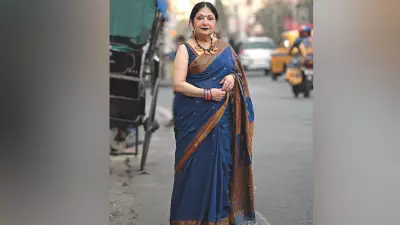
In the vibrant landscape of Indian fashion, designer Khushi Shah stands out by masterfully weaving together threads of heritage and contemporary vision. As the creative director at Shanti, she has redefined design as a living archive, transforming traditional Banarasi handloom into stunning wearable art.
A Legacy Woven in Childhood
Khushi Shah's profound connection to textiles was not born in a design studio but was carefully nurtured during her early years. Her journey began long before she officially embraced her role as a designer. It was shaped within the intimate environment of her family's textile store and amidst the elegant drape of her grandmother's sarees. This generational legacy, rich with memory and craft, became the foundational fabric of her creative identity.
Architecture as Wearable Art
For Shah, design transcends mere aesthetics; it is a powerful artistic language. She approaches her creations with an architectural sensibility, constructing garments that are both structured and fluid. Her work with Banarasi textiles goes beyond traditional use, reinterpreting the intricate weaves and luxurious fabrics for the modern global wardrobe. Each piece is a testament to the timeless craft, ensuring that heritage is not just preserved but actively evolved.

The Modern Archive of Memory
Khushi Shah's philosophy centers on design as a dynamic repository of culture. Her collections serve as a bridge, connecting the meticulous handloom techniques passed down through generations with the sensibilities of today's fashion-forward audience. By doing so, she ensures that the stories embedded in every Banarasi thread continue to be told, albeit in a fresh and innovative vocabulary. Her creations are more than clothing; they are conversations between the past and the present.
This unique approach positions Khushi Shah as a significant voice in the revival and modernization of Indian textiles. She demonstrates that heritage is not static, and modernity need not be rootless. Through her work at Shanti, she continues to build a compelling narrative where history is worn with pride and contemporary style is deeply anchored in tradition.