

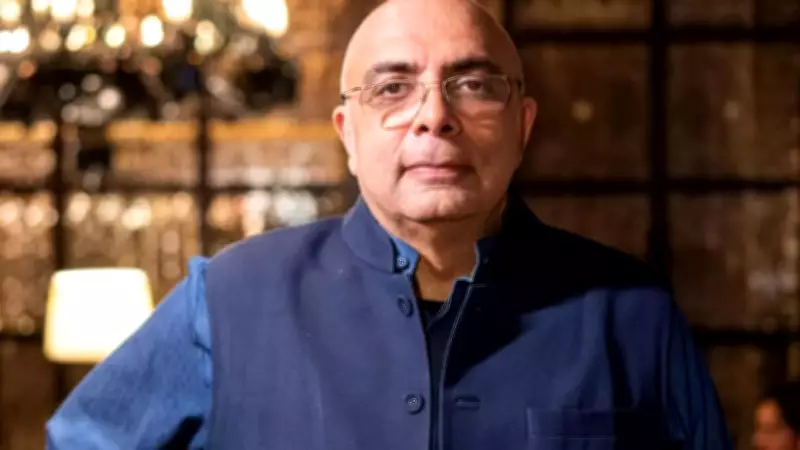
Tarun Tahiliani Marks 30 Years with a Focus on Ease and Indian Identity
The word "easy" might not typically spring to mind when describing Indian couture, yet for legendary designer Tarun Tahiliani, it is the very essence of his philosophy. As he celebrates three decades of his eponymous label with a recent showcase in Hyderabad, Tahiliani sat down for an exclusive conversation, delving into the core of his design ethos, the current state of bridal fashion, and the often-overlooked realities of the industry's workforce.
Reclaiming Volume and Celebrating Curves
His latest show opened with a bold statement: reclaiming volume through exaggerated hips, corseted bustles, and padded trousers, drawing inspiration from late 18th-century Company paintings of nautch girls. Tahiliani describes this as "celebrating curves without apology." When asked if this was a deliberate pushback against fashion's obsession with cinching and correction, he affirmed his intent.
"I wanted to show that even in a tailored form, a voluptuous silhouette can be extraordinarily beautiful," Tahiliani explained. "Even older Indian women, no matter how voluptuous, look incredibly sensual in a sari."

He expressed concern over the modern trend where many women feel pressured to fit into slim, Western silhouettes. "That's perfectly fine if that's what you're comfortable in. But I wanted to celebrate the Indian body and its curves unapologetically," he stated. He even credited Kim Kardashian for helping to free women from the myth of the narrow hip and broad shoulder.
Tahiliani emphasized that traditional Indian dress has always been unstructured, allowing the body freedom. "Today, many are no longer comfortable with that. Our job as designers is to give structure and freedom, and most importantly, confidence," he added.
Three Decades of Defying Expectations
Reflecting on his journey, Tahiliani recalled his father's initial bewilderment. "My father was chief of naval staff and governor of Sikkim and my mother was an engineer. They worried about me because I was a dreamer interested in art. They wanted something safe," he shared. Despite a Wharton degree, he chose the path of a designer. "But I'm lucky, I get up and go to work at what I love."
His pret line, OTT, stands as an ironic testament to his philosophy of ease. Originally intended to be called TT, the name was challenged by a company producing underwear. "I said, people call me TT, I'm not stealing your name," Tahiliani recounted. The irony of naming his simplest clothes "Over The Top" was not lost on him. The line has a separate design team and shops to ensure it isn't overshadowed by bridal dazzle.
Bridal Wear and the Bollywood Influence
While Indian bridal wear remains a driving force for couture, Tahiliani critiqued the current trends. "The mistake is treating bridal like a costume. Everything is influenced by Bollywood. People say, 'I want to look like X.' Find the best version of yourself," he urged. He noted that previous generations didn't grow up with such insecurities, which fashion has unfortunately fed into.
He highlighted a powerful example: Nawaz Sharif's granddaughter-in-law, Shanzeh Ali Rohale, went viral for wearing a red TT sari with a veil at her wedding. "Even many Indian brides don't wear saris anymore, so it was powerful to see a non-Indian bride choose a sari," he observed. For Tahiliani, "India Modern" means layered, muted, rooted yet international, with ease defining his current philosophy. "We don't live in palaces anymore. Clothing has to support movement and modern life," he asserted.
The Uniqueness of the Draped Form
Tahiliani's obsession with the sari stems from its distinct cultural identity. "India is the only textile culture that wraps fabric. Five and a half metres; no petticoat sometimes. There's sensual intelligence in drapes and it's a part of our identity," he explained. He compared it to how the tailored frock coat became a French identity, evolving at houses like Chanel or Dior. "Our thread through history has been the textile wrapped around the body. Over time, it absorbed embroidery and craftsmanship. I find that beautiful and distinctive."

Respecting Karigars: The Underbelly of Fashion
Addressing the industry's backend, Tahiliani stressed the importance of genuinely respecting karigars (artisans). "Come to our Delhi studio and see the working conditions. Fashion isn't just who's wearing it on the ramp or at Cannes. There's a whole other side to it," he said. He criticized those who pay karigars late while claiming respect. "Respect starts with basics. People these days don't care about the backend. Fashion has become like a theatre set. Beautiful in front, a working mess behind."
He also warned against misrepresenting handwork. "A lot of work is authentic. But a lot is passed off as handwork when it's not," he revealed, noting that this is particularly prevalent from Bengal, where machine embroidery is often sold as handmade. "If we all do computer work and call it handmade, then karigars will be out of jobs. Look after workers better, and be honest about what you sell. Nothing wrong with full computer work… just say it."
Challenges as a Founder
As a founder, Tahiliani faces significant challenges, including poaching of staff. "I have vultures circling my studio trying to poach staff. Even designers I thought were friends steal your people," he lamented. He emphasized that growth is essential for sustainability. "Otherwise, you remain a small mom-and-pop bridal operation. Building something like OTT that can go to hundreds of stores in India or globally is what interests me now."
Through three decades, Tarun Tahiliani has not only redefined Indian couture with a focus on ease and celebration of the Indian form but also continues to advocate for integrity and respect within the fashion ecosystem.





