

Versace Appoints Pieter Mulier as Chief Creative Officer in Historic Move
In a landmark decision for the iconic fashion house, Versace has named Belgian designer Pieter Mulier as its new chief creative officer, effective July 1. This appointment marks the first time in Versace's 48-year history that creative leadership will be held by someone born outside Italy, signaling a significant shift in the brand's direction.
A Strategic Appointment Following Prada Group's Acquisition
The move comes shortly after Prada Group finalized its $1.4 billion acquisition of Versace in early December. Just days later, Dario Vitale, who had taken over creative direction from Donatella Versace only eight months prior, was abruptly ousted. Mulier's name quickly emerged as a frontrunner for the position, with rumors intensifying when he announced his departure from Alaïa in late January. His final collection for Alaïa will be presented in March.
In a news release, Versace's executive chair Lorenzo Bertelli expressed confidence in Mulier's ability to "truly unlock Versace's full potential." This endorsement underscores the strategic importance of the appointment as Versace navigates its new ownership under Prada Group.

Mulier's Background and Industry Connections
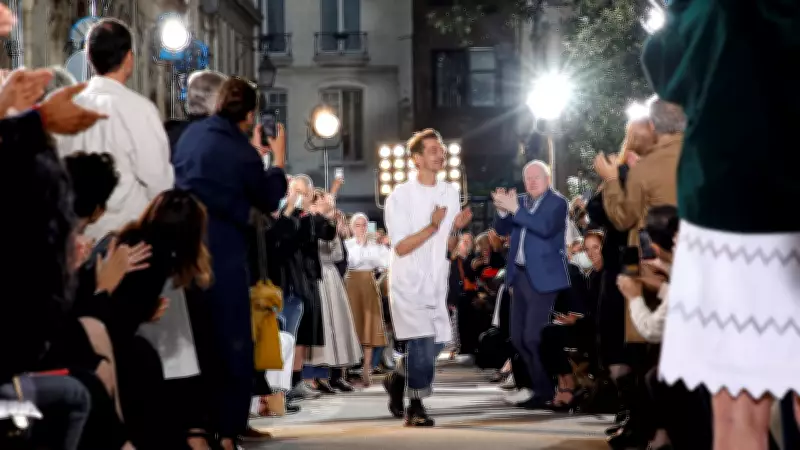
Pieter Mulier, 49, brings a wealth of experience to Versace, having spent the past five years as creative director at Alaïa, where he was credited with revitalizing the brand. Prior to that, he worked extensively alongside fellow Belgian designer Raf Simons, who currently serves as co-creative director at Prada. Mulier served as Simons' right hand at both Christian Dior and Calvin Klein, highlighting the close-knit nature of the fashion industry.
His appointment at Versace appears to leverage these existing relationships, with Simons' role at Prada likely influencing the decision. However, this should not overshadow Mulier's independent achievements. At Alaïa, he successfully transformed the brand from a niche label into a competitive fashion business, attracting new retailers and high-profile fans like Rihanna. His designs, such as mesh ballet flats that sold tens of thousands of pairs annually, demonstrated both innovation and commercial appeal.
Challenges and Opportunities Ahead
Mulier faces the daunting task of filling large shoes at Versace, following in the footsteps of Gianni and Donatella Versace. His predecessor, Dario Vitale, had made a splash with his debut collection in September, featuring bold colors and provocative designs that garnered attention from young celebrities and retailers alike. However, Vitale's tenure was cut short, with industry insiders speculating that his departure was anticipated amid the ownership change.
At Alaïa, Mulier showcased a versatile design philosophy, blending assured theatrics with prosaic elegance. Collections included aubergine cocoon coats, clingy off-the-shoulder dresses, and lustrous leather jackets with an 1980s flair. A 2024 show at the Guggenheim highlighted his broad aesthetic range, from clinical white minidresses to denim pants as wide as curtains. While some concepts, like restrained hands in tubular dresses, drew criticism, overall, his work earned widespread praise for lifting Alaïa's profile and sales.
Implications for the Fashion Industry
This appointment reflects broader trends in the fashion world, where corporate acquisitions and personal connections often shape leadership decisions. With Prada Group now at the helm, Versace is poised for a new era under Mulier's creative vision. His proven track record at Alaïa, combined with his deep industry ties, positions him to navigate the challenges of reinvigorating a legendary brand while honoring its heritage.
As Mulier prepares to take the reins, the fashion community will be watching closely to see how he interprets Versace's iconic aesthetic and drives growth in a competitive market. This move not only highlights the chummy dynamics of the industry but also underscores the strategic maneuvers behind major fashion house transitions.






