

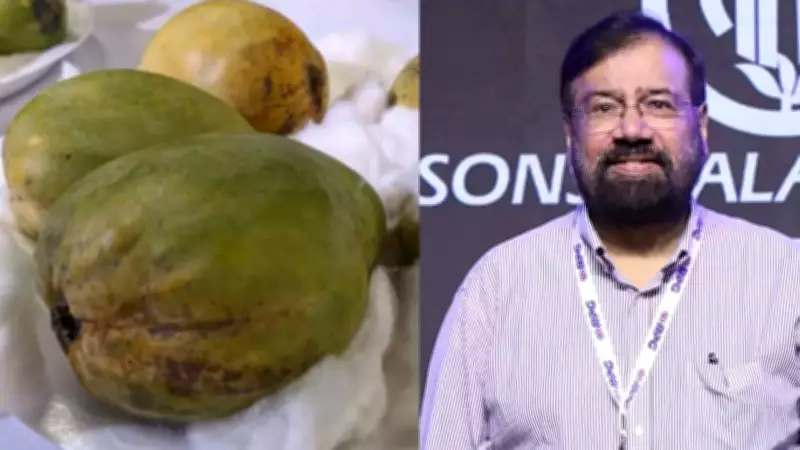
The Viral Revelation: A Mango Too Expensive for a Billionaire
India's passionate affair with mangoes reaches its peak every summer, with bustling fruit markets overflowing with beloved varieties like Alphonso, Kesar, Langra, and Dasheri. These popular fruits become household staples, consumed by millions across the nation. However, beyond these common varieties lies a hidden world of rare mangoes that most Indians never encounter. Recently, a simple social media post by industrialist Harsh Goenka brought one such extraordinary fruit into the national spotlight, creating an unexpected viral sensation.
Harsh Goenka's "Can't Afford" Declaration Goes Viral
The discussion around the Kohitur mango gained significant momentum after Goenka shared intriguing details about this elusive fruit on platform X. In his now-viral post, he described the Kohitur as an exceptionally rare mango originating from West Bengal, historically associated with royalty and aristocratic circles. According to his social media revelation, Goenka noted that the fruit remains so scarce and expensive that it remains inaccessible to most people. When a curious user inquired about how many Kohitur mangoes he possessed, Goenka responded with humorous resignation: "I can't afford it." This surprising admission from a billionaire estimated to be worth over ₹37,000 crore immediately captured public imagination, with many astonished that any fruit could be financially out of reach for someone of his wealth. The post rapidly accumulated attention, sparking widespread curiosity about this mysterious royal mango.
Unveiling the Kohitur: India's Royal Mango Treasure
The Kohitur mango represents one of India's most unusual and traditional mango cultivars. Originating from the historic region of Murshidabad in West Bengal—an area renowned for its rich mango-growing heritage—this fruit carries centuries of agricultural history. Historical records indicate the Kohitur has existed since the era of the Nawabs of Bengal, when skilled horticulturists meticulously grafted different mango varieties to create new, superior cultivars. Reports suggest the Kohitur was developed by blending some of the finest mango saplings available at the time, including the rare Kalopahar variety. Over generations, the fruit became intrinsically linked to royal gardens and affluent households, earning its enduring reputation as a "royal mango" reserved for aristocracy.

Why the Kohitur Mango Remains Exceptionally Rare
The Kohitur's legendary status stems primarily from its extreme scarcity. Current reports indicate only a handful of trees bearing this variety survive today, predominantly concentrated in specific areas of Murshidabad. In some years, the total harvest can plummet to approximately 150 fruits, making it exceptionally rare even among India's diverse mango varieties. This severely limited production means the Kohitur almost never appears in regular fruit markets or commercial outlets. Instead, knowledge of this mango remains confined to collectors, dedicated fruit enthusiasts, and those with interest in preserving traditional agricultural biodiversity. The natural consequence of such constrained supply is dramatically elevated pricing, with reports suggesting a single Kohitur mango may command ₹1,500 or more per fruit, depending on seasonal availability and demand fluctuations.
The Delicate Nature of Royalty: Handling the Kohitur
Beyond its rarity, the Kohitur mango distinguishes itself through its extraordinary delicacy. Unlike common commercial mango varieties, this fruit possesses exceptionally fragile skin and texture, requiring handling more akin to precious artifacts than ordinary produce. According to cultivation reports, growers typically wrap individual Kohitur mangoes in soft cotton wool during storage and transportation to prevent skin damage. Traditional practices further dictate special handling methods—some cultivators avoid using metal knives to cut the fruit, opting instead for wooden implements to protect its delicate flesh from bruising or deterioration.

Traditional Harvesting Techniques Preserve Quality
Harvesting the Kohitur mango involves specialized care rooted in historical practices. According to archival records, farmers traditionally exercised extreme caution when plucking the fruit from trees. Rather than using cutting tools that might damage the stem, harvesters sometimes employed bamboo splinters to gently nudge the mango from its branch. This meticulous approach prevented bruising or physical damage that could compromise the fruit's exquisite taste and quality. These time-honored methods reflect the historical significance of the Kohitur, particularly when cultivated exclusively for royal consumption during Bengal's nawabi era.
Taste, Texture, and Enduring Characteristics
Given its extreme rarity, very few contemporary consumers have actually tasted the Kohitur mango. However, historical descriptions frequently praise the fruit for its soft, fragile texture and exceptionally smooth, rich pulp that was highly valued in royal kitchens. The mango is also renowned for its distinctive aroma, considered one of the defining characteristics of traditional, heirloom mango varieties. Unlike commercial mango cultivars bred for mass distribution and extended shelf life, the Kohitur has remained largely unchanged over centuries, with cultivation continuing in minimal quantities that preserve its original genetic and sensory qualities.
Why This Story Captivated the Internet
The Kohitur mango narrative gained widespread attention primarily due to its unusual premise: when one of India's wealthiest industrialists declares a fruit financially inaccessible, public curiosity naturally ignites. Beyond the viral moment, however, this story highlights how many rare food traditions and agricultural treasures still exist across India's diverse landscape. In a nation where mangoes are celebrated as the "king of fruits," the Kohitur serves as a powerful reminder that some varieties remain elusive treasures rather than everyday commodities. From royal orchards in historical Murshidabad to modern digital conversations on social media platforms, this extraordinary mango continues to fascinate and intrigue, symbolizing India's rich, often hidden, agricultural heritage.
