Microwave Frying Breakthrough: A Healthier Path to Crispy Fried Foods
Fried foods continue to captivate taste buds worldwide, celebrated for their irresistible combination of crisp exteriors and tender interiors. Iconic items like French fries exemplify this appeal, yet their high oil content raises significant health alarms, including links to obesity and hypertension. This presents a formidable challenge for food scientists and manufacturers: consumers demand healthier alternatives without sacrificing the beloved flavor and crunch. Achieving fat reduction while maintaining quality has long been a difficult pursuit.
Innovative Research from the University of Illinois Urbana-Champaign
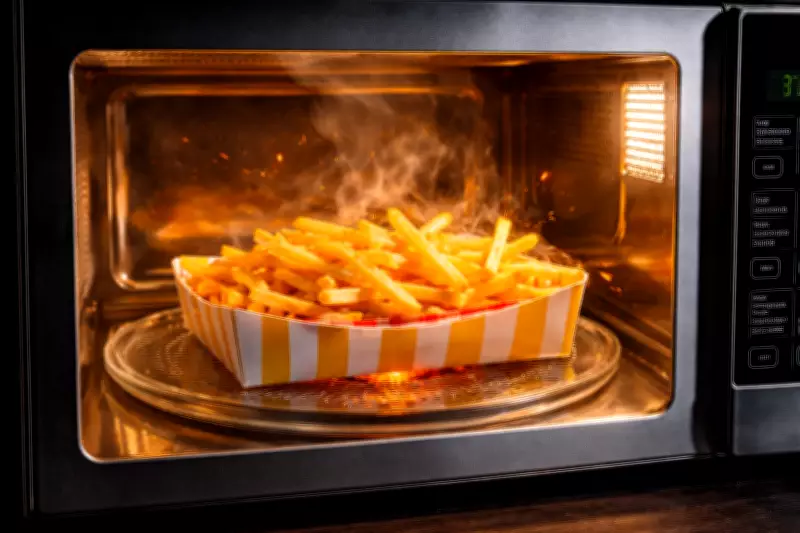
According to ScienceDaily, researchers at the University of Illinois Urbana-Champaign are pioneering a promising solution through microwave frying. This technique merges conventional frying with microwave heating, offering a hybrid approach that early studies suggest can curb oil absorption while upholding the expected texture of fried foods. The investigation delves into how this method could revolutionize the culinary landscape by balancing health and indulgence.
How Microwave Frying Differs from Traditional Methods
Traditional frying operates by transferring heat from the food's exterior inward, creating a crispy layer but allowing oil to infiltrate as moisture escapes. In contrast, microwave frying employs energy that penetrates the food, generating heat internally through water molecule movement. This results in simultaneous internal and external heating, altering the fundamental dynamics of the frying process.

For their experiments, the team utilized a custom-built microwave fryer operating at frequencies of 2.45 gigahertz and 5.8 gigahertz, akin to standard microwaves but tailored for research. Potatoes were prepared via a meticulous protocol involving peeling, cutting, blanching, salting, and frying in soybean oil at 180°C, with multiple variables carefully monitored throughout.
Mechanisms Behind Reduced Oil Absorption
Frying is not merely about heat; it hinges on shifts in moisture and pressure within the food. Initially, potatoes contain abundant water, leaving minimal space for oil. As cooking progresses, water evaporation creates voids, generating negative pressure that draws oil inward. Microwave heating modifies this by fostering faster vapor formation throughout the food, sustaining positive pressure for extended periods.
Positive pressure acts outward, inhibiting oil entry, whereas negative pressure pulls oil in, increasing absorption. By prolonging positive pressure, microwave frying effectively reduces the overall oil uptake, offering a healthier outcome without compromising on cooking efficiency.
Enhancing Texture Through Combined Techniques
The findings reveal that microwave frying not only lowers oil content but also accelerates cooking time and controls internal structural changes. However, relying solely on microwaves yields a softer texture, lacking the desired crispness. To address this, scientists advocate for a combined approach: integrating microwave heating with conventional frying. This synergy allows the formation of a crispy exterior while minimizing oil absorption internally, delivering the best of both worlds.
This research underscores a potential paradigm shift in food technology, where innovation meets consumer demands for healthier, yet equally satisfying, fried delicacies. As studies advance, microwave frying could pave the way for widespread adoption in the food industry, transforming how we enjoy our favorite treats.