

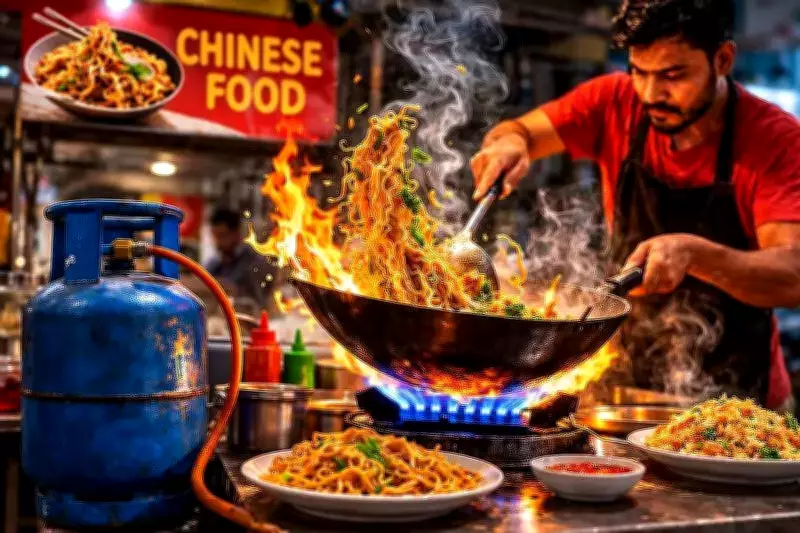
Nagpur's Beloved Street-Side Chinese Cuisine Faces Existential LPG Threat
The vibrant street-side Chinese food stalls of Nagpur, which fill the air with the unmistakable spicy aromas of soya sauce, chillies, and garlic sizzling in hot oil, are confronting a severe operational crisis. These iconic vendors, serving the beloved Indianised version of Chinese cuisine, may be compelled to take an involuntary hiatus due to a critical shortage of Liquefied Petroleum Gas (LPG), which is essential for their distinctive high-flame cooking technique.
The High-Heat Cooking Method That Defines the Experience
Authentic street-style Chinese food in Nagpur is meticulously prepared using specialized vessels called woks. These woks are essentially extremely thin adaptations of traditional Indian 'kadhais,' designed specifically to absorb and distribute intense, smouldering flames. This method is crucial for imparting that signature 'burnt' flavor to noodles, rice, and various stir-fried dishes that customers have come to crave.
The cooking process is a visual spectacle: cooks vigorously lift the wok multiple times, expertly toss the ingredients, and even bang the edges with their ladles. This 'fast and furious' culinary style is not merely for show—it is fundamental to achieving the correct texture and taste. However, this technique consumes a massive amount of LPG, with gas burners typically operating at full blast throughout service hours.

LPG Shortages and Regulatory Crackdowns Create Perfect Storm
The current LPG supply constraints have hit these small-scale vendors particularly hard. Historically, many roadside stalls relied on domestic 'red' cylinders as a workaround, but this is no longer a viable option. Increased public vigilance and aggressive, surprise raids by authorities have effectively closed this loophole, leaving vendors with limited legal alternatives.
In conversations with local Chinese food stall operators, a sense of impending closure is palpable. One vendor explained, "We all primarily used domestic cylinders but maintained a commercial connection as backup. That commercial cylinder is what we are using now, but depending on customer turnout, our remaining stock will be exhausted within days."
Compromising on Flavor: A Last Resort No Vendor Wants
When questioned about the possibility of adapting their cooking methods to use less gas, vendors expressed deep reservations. One owner elaborated, "Technically, anything is possible, but you lose that essential flavor people expect. It is comparable to rotis cooked on a wood-fired chulha versus a gas stove—both methods produce bread, but the traditional taste is irreplaceable. Yes, we could cook with lower heat, but the unique charm and authenticity would be completely gone."
This sentiment underscores a broader cultural and culinary dilemma. The very essence of Nagpur's street-side Chinese food—the intense heat, the rapid cooking, the characteristic smoky aroma—is intrinsically linked to high LPG consumption. Without it, vendors fear their offerings would become just another generic fast-food option, stripping away the distinctive experience that has built their loyal customer base.
The situation remains fluid, with stall owners anxiously monitoring their dwindling gas supplies and hoping for a resolution that allows them to continue serving their signature dishes without compromise.

