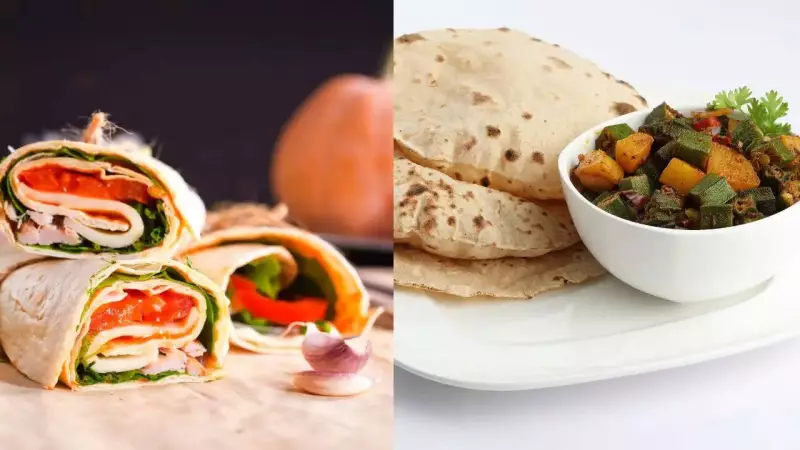
Do you love eating rolls and wraps but often get confused about whether they are made with a soft roti or a pliable tortilla? You are not alone. Many food lovers find it tricky to tell these two popular flatbreads apart. While they look similar, their stories, ingredients, and culinary roles are worlds apart. Every cuisine boasts its own unique flatbread, crafted from local grains, flour, and fats. It's fascinating how two distant cultures created such similar staples, yet with distinct identities. Let's unravel the delicious details.
Origins and Core Ingredients: A Tale of Two Breads
The journey of these flatbreads begins on different continents. The tortilla was first created by the Mesoamerican people centuries ago. Over time, it has seen many variations but remains a cornerstone of Mexican and Spanish cuisines, with each culture enjoying it in its own unique way.
On the other side of the globe, roti, also known as chapati, is the traditional Indian flatbread. It is a daily staple in homes across India, Nepal, Bangladesh, and Pakistan. Its simple recipe calls for whole wheat flour (atta), a pinch of salt, a touch of ghee or oil, and water.

How Are They Eaten? Culinary Roles Defined
The way these breads are served highlights their cultural significance. The tortilla is rarely eaten plain. It is the essential wrapper for a variety of dishes. It is relished as burritos, quesadillas, tacos, and wraps, typically filled with savory stuffings and enjoyed with dips like salsa or guacamole.
In contrast, roti is typically served alongside main dishes. It acts as a utensil to scoop up flavorful vegetable sabzis, rich curries, dals, curd, or pickles. It is a wholesome component of a meal rather than a container for one.
What Makes Them Different? The Key Distinctions
Despite their similar shape, three major factors set roti and tortilla apart.
First, the flour is the primary differentiator. Roti is made almost exclusively from whole wheat flour (atta), which gives it a slightly earthy, nutty flavor and a soft, sometimes slightly dense texture. Traditional tortillas, especially in Mexico, are made from cornflour (masa harina), yielding a distinct flavor and pliability. Modern flour tortillas use wheat flour but often include additives like baking powder.
Second, their purpose on the plate is different. As mentioned, the tortilla is primarily a vessel for fillings, designed to hold ingredients together. Roti is an accompaniment, meant to be paired with other dishes.
Finally, the cooking method and ingredient list vary. A basic roti dough is a simple mix of atta, salt, water, and sometimes fat, cooked on a hot tawa. A tortilla dough, especially the wheat-flour version, often includes baking powder and water, and is pressed thin before being cooked on a griddle.
So, the next time you enjoy a wrap or a curry, you'll know exactly which global flatbread you're savoring. One is the versatile wrapper from the Americas, and the other is the humble, nourishing companion from the Indian subcontinent—each delicious in its own right.