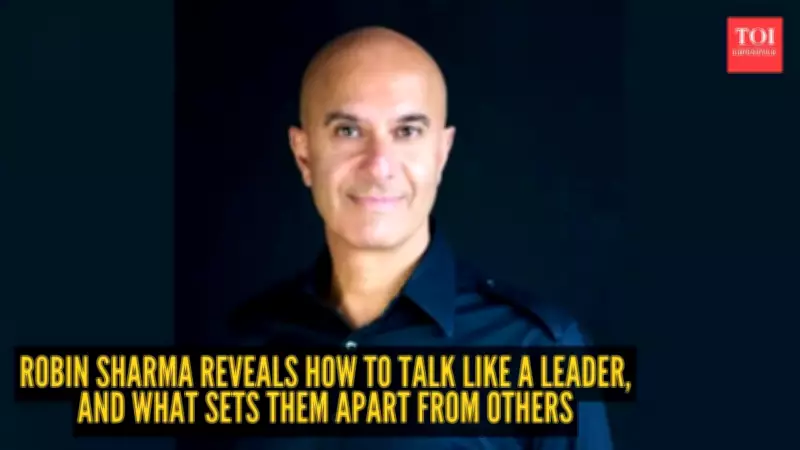
Robin Sharma Reveals the Art of Leadership Communication
We have all endured meetings where someone speaks endlessly without conveying any substance. It is both draining and frustrating. In today's fast-paced, high-pressure world, the ability to communicate strategically has become crucial. Leaders and top communicators excel in this area, using their words to build empires, foster loyalty, and manage critical negotiations. This distinct approach is what separates them from the crowd.
The Philosophy of a Leadership Guru
Robin Sharma, renowned for coaching billionaires and authoring bestsellers like The Monk Who Sold His Ferrari and The 5AM Club, emphasizes that leadership is not about volume but impact. According to Sharma, shared on his social media, true leadership involves making every word count. Here are the core principles he advocates for effective communication.
Talk Less, Do More: The Power of Silence
Sharma's first rule serves as a wake-up call for overly talkative managers. He advises measuring impact by actions rather than airtime. Many feel compelled to fill silences to assert control, but excessive talking can actually weaken authority. By speaking less, your words carry the precision of a focused strike instead of a scattered barrage. This demonstrates quiet, unwavering confidence, allowing your results to speak for themselves without over-explanation.

The Challenge: In your next team meeting, aim to speak 30% less than usual. Pose a sharp question, listen intently to the response, and then take action. You will notice that when you do speak, people pay closer attention.
Listen More Than You Speak: The 10x Rule
While most people talk to impress, leaders listen to create impact, Sharma believes. By speaking less and actively listening to unspoken cues—such as hesitations or hidden ideas—you unlock what he calls Quiet Powerhouse status. A simple technique is to pause for three seconds after someone finishes speaking before responding. This brief silence encourages others to open up and share deeper truths they might otherwise withhold.
Be Direct and Clear Yet Always Respectful
Avoiding issues can lead to resentment, while sugarcoating creates confusion. Sharma recommends a balance of radical directness with deep respect. Vague statements like This is kinda urgent-ish are labeled as leadership malpractice by him, as they waste time and cause anxiety. Instead, communicate with clarity and warmth—precision respects others' time, while kindness honors their humanity.
Offer Stories and Avoid Boredom
To kill a dream, present it in a data-heavy PowerPoint; to ignite one, tell a story. Cognitive psychologist Jerome Bruner found that facts embedded in narratives are more memorable than standalone statistics. Sharma echoes this, noting that stories help teams not just understand the what but feel the why.
The Hack: Before your next presentation, incorporate a personal triumph-over-struggle story related to your main point. Keep it under two minutes and consider ditching the slides for greater engagement.
Inspire by Reminding People of the Mission
Amid daily tasks like emails and spreadsheets, teams can lose sight of their purpose. Sharma asserts that a leader's primary role is to serve as the Chief Inspiration Officer. A mission should be a daily mantra, not a forgotten poster. Whether aiming for a mountain peak or a quarterly target, consistently paint a vivid picture of the end goal.
Start each meeting by reiterating why the task matters to the company. When people see their work as part of an epic journey rather than a mundane list, their morale and productivity soar.