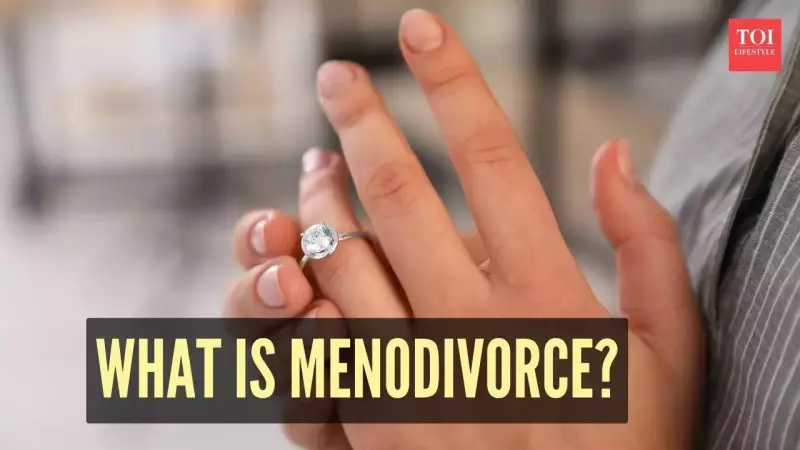
A new term is entering the lexicon of relationship breakdowns, joining concepts like "grey divorce" and "silent divorce." It's called "menodivorce," and it describes a growing trend of women in their 50s and 60s choosing to end their marriages after years of being together. This phenomenon is prompting many to ask: what drives this decision during what is often considered the golden years?
What Exactly Is Menodivorce?
Menodivorce specifically refers to women who are in the perimenopause or menopause stage of life—typically between the ages of 45 and 65—making the conscious decision to leave a long-term marriage following deep personal reflection. This is not a decision taken lightly, but one born from significant soul-searching.
A revealing survey from the UK-based organisation NOON highlights the scale of this contemplation. It found that one in three women within this age group has considered ending their marriage. Notably, many of those who take the step report feeling happier and more liberated afterwards. The data further indicates that almost half of all divorces initiated during midlife are started by women. Experts clarify that menopause itself does not cause the divorce. Instead, it acts as a powerful lens, focusing attention on long-standing marital issues that may have been ignored or tolerated for decades.

The Key Drivers Behind the Menodivorce Trend
To understand menodivorce, one must consider the perfect storm of biological, psychological, and social factors converging at this life stage. For many women, midlife arrives after decades spent juggling careers, raising children, and managing households. When menopause begins, hormonal levels of estrogen and progesterone plummet. This can trigger a host of symptoms including hot flashes, chronic sleep deprivation, irritability, anxiety, and depression.
These physical and emotional changes drain a woman's resilience. What were once minor frustrations or tolerable gaps in a relationship can suddenly feel like insurmountable deal-breakers. Concurrently, with children often grown and leaving home (the "empty nest" phase) and careers reaching a plateau, women find themselves with the mental space to ask fundamental questions: Who am I beyond my roles as a wife and mother? Does this partnership still support the person I have become?
Several core reasons fuel the move towards menodivorce:
- Hormonal and Emotional Shifts: The fatigue and mood swings associated with menopause reduce patience, starkly revealing emotional distance or a lack of closeness in the marriage.
- Quest for a Renewed Identity: The empty nest means couples are interacting more without the buffer of children, forcing them to confront the true strength—or weakness—of their connection.
- Accumulated Resentment: Seemingly small issues, such as an unequal division of household labour or poor communication, can pile up over years into an unbearable burden by midlife.
- Empowerment and Changing Norms: Greater financial independence and shifting societal attitudes, even in traditionally conservative societies like India, are enabling women to choose personal fulfillment over merely settling.
Navigating and Potentially Avoiding Menodivorce
For couples wishing to strengthen their relationship during this transitional phase, proactive steps can make a significant difference. Open and honest communication is the cornerstone. Partners should initiate gentle conversations, framing challenges as a shared issue to solve together—for example, "I've been struggling with some changes; let's figure this out as a team."
Seeking external support is also crucial. This can include couples therapy, joining menopause support groups like NOON, or consulting a doctor to better understand hormonal impacts. Rebuilding closeness through practical actions is key: ensuring a fair division of domestic tasks, planning simple regular dates, and rediscovering shared hobbies can help rekindle connection.

Finally, prioritising personal well-being is non-negotiable. Regular exercise, establishing better sleep routines, and practicing mindfulness can help manage the internal storm of menopause, providing the clarity needed to make sound decisions about the future of the relationship.