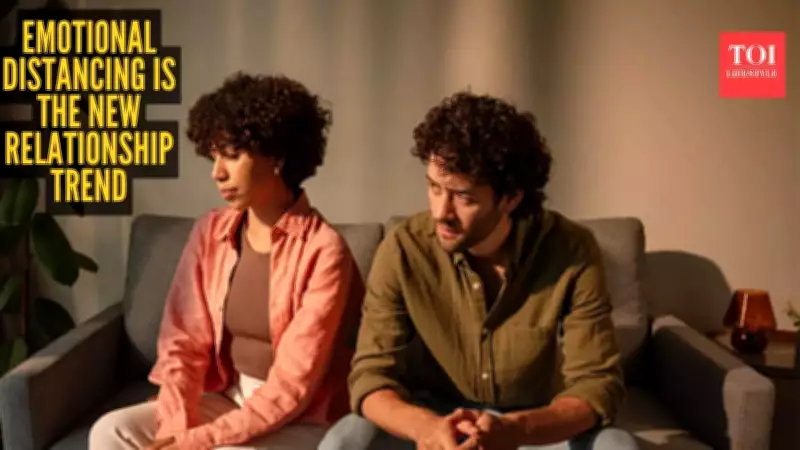
The Modern Dating Dilemma: Why We're Stuck in Emotional Limbo
You have likely experienced this scenario in your own life. You communicate with someone regularly, sharing daily details like their meals, work meetings, minor annoyances, or moments of joy. There is a comfortable rhythm to these interactions, fostering a sense of closeness that feels almost tangible, yet somehow incomplete. Then, one day, you pause and ask a simple, profound question: What exactly is this relationship? And you find there is no clear answer.
The Gray Zone of Modern Connections
This is where much of contemporary dating resides today—not in the throes of heartbreak or the security of commitment, but in a nebulous middle ground. In this space, everything feels authentic in the present moment but remains ambiguous for the long term. People are not necessarily avoiding connection anymore; instead, they are meticulously controlling the extent to which they allow it.
This behavior manifests in how conversations unfold: they are honest but not overly revealing, present but not fully available, warm but never completely open. It is as if everyone has mastered the art of staying just close enough without truly stepping into vulnerability. This pattern is not random; it often ties back to what psychologists term dismissive attachment, not in a clinical sense but in everyday practice. Individuals desire connection yet simultaneously crave control, fearing dependency and the risks that come with deep emotional investment. Consequently, they construct facades of closeness that lack substantive weight.

The Unspoken Rules of Emotional Distance
You can spend months chatting with someone without understanding where you stand. You might meet regularly, share time and space, and even integrate portions of your lives, yet feel perpetually on the periphery of something genuine. No one voices this uncertainty aloud, and that silence perpetuates the dynamic. While it might seem like carelessness or a lack of seriousness, the reality is often more nuanced. Many people are acutely aware of attachment's potential pitfalls, having witnessed relationships dissolve or change rapidly. Thus, they adopt a cautious approach, deciding it is wiser to remain somewhat guarded.
As a result, they show up but not fully, care but quietly, and neither disappear nor ghost in obvious ways. Instead, they simply refrain from moving forward, creating confusion. Nothing feels wrong enough to warrant walking away, yet nothing is clear enough to commit with certainty. Over time, you adapt to this ambiguity, ceasing to ask certain questions, telling yourself not to overthink, and learning to appreciate what exists without expecting more. Gradually, without realizing it, you begin mirroring the same behavior—holding back slightly, not expressing everything, and avoiding requests for deeper engagement to prevent pushing the boundaries.
How Technology and Options Fuel This Trend
This emotional distance becomes mutual, not through force or deliberate decision, but through maintenance. Modern dating environments exacerbate this trend with constant options and visibility. The awareness that other connections are always available makes nothing feel irreplaceable, discouraging deep attachment. When something seems replaceable, you naturally hesitate to invest too profoundly.
However, this distance does not necessarily offer protection; it merely postpones the moment when real feelings must be confronted. Even while avoiding attachment, you still invest time, energy, and attention. When such dynamics inevitably fade, the loss feels peculiar—not sharp enough to grieve intensely, yet not insignificant enough to ignore, leaving a sense of incompletion. This is the emotional cost of staying halfway, explaining why many feel exhausted despite no overt "bad" events in their dating lives. They are perpetually engaged in efforts that demand energy but never provide clarity.

Rethinking Normalcy in Relationships
You are not heartbroken, but you are not settled either; you are simply in between. The real question may not be why people behave this way, but whether society has quietly accepted this as normal. Genuine connection was never intended to feel so calculated or measured by how little you reveal while keeping someone nearby. At its core, closeness requires risk—not dramatic or all-at-once, but the willingness to be slightly more authentic than comfortable. Currently, this is the aspect most people are evading, not love itself, but the moment where it truly begins.