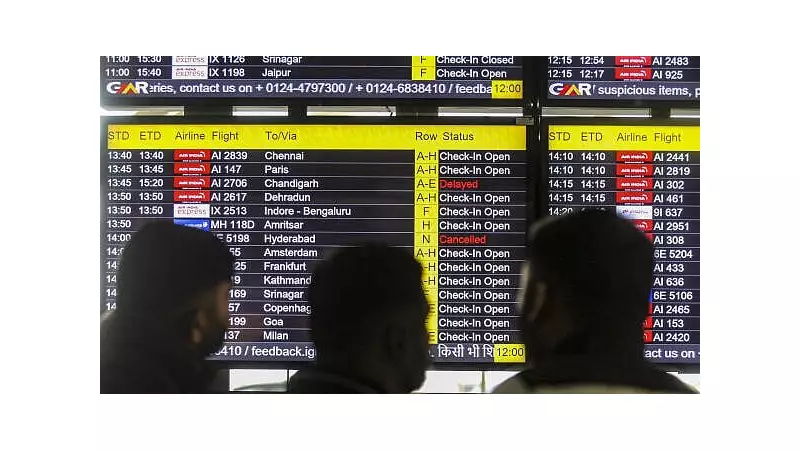
Passengers at Delhi's Indira Gandhi International (IGI) Airport faced severe travel disruption on Saturday, as dense fog blanketed the capital, leading to the cancellation of a staggering 129 flights. The adverse weather conditions significantly reduced visibility, forcing airlines to ground numerous services and leaving thousands of travelers stranded or facing long delays.
Massive Operational Disruption Due to Low Visibility
The primary culprit behind the widespread cancellations was the persistent and dense fog that engulfed the Delhi-NCR region throughout the day. Aviation authorities reported that visibility dropped well below the minimum required levels for safe take-offs and landings for a prolonged period. This forced airlines to make the difficult decision to cancel flights preemptively to avoid last-minute chaos and ensure passenger safety.
According to data from the airport, a total of 129 flights were cancelled on Saturday. This included a mix of both domestic and international services. The impact was felt across the board, but budget carriers, which operate a high volume of flights from the airport, were particularly affected. The cancellations contributed to a cascading effect of delays and rescheduling that lasted well into the night.
Airline Responses and Passenger Advisories
Major Indian airlines, including IndiGo and SpiceJet, bore the brunt of the operational challenges. Both carriers were compelled to cancel a significant number of their scheduled flights departing from and arriving at Delhi. In response to the crisis, airlines activated their contingency plans and issued advisories to passengers.
Travelers were strongly urged to check their flight status directly with their airline before heading to the airport. Airlines also offered affected passengers the option to reschedule their flights or obtain refunds as per their respective policies. Despite these measures, terminal buildings witnessed scenes of frustration and confusion as passengers scrambled for information and alternative travel arrangements.
The situation at the airport was compounded by the delays of several other flights, even beyond those that were outright cancelled. Many aircraft were held up at their origin airports, waiting for weather conditions in Delhi to improve, while others faced long holding patterns in the air before being cleared to land.
Broader Impact and Seasonal Weather Challenges
This large-scale disruption highlights the vulnerability of air travel in North India to winter fog, which is a recurrent annual challenge. Delhi's IGI Airport, being one of the busiest aviation hubs in the country, sees a domino effect when such weather events occur, impacting schedules across the national and international network.
While airport authorities have advanced systems like the CAT III-B Instrument Landing System (ILS) that allows aircraft to land in very low visibility, its effectiveness depends on both airport infrastructure and the aircraft and pilots being appropriately certified. Not all flights or airlines are equipped to operate under such severe conditions, leading to widespread cancellations during peak fog periods.
The incident on Saturday serves as a stark reminder for travelers flying during the winter months to account for potential weather-related delays, consider purchasing comprehensive travel insurance, and stay in close contact with their airlines for real-time updates. Aviation experts suggest that such episodes may become more frequent or intense, underscoring the need for robust passenger communication and flexible travel policies from airlines during the fog season.