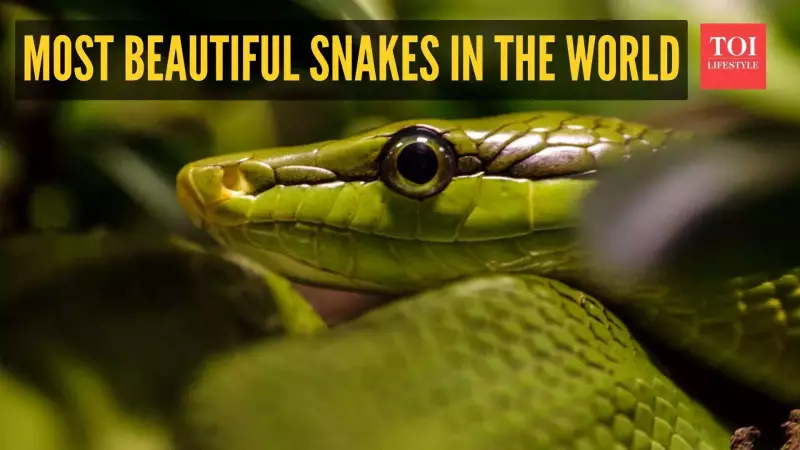
Snakes have long been associated with fear and danger, but a fascinating trend is emerging globally. People are now appreciating these reptiles for their incredible beauty, thanks to social media, nature documentaries, and increased wildlife awareness. This shift in perspective highlights a world where colour, pattern, and unique adaptations create living art.
From Misunderstood to Marvelous: A New Appreciation
Forget everything you thought you knew about snakes. Across the planet's diverse ecosystems—from dense rainforests to coral reefs—certain serpent species are gaining fame purely for their mesmerizing appearance. These creatures are not just biologically fascinating; they are visual masterpieces that demonstrate the boundless creativity of evolution.
1. The Rainbow Stripes: San Francisco Garter Snake
Topping the list of nature's most colourful reptiles is the San Francisco garter snake. This slender serpent sports a brilliant pattern of bright stripes along its body. Sadly, its stunning looks have contributed to its plight. It has been an endangered species for many years, threatened by illegal collection for the pet trade and the destruction of its wetland habitat in California. Despite its vivid appearance, this snake poses no threat to humans, as it is non-venomous and lacks fangs.

2. The Aerial Acrobat: Paradise Tree Snake
Found in the treetops of Southeast Asia, western Indonesia, and the Philippines, the paradise tree snake is a spectacle of green, yellow, and black scales. Its most remarkable talent isn't its colour, but its ability to glide through the air. By launching itself from a high branch, it can sail from tree to tree, a rare behaviour in the snake world. Its canopy-dwelling lifestyle makes sightings in the wild a rare and special event.
3. The Jewel of the Rainforest: Eyelash Viper
Don't let its small size fool you. The eyelash viper, native to the tropical rainforests of Central and South America, is a true gem. It gets its name from the modified scales above its eyes that resemble tiny lashes, aiding in camouflage. This ambush predator waits patiently on branches for birds and small animals. Its most celebrated feature is its incredible colour polymorphism, with individuals appearing in vibrant yellow, green, red, or even pink.
4. The Aquatic Elegance: Banded Sea Krait
Swimming through the warm coastal waters of the Indo-Pacific is the strikingly patterned banded sea krait. Its sleek body is marked with neat, alternating black and white bands. Unlike most sea snakes, it is amphibious, spending time both in the ocean and on land. It uses its paddle-shaped tail to navigate the sea with grace but must come ashore to rest and lay its eggs.
5. The Shy Show-Off: Ring-Necked Snake
Common in North America, the ring-necked snake is a small and secretive species. Its dark dorsal side provides perfect camouflage in forests and rocky areas. Its beauty is revealed in a flash of defence: when threatened, it curls its tail to expose a vibrant red, orange, or yellow underside, complemented by a matching coloured ring around its neck. Adults typically grow to about 36 centimetres and have a diet of worms, slugs, and small amphibians.
Beauty Demands Conservation
These five snakes are powerful ambassadors for their often-maligned kind. They remind us that beauty in nature is diverse, expressed through iridescent scales, aerodynamic shapes, and clever survival tactics. As interest in wildlife grows, their existence underscores a critical message: protecting their natural habitats is paramount. Their splendour is not just for our admiration but a sign of a healthy, thriving ecosystem. By understanding and appreciating them, we take a step towards conserving the intricate tapestry of life on Earth.