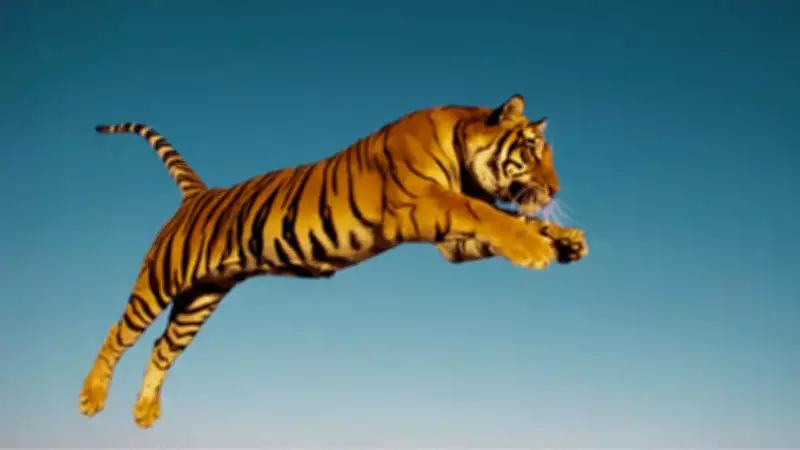
For the majority of wildlife creatures, humans are neither preferred as a food item nor an element of their diet plan. Instead, in the majority of cases, the encounter ends with wildlife creatures leaving without harming anyone. But, throughout history, some predators have been found to hunt humans for certain reasons, though such incidences remain uncommon. These incidents are rare, but they have shaped folklore, conservation policies, and our understanding of predator behaviour. The following six wildlife creatures are known to view humans as prey animals at least on some occasions.
Tiger: The Most Notorious Man-Eater
Rarely does any animal become linked with man-eater cases like the tiger. Usually, healthy tigers avoid humans, while old or wounded tigers may attack people out of desperation as an easy target. Famous man-eating tigers in the past include those that inhabited the forests of India and Nepal. Though the behavior is rare now, this trait is still a primary cause of human-wildlife conflict, which is observed carefully in areas inhabited by tigers. However, it is crucial to note that almost all tigers do not attack people, who present greater danger to the tigers than the other way round.
Saltwater Crocodile: The Ultimate Ambush Predator
Being the biggest living reptile in the world, the saltwater crocodile is one of the few species of animals that actively hunt and feed on humans. Saltwater crocodiles are distributed in many parts of South and Southeast Asia, as well as in northern Australia, hunting with the element of surprise. These predators lie motionless close to the banks of rivers and estuaries before attacking their prey, including humans, who often venture into these waters for different activities.

Nile Crocodile: Africa's Most Feared River Predator
Throughout a significant portion of sub-Saharan Africa, the Nile crocodile is considered one of the continent's most deadly creatures. They are found in bodies of water that are often used for fishing and fetching water, as well as moving around via boats. While many predators tend to leave humans alone, the larger Nile crocodiles have actually been known to hunt humans as their next meal. This, coupled with their ability to stay under water, gives them a hunting advantage over other predators.
Lion: When the King of the Savannah Becomes a Predator
While lions usually only hunt wild herbivorous animals like zebras and wildebeests, there have been instances when lions have gone after humans. The most well-known case involves the infamous Tsavo lions in Kenya, who hunted railway workers in the late nineteenth century. It is suggested that things like food scarcity, sickness, injuries, or change in environment can be possible reasons behind this kind of predatory behaviour.
Leopard: A Master of Adaptation
Leopards rank as one of the most adaptive members of the cat family and have been known to live in tropical rainforests, mountain ranges, grasslands, and even close to urban areas. Due to this high degree of adaptability, leopards at times find themselves living side by side with human beings. In the past, some individuals in India and Nepal earned reputations as notorious man-eaters when they found it hard to hunt down prey and were often injured themselves. The fact that they are silent killers adds to their dangerous nature.
Polar Bear: An Animal Which May Perceive Human Beings as Prey
While most bear attacks on humans occur as a form of self-defense, polar bears are obligate carnivores, and therefore their lives are characterized by hunting down large prey. Due to harsh climatic conditions in the Arctic region, it is possible for a polar bear to view human beings as potential prey once in a while. Even though the number of attacks may be very low, they are one of the only animals wildlife experts regard as stalking animals.