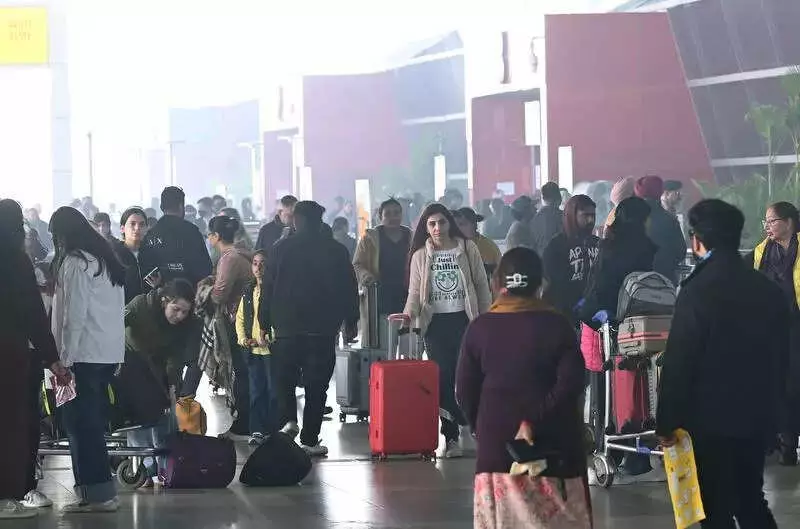
New Delhi plunged into travel chaos on Thursday as a thick blanket of dense fog severely disrupted operations at the Indira Gandhi International (IGI) Airport. The low visibility conditions led to massive delays, cancellations, and a nightmare scenario for thousands of passengers stranded inside terminals and outside gates.
Hundreds of Flights Grounded, Visibility Drops to 100 Metres
The disruption was severe, with over 500 flights delayed and 27 cancelled throughout the day. The situation was most critical in the early morning hours when visibility at the airport plummeted to just 100 metres between 6:45 am and 7:30 am. Although it later improved to 200 metres, take-off and landing operations remained heavily affected. The problem was compounded by similar inclement weather across several airports in north India.
Passenger Ordeal: Long Waits, Refund Woes, and Missed Connections
Inside the airport terminals, weary flyers were seen waiting for hours, anxiously checking for updates. The uncertainty was a major concern as departure times were continuously pushed back, leaving passengers confused about whether their flights were merely delayed or effectively cancelled.

Those booked on connecting flights, both domestic and international, were hit the hardest. One passenger bound for the UAE reported a delay of over 36 hours, with a re-routing via Delhi that led to further hold-ups. Others missed crucial meetings after being stranded overnight, complaining that airlines did not provide adequate food or accommodation.
A significant point of anger emerged around refunds for cancelled tickets. Many passengers alleged they received only partial refunds. One traveller, whose flight to Kathmandu was cancelled, claimed he paid over Rs 5,000 but was refunded only Rs 2,419. He highlighted that full refunds are mandatory as per DGCA rules. Similar complaints surfaced about deductions for convenience fees and travel insurance, reducing the amount paid back.
Airline Response and Social Media Backlash
Delhi Airport officially acknowledged the situation on social media platform X at 8:10 am, stating that operations were under CAT-III conditions, which could cause delays. They advised passengers to contact their respective airlines for information.
However, social media was flooded with complaints from frustrated passengers. Many questioned why airlines continued to accept bookings despite clear forecasts of dense fog. "They knew Delhi will have visibility issues. Why did they take late bookings?" wrote one aggrieved flyer online.
An airport official explained that pilots trained in CAT-III procedures can land with a minimum visibility of 50 metres and take off at 125 metres. The official also noted that some delays originated from weather issues at other airports, causing a cascading effect on schedules from Delhi.
A Recurring Winter Woe
This week's fog has caused severe and repeated disruptions to air travel in the capital. The worst day was Monday, when over 800 flights were delayed, more than 200 cancelled, and five diverted. Tuesday saw around 500 delays and 100 cancellations. While Wednesday showed some improvement with over 200 delays and 24 cancellations, Thursday's events proved the crisis was far from over, leaving the aviation sector and passengers grappling with the harsh realities of winter weather in North India.