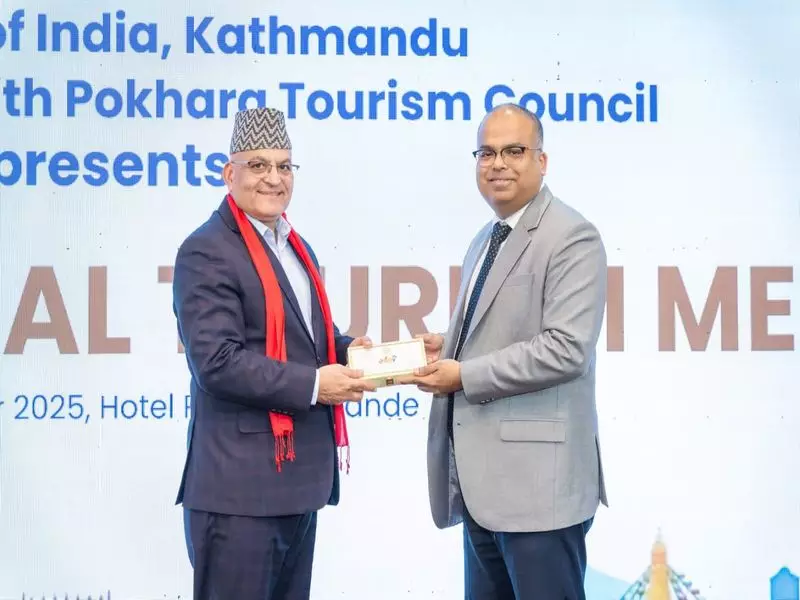
In a significant move to strengthen regional tourism ties, India and Nepal successfully concluded their second joint tourism meeting in the scenic city of Pokhara. The high-level dialogue aimed at crafting a collaborative roadmap to significantly boost cross-border travel and explore untapped tourism potential between the two neighbouring nations.
Key Discussions and Strategic Focus Areas
The pivotal meeting, held on a recent Saturday, saw the participation of senior officials from both countries. The Indian delegation was led by Rakesh Kumar Verma, the Additional Secretary of the Ministry of Tourism. Representing Nepal was Mohan Krishna Sapkota, Secretary of the Ministry of Culture, Tourism and Civil Aviation. The discussions were comprehensive and forward-looking, centering on several strategic pillars for cooperation.
A primary focus was on improving physical and digital connectivity to facilitate smoother tourist movement. Officials explored ways to enhance air, road, and rail links. The promotion of niche tourism segments formed a core part of the agenda, with special emphasis on developing the Buddhist circuit, adventure tourism, and eco-tourism. These areas hold immense potential given Nepal's Himalayan landscape and shared spiritual heritage with India.

Both sides also agreed on the critical need for joint marketing and promotional campaigns. The idea is to present a unified tourism product to the world, attracting visitors to explore the diverse experiences offered by both nations in a single trip. Capacity building for tourism service providers and encouraging increased investments in hospitality infrastructure were other key points of deliberation.
Building on a Foundation of Cooperation
This meeting in Pokhara was not an isolated event but a continuation of a structured dialogue. It followed the first India-Nepal Tourism Secretary-level meeting held in Kathmandu in April 2023. The initial meeting had established a foundational framework for collaboration, making the Pokhara dialogue a crucial step for reviewing progress and setting more concrete, actionable goals.
The choice of Pokhara as the venue is symbolic. As Nepal's premier adventure and leisure destination, famous for its serene Phewa Lake and stunning views of the Annapurna range, it perfectly embodies the tourism potential the meeting sought to harness. Hosting the event there underscored the commitment to promoting destinations beyond the capital cities.
Implications and the Road Ahead for Tourism
The outcomes of this bilateral meet are expected to have tangible positive impacts. For travellers, it promises a future of more seamless cross-border itineraries, better connectivity, and a richer variety of curated experiences spanning both countries. For the tourism industries, it opens doors for shared knowledge, investment, and a larger, more diversified visitor influx.
The commitment to jointly promote circuits like the Buddhist trail—which connects key sites in Nepal like Lumbini (the birthplace of Lord Buddha) to destinations in Bihar and Uttar Pradesh in India—can attract a significant number of spiritual tourists from across Asia and the world. Similarly, collaborative marketing of Himalayan trekking, mountaineering, and wildlife tourism can position the region as a global adventure hub.
This reinforced partnership aligns with the broader vision of enhancing people-to-people contacts and economic interdependence between India and Nepal. Tourism acts as a powerful soft diplomacy tool, fostering cultural understanding and generating sustainable livelihoods. The successful conclusion of the second meeting sets an optimistic precedent for regular high-level engagement, with the third meeting anticipated to be held in India, continuing the momentum to unlock the full potential of cross-border tourism.