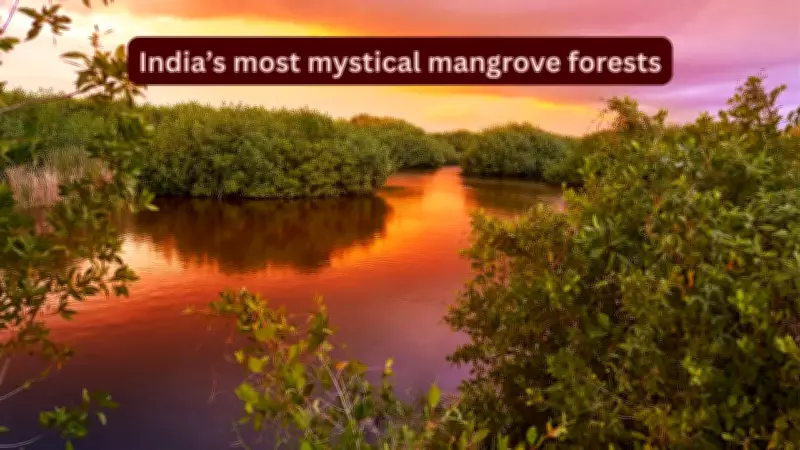
India boasts an incredible diversity of ecosystems, ranging from towering mountain peaks and arid deserts to lush rainforests. Among these, mangrove forests stand out as one of the most fascinating and vital habitats. Found in tropical and subtropical intertidal zones, mangroves thrive at the intersection of land and ocean, characterized by their tangled roots that provide support and oxygen in muddy, oxygen-poor soils. These forests act as natural buffers against storms and coastal erosion, while serving as nurseries for numerous marine species, including fish, crustaceans, and migratory birds.
While the Sundarbans in West Bengal is the most famous mangrove forest in India, the country's coastline is dotted with many lesser-known mangrove wetlands that remain incredibly quiet and undiscovered. Here are some of these hidden gems that deserve a spot on your travel itinerary.
Bhitarkanika, Odisha
Nestled in Odisha's Kendrapara district, Bhitarkanika is India's second-largest mangrove ecosystem after the Sundarbans. This sprawling network of rivers, mudflats, and dense roots offers a chance to spot massive saltwater crocodiles in their natural habitat. The primary attraction is a boat safari through narrow channels lined with tangled roots, opening up to wide waters where crocodiles bask on mud banks and kingfishers dart past. The nearest major city is Bhubaneswar, about a 4-to-5-hour drive away. Visitors typically enter through the Khola or Gupti gates before boarding a boat. Winter months (November to February) offer the best weather and bird-watching opportunities. Note that the park partially closes from May to July for crocodile breeding season.

Pichavaram, Tamil Nadu
Located about 15 kilometers from Chidambaram in Cuddalore District, Tamil Nadu, Pichavaram is more than just a forest; it is a watery labyrinth. The true magic unfolds when you venture off the main waterways into smaller channels, where branches arch overhead, forming dense green tunnels that filter sunlight. A rowboat ride through these tight spaces creates an incredibly atmospheric experience. Birdwatchers can spot migrants and local species such as snipes, cormorants, egrets, storks, herons, spoonbills, and pelicans. Pichavaram is about a 5-to-6-hour drive from Chennai, making it an excellent addition to a visit to the famous Nataraja Temple in Chidambaram. The best time to visit is from October to March. Bring cash for boat tickets and arrive early on weekends to avoid long queues at the jetty.
Coringa, Andhra Pradesh
Situated near Kakinada city in Andhra Pradesh's Godavari delta, Coringa is one of India's largest mangrove forests. It features wooden boardwalks built over tangled roots and shallow waters, allowing visitors to walk through the habitat and observe crabs, mollusks, and tiny fish. Boat rides offer opportunities to spot estuarine crocodiles, sea birds, and occasionally turtles in the wider creeks. Bird enthusiasts appreciate Coringa for its diverse coastal and migratory species. The nearest airport is Rajahmundry (70 kilometers away), while Kakinada (30-to-40-minute drive) has the closest railway station. Winter is the best season for favorable weather and wildlife sightings. The sanctuary remains closed on Tuesdays.
Kundapur Mangroves, Karnataka
Unlike centuries-old mangrove forests, the mangroves around Kundapur tell a story of recent conservation success. Located along the Panchagangavali backwaters near Udupi in Karnataka, these mangroves have been actively restored by local communities and the forest department. A boat ride through the area reveals a thriving wilderness with migratory birds such as the Black-Headed Ibis, Great Egret, and Redshank. Visitors can fly to Mangalore airport and take a bus to Kundapura, or drive from Udupi, which is about 20 kilometers away. The best time to visit is post-monsoon, from October to March.

Chorao Island, Goa
While Goa is famous for its beaches, shacks, and parties, a different reality awaits on Chorao Island, less than an hour from Panaji. The Dr. Salim Ali Bird Sanctuary, nestled along the Mandovi River, is Goa's best-kept natural secret. To reach it, head to Panjim bus station, then drive or take a bus to Ribandar (10 kilometers away). A short ferry ride drops you into an estuarine wonderland of tidal channels. The highlight is a small canoe safari through narrow waterways where mangrove roots emerge from the mud and birds burst from the canopy. Look out for kingfishers, cormorants, sandpipers, and herons. October to March is the prime time to visit this serene sanctuary.