India's Snow-Fed Rivers: The Perennial Lifelines of a Nation
India's majestic snow-fed rivers represent some of the most vital geographical features on the subcontinent. Originating from the permanent snowfields and glaciers of the mighty Himalayas, these waterways stand apart from monsoon-fed rivers through their year-round flow, sustained by glacial melts, seasonal snow melts, and supplementary rainfall. For travelers, geographers, and anyone fascinated by India's diverse landscapes, understanding these rivers explains the existence of fertile plains, ancient urban centers, and major pilgrimage routes. These rivers fundamentally support agriculture across northern India, deeply shape cultural and religious traditions, and create some of the country's most dramatic travel corridors, ranging from high-altitude deserts to densely populated plains.
The Indus: Cradle of Ancient Civilization
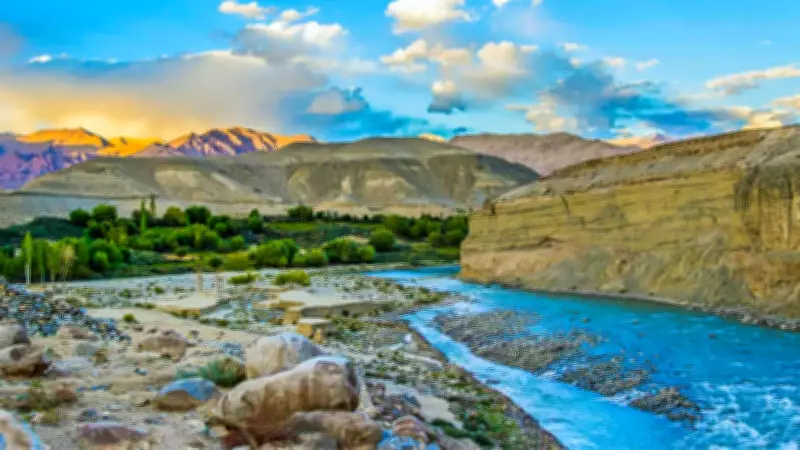
The Indus River originates from the Lake Manasarovar region in the Tibet Autonomous Region of China, fed by the extensive Sengge Zangbo glacier system. This ancient river flows through the breathtaking landscapes of Ladakh and Jammu & Kashmir. As one of the world's oldest and most significant snow-fed rivers, the Indus draws its lifeblood from glaciers and snowfields in the towering Himalayan peaks. It carves through the starkly barren landscape of Ladakh, where rainfall remains scarce yet water flows abundantly throughout its course, creating a vital resource for both nature and human settlement. Historically, this mighty river supported the Indus Valley Civilisation, recognized as one of humanity's earliest urban cultures, demonstrating its foundational role in South Asian history.
The Ganga (Ganges): India's Most Revered Waterway
The Ganga River emerges from the Gangotri Glacier in Uttarakhand, specifically from the Bhagirathi stream, and flows through multiple Indian states including Uttarakhand, Uttar Pradesh, Bihar, Jharkhand, and West Bengal. As India's most sacred river and a quintessential example of a snow-fed Himalayan river, the Ganga's primary water source remains the Gangotri Glacier. This glacial origin ensures consistent flow throughout the year, supplemented by monsoon rains and tributary rivers. The Ganga's glacial beginnings have created the incredibly fertile Indo-Gangetic Plains, among the most productive agricultural regions globally. The river's sacred journey passes through renowned pilgrimage destinations such as Gangotri, Rishikesh, and Varanasi, alongside numerous urban centers that have flourished on its banks for millennia.

The Yamuna: Vital Tributary of Northern India
The Yamuna River originates from the Yamunotri Glacier in Uttarakhand and flows through Uttarakhand, Himachal Pradesh, Haryana, Delhi, and Uttar Pradesh. While serving as the Ganga's most important tributary, the Yamuna stands as a vital snow-fed river in its own right. Rising from the Yamunotri Glacier, the river navigates through steep Himalayan valleys before descending to the northern plains. Despite contemporary pollution challenges, the Yamuna remains critically important for water supply and agricultural irrigation across northern India. Historically, major cities including Delhi and Agra were strategically established along its banks due to the reliable water supply from glacial sources, long before modern dam and canal systems were developed.
The Brahmaputra: Mighty Force of the Northeast
The Brahmaputra River begins its journey from the Angsi Glacier in Tibet (where it's known as Yarlung Tsangpo) before flowing through Arunachal Pradesh and Assam in India. Recognized as one of the world's most powerful snow-fed rivers, the Brahmaputra's waters comprise massive volumes of glacial melt, snow runoff, and heavy monsoon rainfall. This formidable river fundamentally shapes Assam's landscape, creating extensive floodplains, unique river islands like Majuli, and diverse natural habitats. For travelers, the Brahmaputra valley offers exceptional wildlife sanctuaries, scenic river cruises, and a distinctive cultural tapestry profoundly influenced by the river's dramatic seasonal rhythms.

The Chenab: Hydroelectric Powerhouse
The Chenab River originates from the Baralacha La pass in Himachal Pradesh's Lahaul and Spiti district, formed by the confluence of the Chandra and Bhaga rivers. As a major snow-fed tributary of the Indus River system, the Chenab depends heavily on glacial melt from its high-altitude source. The river carves through deep gorges and rugged mountain terrain, creating spectacular natural scenery. Today, the Chenab plays a crucial role in hydroelectric power generation across the region, clearly demonstrating how snow-fed rivers support not only traditional ways of life but also modern infrastructure development.
The Ravi: Cultural and Agricultural Contributor
The Ravi River begins its flow from Bara Bangahal in Himachal Pradesh, traversing through Himachal Pradesh and Punjab. Although smaller in scale compared to other major rivers, the Ravi represents an important snow-fed river within the Indus basin. Its glacial origin ensures regular water flow through the western Himalayas before reaching the agricultural plains below. Historically, settlements along the Ravi benefited from its consistent waters, which supported both agriculture and commerce. The river holds significant place in regional folklore, literature, and the rich cultural history of Punjab.
The Sutlej: Sustainer of Northwestern India
The Sutlej River traces its origin to Rakshastal Lake in Tibet, flowing through Himachal Pradesh and Punjab. As one of India's longest snow-fed rivers, the Sutlej receives nourishment from glaciers and snow fields, carving deep valleys through the Himalayas before reaching the northwestern plains. Currently, the river sustains numerous irrigation projects and hydroelectric facilities in Himachal Pradesh and Punjab. The glacial-fed Sutlej plays an indispensable role in ensuring food security across northwestern India, supporting agriculture that feeds millions of people.
These snow-fed rivers collectively represent more than mere geographical features—they are the living arteries of northern India, sustaining ecosystems, agriculture, cultural traditions, and economic activities across generations. Their perennial flow, guaranteed by Himalayan glaciers, continues to shape India's landscape and destiny in profound ways.