While much of North India bundles up against foggy mornings and icy winds, with Delhi's single-digit temperatures and Shimla's snowfall making headlines, a deeper question grips the online curious: If this is cold, what is life like in the coldest corner of the country?
Drass: The Frosty Heart of India
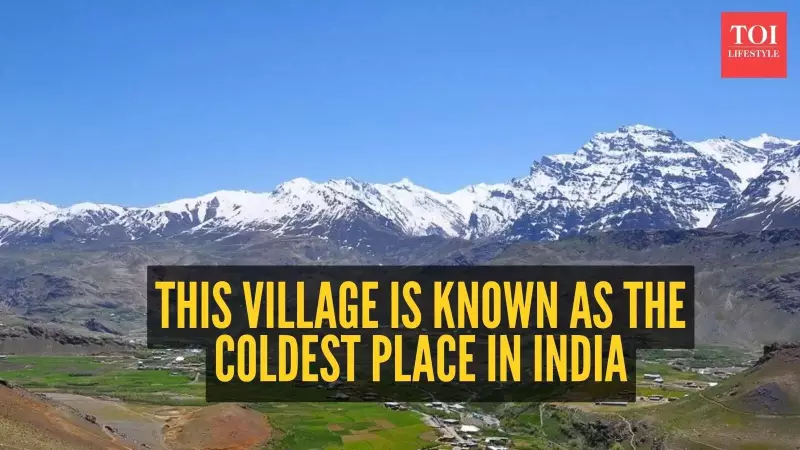
This seasonal curiosity has once again turned the spotlight onto Drass, a remote settlement in the Ladakh region that holds the formidable title of India's coldest inhabited village. The chill here is of an entirely different magnitude. Forget the discomfort felt while sipping hot chai in plains; Drass experiences a deep, penetrating cold where temperatures routinely oscillate between minus 20 and minus 25 degrees Celsius during winter.
However, the mercury often plunges even further. It is common for winter readings to sink to around minus 40 degrees Celsius. The village entered the record books in 1995 when it reportedly witnessed an almost unimaginable low of minus 60 degrees Celsius—a temperature colder than most household deep freezers.

A Surreal Daily Life in Extreme Cold
What captures the public imagination each winter is not just the staggering numbers but the surreal visuals of daily existence. Social media feeds are flooded with videos that seem almost otherworldly: water freezing mid-pour from a jug, wet laundry turning board-stiff within minutes, and snow instantly crystallizing on hair and beards.
Travel influencer Kanishk Gupta recently shared clips from Drass, leaving viewers awestruck by the beautiful yet brutal landscape. The content serves as a stark reminder of the environment's unforgiving nature, where a simple misstep like stepping outside with damp clothes can have serious consequences.
Yet, Drass is far from deserted. Against all odds, approximately 22,000 resilient people, largely from the Baltic and Dardic communities, call this extreme environment home year-round. Life is meticulously adapted: homes are specially constructed to withstand months of deep freeze, and daily routines are entirely shaped around battling the cold, showcasing a way of life that seems impossible to the rest of the nation.
Visiting the Icy Frontier
The intrigue around Drass is also fueled by its challenging accessibility. While connected via National Highway 1, the route is frequently shut during peak winter due to heavy snowfall, adding to its isolated mystique. Travel here is not about comfort but about witnessing an extreme environment firsthand.
For those daring to visit, the journey is an adventure. Most travellers first fly into either Srinagar (SXR) or Leh. From Srinagar, Drass is a five to six-hour drive via Kargil. The route from Leh is longer, traversing stark, dramatic landscapes. Given limited public transport, especially in winter, hiring a taxi is the safest option. The nearest major railway station is Jammu Tawi, but from there, it's a long road journey. Careful timing and vigilant monitoring of weather updates are crucial, as the highway closures are unpredictable.
Interestingly, Drass remains cool even during India's scorching summers, with temperatures rarely exceeding 25 degrees Celsius. Beyond the weather, the area is steeped in history, located near the Drass War Memorial and key sites from the 1999 Kargil War, adding a layer of solemn significance to its geographical fame.
So, as urban India debates seasonal temperature dips, Drass stands as a silent, frozen testament to real extreme cold. It represents not just a weather phenomenon, but a unique, resilient, and fascinating way of life, perpetually etched in ice.