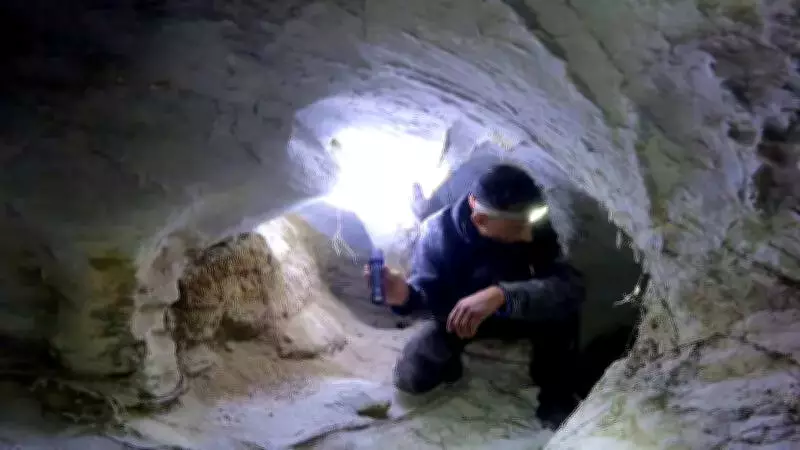
Mysterious Cave System Uncovered in Uttarakhand's Himalayan Region
In a significant discovery for both archaeology and tourism, a previously undocumented cave system has been identified along the banks of the Jakula river near Kviti village in Uttarakhand's Pithoragarh district. Located approximately 80 kilometers from Pithoragarh town, this natural formation has remained hidden from official records until now, prompting immediate interest from state authorities.
From Local Folklore to Tangible Discovery
The cave was located by members of the Kafal Hill Foundation, a local non-governmental organization dedicated to documenting caves and historically significant sites across the region. Their discovery validates long-standing local folklore that spoke of a mysterious cave hidden along the riverbank, traditionally believed to lead to a waterfall and a lake with exceptionally clear water.
Tarun Mahar, coordinator of the foundation, provided detailed insights about the exploration. "A team from our NGO visited the site last week to investigate the area between Kviti and Kakadshila villages," Mahar explained. "When we entered the main cave, we discovered several smaller caves branching out inside it, creating what can only be described as a labyrinth-like structure."

Architectural and Natural Features of the Cave System
The exploration revealed remarkable dimensions and features:
- The main cave extends approximately 100 to 150 meters in length
- It has a radius of about six to eight feet
- Multiple smaller caves branch from the main passage
- Additional smaller caves have been identified in the surrounding area
Perhaps most strikingly, the cave opens into a small waterfall at its far end. "The waterfall emerges from rocky formations and contains sulphur, likely because the water flows over sulphur-rich rocks," Mahar noted. This waterfall, estimated to be around 10 feet high, flows directly into the Jakula river. At the confluence point where the waterfall meets the river, a small lake with crystal-clear water has naturally formed, enhancing the site's visual appeal and ecological significance.
Official Response and Future Exploration Plans
Following the NGO's documentation, the foundation formally notified the Uttarakhand tourism department about their discovery. Kirti Arya, district tourist officer for Pithoragarh, confirmed the development and outlined next steps.
"Officials from the tourism department will conduct a field visit in coordination with experts from the zonal archaeology department," Arya stated. "Our joint survey aims to assess the cave's historical, geological, and tourism potential comprehensively. This evaluation will help determine the cave's significance and whether it can be developed responsibly as a sustainable tourist attraction."
The Kafal Hill Foundation is now in the process of assembling a larger, more specialized research team to conduct further exploration and detailed documentation of the entire cave system. This discovery not only adds to Uttarakhand's rich natural heritage but also opens possibilities for responsible ecotourism development in the region.