NEW DELHI: In a landmark development for global democracy, more than 40 election management bodies (EMBs) from across the world came together on Friday to unanimously adopt the historic 'Delhi Declaration 2026'. This significant resolution commits these international electoral authorities to collaborative work on five foundational pillars aimed at strengthening democratic processes worldwide.
A Framework for Electoral Excellence
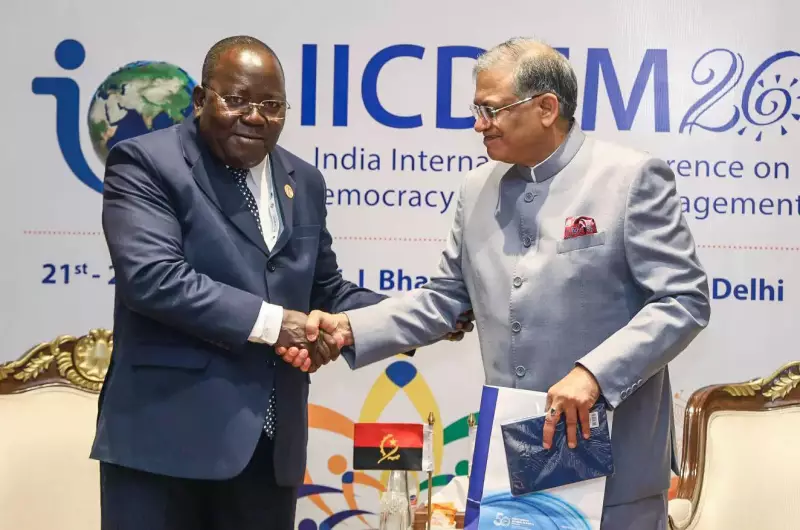
The Delhi Declaration was formally adopted during the valedictory session of the three-day India International Conference on Democracy and Election Management (IICDEM 2026), held in the national capital. This gathering marked a pivotal moment in international electoral cooperation, bringing together experts and officials from diverse democratic systems.
Five Pillars of Democratic Strengthening
Chief Election Commissioner Gyanesh Kumar, in his comprehensive valedictory address, outlined the declaration's core components: "We resolve to operationalize these five pillars through cooperation, innovation, and measurable actions, and to periodically review the progress before we plan to meet once a year... the next dates being December 3, 4 and 5, 2026, at the India International Institute for Democracy and Election Management (IIDEM) campus here."

The five pillars represent a comprehensive approach to electoral management:
- Pure Electoral Rolls: Kumar emphasized that accurate electoral lists containing all legally eligible voters form the bedrock of any democracy. "The election management bodies should strive to provide photo identity cards to all electors," he stressed, highlighting this as a fundamental requirement for electoral integrity.
- Conduct of Free, Fair and Transparent Elections: The EMBs have endorsed participative and inclusive electoral processes that actively involve all stakeholders, ensuring elections reflect the true will of the people.
- Research and Publications: Under this pillar, the participating bodies agreed to produce an encyclopedia of world democracies and compile comprehensive reports on seven key themes led by the International Institute for Democracy and Electoral Assistance (International IDEA), along with documentation from the 36 thematic sessions conducted during IICDEM 2026.
- Technology Integration and Misinformation Combat: The declaration commits to harnessing technological advancements for electoral functions while simultaneously safeguarding election integrity and countering the growing threat of misinformation. "India is willing to share its experience regarding ECINET, for co-development of a similar digital platform for any other EMB in accordance with its laws and in its language," stated the Chief Election Commissioner.
- Training and Capacity Building: Kumar announced India's willingness to share its extensive electoral experience across all sectors through training programs and the exchange of transparent practices, aiming to build global electoral capacity.
Global Impact and Future Directions
The Chief Election Commissioner noted that IICDEM 2026 has sparked crucial conversations about establishing model international electoral standards. Referring to the over 40 bilateral meetings conducted during the conference, he observed that these interactions have significantly expanded mutual cooperation and enhanced understanding of collective priorities and perspectives among global electoral bodies.
Voices from the Election Commission
Election Commissioner Sukhbir Singh Sandhu, speaking at the closing session, remarked: "The openness, mutual respect, and willingness to learn from one another reflect the maturity and professionalism of the global electoral community." His words captured the collaborative spirit that defined the three-day conference.
Election Commissioner Vivek Joshi highlighted the technological dimension, stating: "The launch of ECINET has underlined the importance accorded by the Election Commission of India to technology, including its measured adoption that elicits trust." This emphasis on balanced technological integration emerged as a recurring theme throughout the discussions.

The adoption of the Delhi Declaration 2026 represents a significant step toward global electoral standardization and cooperation. By addressing fundamental aspects of electoral management—from voter registration to technological integration—this agreement sets a new benchmark for international collaboration in strengthening democratic institutions and processes worldwide.