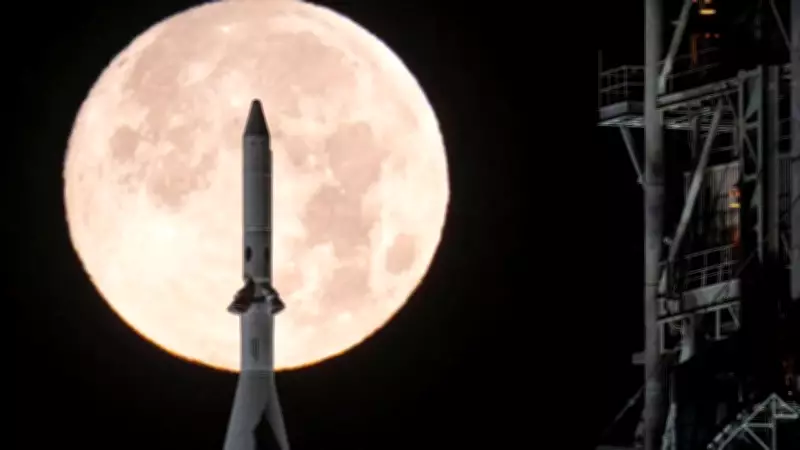
NASA's Artemis II Moon Mission Faces Potential Launch Delay Following Critical Helium Flow Issue
NASA's highly anticipated Artemis II mission, which recently completed a successful wet dress rehearsal and was targeting an early March launch window, may now encounter significant delays. This development comes after engineers detected a critical interruption in the flow of helium into the Space Launch System (SLS) rocket's interim cryogenic propulsion stage.
Critical System Issue Emerges Overnight
The space agency shared concerning observations on Saturday, revealing the helium flow problem in a system that is absolutely essential for launch operations. This announcement followed closely on the heels of NASA's previous declaration that the ambitious moon mission had successfully completed its wet dress rehearsal.
NASA is currently evaluating whether this technical issue will necessitate rolling the massive rocket and its accompanying Orion spacecraft back to the Vehicle Assembly Building (VAB) at Kennedy Space Center in Florida. This potential rollback represents a significant logistical challenge that could substantially impact the mission timeline.

Official Statement from NASA Leadership
In a post on social media platform X, NASA Administrator Jared Isaacman provided official confirmation of the situation. He stated, "After overnight data showed an interruption in helium flow in the SLS interim cryogenic propulsion stage, teams are troubleshooting and preparing for a likely rollback of Artemis II to the VAB at NASA Kennedy. This will almost assuredly impact the March launch window. NASA will continue to provide updates as they become available."
Timing Creates Additional Complications
The timing of this technical setback is particularly unfortunate, as it occurred just one day after the four astronauts assigned to the historic mission entered quarantine in Houston. This quarantine period was specifically timed in preparation for the early March launch, highlighting how this helium flow issue disrupts carefully coordinated preparations.
The rocket had recently undergone a comprehensive wet dress rehearsal that simulated launch day operations with remarkable precision. During this critical test, the vehicle was fueled up to T-29 seconds, with no evidence of leaks reported at that time. This successful test followed a previous hydrogen leak incident that had forced NASA to repeat the prelaunch test earlier in the month, as reported by USA Today.
NASA's Response and Contingency Planning
According to NASA's official statement, "Teams are actively reviewing data, and taking steps to enable rollback positions for NASA to address the issue as soon as possible while engineers determine the best path forward." This indicates a methodical, data-driven approach to resolving the complex technical challenge.
To maintain maximum troubleshooting flexibility at both Pad 39B and the VAB, NASA teams are preparing to remove the pad access platforms that were installed on February 20. However, this removal operation faces its own constraints, as the platforms cannot be taken down during periods of high winds, which are forecast for February 22 near Cape Canaveral.
The space agency has emphasized that while rollback preparations are actively underway, engineers continue to assess the optimal course of action to resolve the helium flow interruption and safeguard the Artemis II launch schedule. This dual-track approach demonstrates NASA's commitment to both thorough problem-solving and mission timeline preservation.
Background on Artemis II Mission Significance
The Artemis II mission represents a crucial milestone in NASA's ambitious program to return humans to the Moon and eventually establish a sustainable presence there. This crewed mission will test critical systems and operations that are essential for future lunar exploration, making any delay particularly significant for the broader Artemis program timeline.
NASA's methodical approach to addressing technical challenges reflects the agency's commitment to mission safety and success, even when facing unexpected obstacles that could impact carefully planned launch windows.