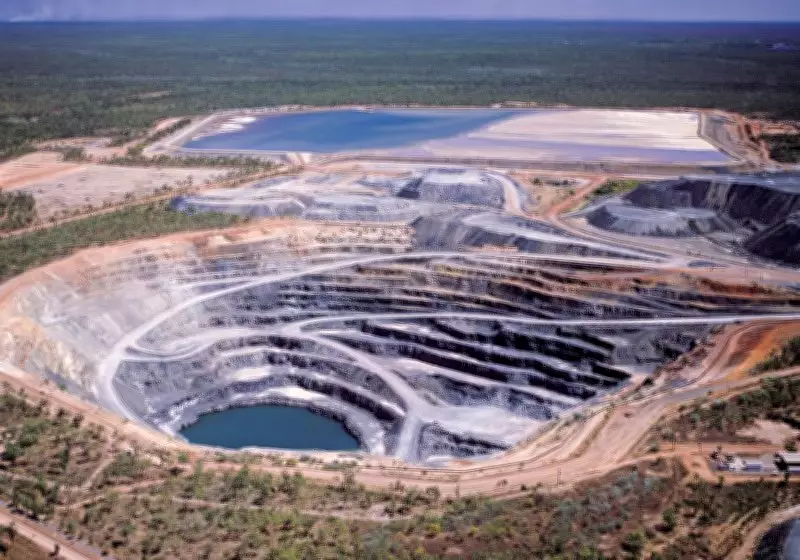
Australia has finalised the administrative arrangement under the 2014 India-Australia Civil Nuclear Agreement, clearing the last hurdle for uranium exports to India's civilian nuclear programme. The breakthrough came after nearly two years of intensive discussions on reporting and safeguard requirements, marking one of the most significant outcomes of Prime Minister Narendra Modi's visit to Australia.
Why Australia Waited Over a Decade
For decades, Australia refused to export uranium to India because New Delhi was not a signatory to the Nuclear Non-Proliferation Treaty (NPT). Under its policy, Canberra supplied uranium only to countries accepting comprehensive international safeguards. This stance began to shift after the Nuclear Suppliers Group granted India a waiver in 2008, enabling civil nuclear commerce despite its non-NPT status. Australia formally lifted its ban in 2011, and the two countries signed the Civil Nuclear Cooperation Agreement in 2014.
However, the agreement could not be implemented until both sides concluded an administrative arrangement governing accounting, reporting, and safeguard requirements for nuclear material transfers. Foreign Secretary Vikram Misri explained during a special media briefing in Melbourne that the arrangement had remained pending because differences over reporting-related issues needed resolution. He stated, "When it comes to uranium supply, there was the requirement for an administrative arrangement. It had been concluded as well, but it had not been possible to operationalise it because there wasn’t agreement fully on reporting-related issues." Nearly two years of discussions allowed both countries to reach "mutual satisfaction" on the outstanding issues, enabling the arrangement to be operationalised.

Impact on India's Clean Energy Transition
The agreement is expected to strengthen India's clean energy transition by providing access to Australian uranium for its expanding civilian nuclear power programme. Notably, Australia holds the world’s largest known recoverable uranium resources, accounting for roughly one-third of global uranium reserves. Despite this, it is only the fourth-largest uranium producer globally because mining is concentrated in a few approved projects and exports are tightly regulated. Unlike many uranium-rich countries, Australia does not operate commercial nuclear power plants; almost all its uranium production is exported under strict bilateral nuclear cooperation agreements and international safeguards to ensure peaceful use.
18 Outcomes from the India-Australia Annual Summit
Beyond the nuclear breakthrough, the third India-Australia Annual Summit produced 18 outcomes spanning defence, maritime security, critical technologies, critical minerals, education, science, and culture. A major strategic outcome was the signing of the joint declaration on Defence and Security Cooperation (JDDSC), which renews the 2009 framework and broadens cooperation in military interoperability, defence industrial collaboration, cyber security, counter-terrorism, and humanitarian assistance and disaster relief. The two sides also adopted a Maritime Security Collaboration Roadmap to strengthen information sharing, capability development, and operational coordination in the Indo-Pacific. The Indian Coast Guard and Australia’s Maritime Border Command signed a memorandum of understanding on maritime law enforcement, maritime domain awareness, and border protection, while Australia invited India to deploy a military instructor at the Australian Defence College during 2028-29.
Critical Technologies and Minerals
Emerging technologies formed another major pillar. India and Australia launched the Australia-India Partnership for Cyber, Critical Technologies and Supply Chains (PACTS) to deepen cooperation in cyber security, digital resilience, emerging technologies, and secure supply chains. Critical minerals, essential for electric vehicles, batteries, and clean energy technologies, also received a major push. The Geological Survey of India and GeoScience Australia signed an agreement to cooperate on advanced exploration techniques, technological modernisation, and capacity building.

Education and Skills Development
Education and skills development featured prominently. Australia’s Flinders University moved a step closer to establishing a campus in Bengaluru, while Victoria University received approval to set up a campus in Gurugram. The two countries also agreed to establish a Centre of Excellence in Mining Equipment, Technology and Services at the National Skill Training Institute in Bhubaneswar in partnership with Technical and Further Education (TAFE), Western Australia, to promote specialised training in mining operations and mineral processing. Green energy cooperation was further strengthened with the operationalisation of the Rooftop Solar Training Academy at Pandit Deendayal Energy University, Gandhinagar, which aims to train 2,000 women and youth as solar technicians under the PM Surya Ghar Yojana.
Scientific Collaboration and Cultural Returns
Scientific collaboration expanded through agreements involving the Council of Scientific and Industrial Research (CSIR), the University of Melbourne, and IP Australia, while the two countries also advanced cooperation under the Australia-Canada-India Technology and Innovation (ACITI) Partnership. The summit also carried a cultural dimension, with Australia returning three Indian antiquities: the sacred bull Nandi, an 11th-century bronze Trident with auspicious Kali (Bhadrakali), and a 12th-century basalt sculpture of the six-headed Skanda (Karttikeya). Taken together, the outcomes signal that India-Australia ties have evolved well beyond trade and education into a broad-based strategic partnership encompassing defence, clean energy, critical technologies, resilient supply chains, and the wider Indo-Pacific security architecture.