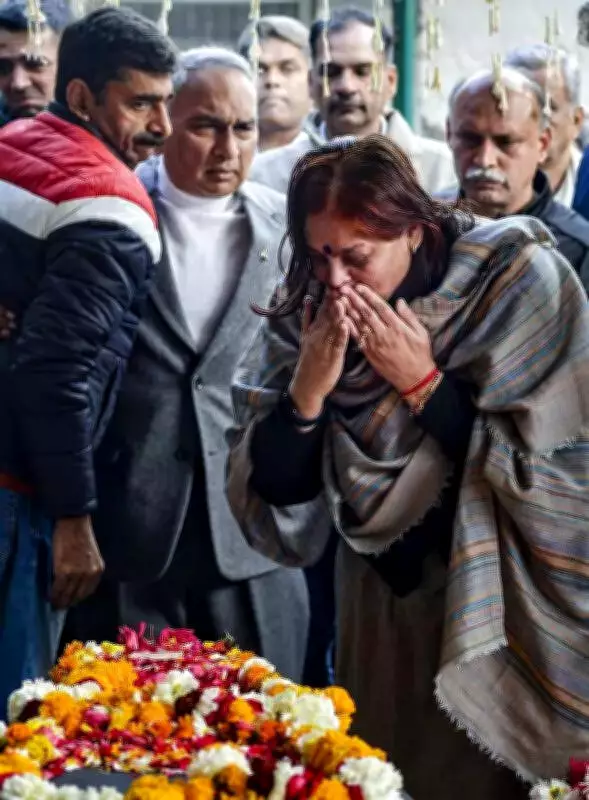
Baramati Airfield's Navigation Deficiencies Eyed in Fatal Learjet Crash That Killed Ajit Pawar
New Delhi: The tragic crash of a Learjet 45 aircraft in Baramati on Wednesday, which claimed the lives of all five individuals on board including Maharashtra deputy chief minister Ajit Pawar, is now under intense investigation, with preliminary findings pointing to the lack of navigational aids at the VVIP Baramati airfield as a potentially critical factor. This incident has sent shockwaves through the political and aviation communities, raising urgent questions about safety protocols at smaller, uncontrolled airstrips across the country.
Multiple Issues Emerge in Probe of VSR Venture Pvt Ltd's Aircraft
Sources close to the investigation have revealed that apart from the navigational shortcomings, a series of other issues have surfaced that will require thorough examination in the crash involving the Delhi-based charter operator VSR Venture Pvt Ltd. The recovery of the aircraft's black box is a significant development, as it may provide crucial data to piece together the final moments before the disaster.
The aviation ministry issued a statement on Thursday confirming that a team of three officers from the Aircraft Accident Investigation Bureau (AAIB) in Delhi, along with another team of three officers from the Directorate General of Civil Aviation (DGCA) Mumbai regional office, reached the crash site on January 28. The director general of AAIB also arrived at the site the same day, with the ministry emphasizing that "the investigation is progressing expeditiously."

Pilots' Distress and Airfield Limitations Under Spotlight
According to agency reports, an official disclosed that two cockpit crew members were heard exclaiming "oh s***" moments before the accident, indicating a sudden realization of impending danger. Aviation industry insiders have highlighted that Baramati is an uncontrolled airfield where only visual flight rules (VFR) landings are permitted. This requires pilots to maintain constant visual contact with the ground and obstacles, while adhering to specific weather minimums, including a visibility of 5 km.
An experienced pilot, analyzing the crash, noted: "The sharp turn that the aircraft took suggests the pilots were trying very hard in their second attempt to land to locate the airfield. The aircraft banked sharply and could not stage upset recovery." Other senior pilots have echoed concerns, stressing that basic minimum navigation aids need to be provided at such airstrips, along with adequate runway lighting systems, to prevent similar tragedies.
Maintenance Practices and Pilot History Under Review
Further complicating the investigation, sources have pointed out that VSR Venture Pvt Ltd carries out its own heavy maintenance of aircraft. A source familiar with aviation maintenance standards commented: "Aircraft are expensive assets that operators will want to sweat to the maximum possible. Operators doing basic routine maintenance on their own is alright, but heavy maintenance must be done at maintenance repair overhauls to ensure a quality check on the work done." This raises potential questions about the maintenance quality and oversight for the ill-fated Learjet.
The captain of the flight, Sumit Kapur, was an experienced pilot with over 15,000 flying hours to his name. However, it has emerged that he had failed the breath analyser test twice during his extensive career. Some airline employees who knew Kapur for many years clarified: "It is being pointed out that he had failed the breath analyser test twice in his very long career, but that may not have anything to do with the accident. So many pilots across airlines have failed BA test twice and are flying. Pilots lose their licence when they fail this test thrice." This aspect is likely to be scrutinized as part of the broader investigation into human factors and pilot fitness.

As the probe continues, the aviation community is calling for a reevaluation of safety measures at uncontrolled airfields, emphasizing the need for enhanced navigational infrastructure to prevent future accidents. The loss of Ajit Pawar, a prominent political figure, has underscored the urgency of these safety upgrades, with stakeholders awaiting the final investigation report to implement necessary changes.