

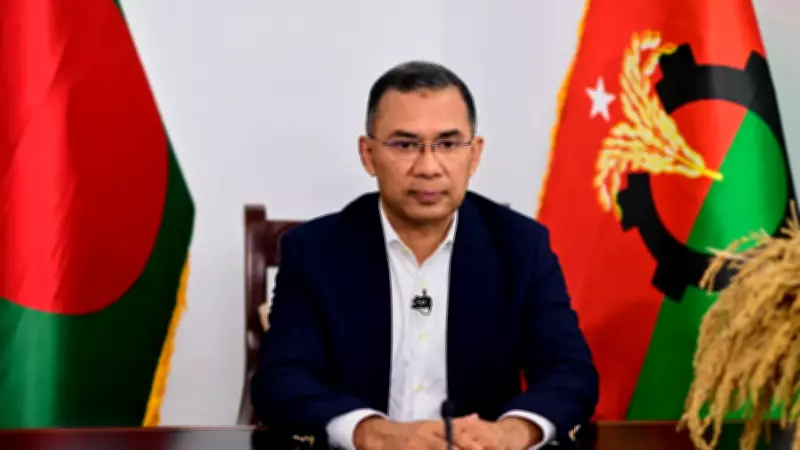
BNP Leader Tarique Rahman Appeals for National Unity Following Historic Election Triumph
In his first public address after securing a decisive parliamentary majority, Bangladesh Nationalist Party (BNP) chief Tarique Rahman passionately called for national unity on Saturday. The newly elected prime minister-designate dedicated the electoral victory to citizens who he stated had "sacrificed for democracy" and urged political adversaries to set aside differences for the country's greater good.
A Mandate for Democratic Aspirations
Rahman began his landmark speech by expressing gratitude to supporters, characterizing the electoral mandate as a triumph for democratic yearnings. "Freedom loving pro-democracy people of the country have once again brought victory to the Bangladesh Nationalist Party," he declared emphatically. "This victory belongs to Bangladesh, belongs to democracy, this victory belongs to people who aspired to and have sacrificed for democracy."
The BNP-led alliance achieved a commanding victory in Thursday's parliamentary elections, securing 212 seats according to official Election Commission results. This electoral contest marked the first national vote since the turbulent 2024 uprising that resulted in former prime minister Sheikh Hasina's removal from power. Notably, Hasina's Bangladesh Awami League was prohibited from participating in these historic polls.

Emphasizing Unity Amid Political Divisions
Addressing the nation from his position as incoming prime minister, Rahman stressed the imperative of national cohesion despite political disagreements. "Our paths and opinions may differ, but in the interest of the country, we must remain united," he asserted during his inaugural post-election speech. The BNP leader elaborated further, stating, "I firmly believe that national unity is a collective strength, while division is a weakness."
Rahman acknowledged the substantial challenges awaiting his administration, particularly highlighting economic vulnerabilities. "We have paved the way for the establishment of democracy in the country," he remarked. "We are about to begin our journey in a situation marked by a fragile economy left behind by an authoritarian regime, weakening constitutional and structural institutions and destroying law and order."
Historic Political Comeback and Opposition Response
This electoral outcome represents a remarkable political resurgence for the 60-year-old leader, who returned to Bangladesh in December following seventeen years of exile in Britain. Rahman is the son of former president Ziaur Rahman, who was assassinated in 1981, and former three-term prime minister Khaleda Zia, who remained a pivotal political figure for decades.
Meanwhile, Jamaat-e-Islami chief Shafiqur Rahman, whose alliance secured 77 parliamentary seats, initially raised concerns about "inconsistencies and fabrications" in the voting process before formally conceding defeat. He committed his party to functioning as "a vigilant, principled, and peaceful opposition" in the new political landscape.
The BNP's overwhelming victory, achieving more than a two-thirds parliamentary majority, signals a profound political transformation in Bangladesh following months of civil unrest and the dramatic events of 2024 that reshaped the nation's governance structure.






