

BRICS Bloc Faces Uphill Battle in Forging Consensus on West Asia Crisis
The BRICS bloc, comprising emerging economies, is encountering significant hurdles in reaching a common stance on the escalating West Asia crisis. As tensions flare, three key members—Iran, Saudi Arabia, and the United Arab Emirates (UAE)—find themselves on opposing sides of the conflict, complicating diplomatic efforts.
Divergent Demands from Iran and UAE Hinder Unified Position
Sources reveal that behind-the-scenes negotiations have exposed stark differences among BRICS nations. Iran, a recent addition to the bloc, is pushing for a resolution that condemns what it terms as "unprovoked" attacks by the United States and Israel. In contrast, the UAE insists that any common BRICS position must explicitly mention Iran's retaliatory actions, which targeted sites within the UAE believed to house US interests.
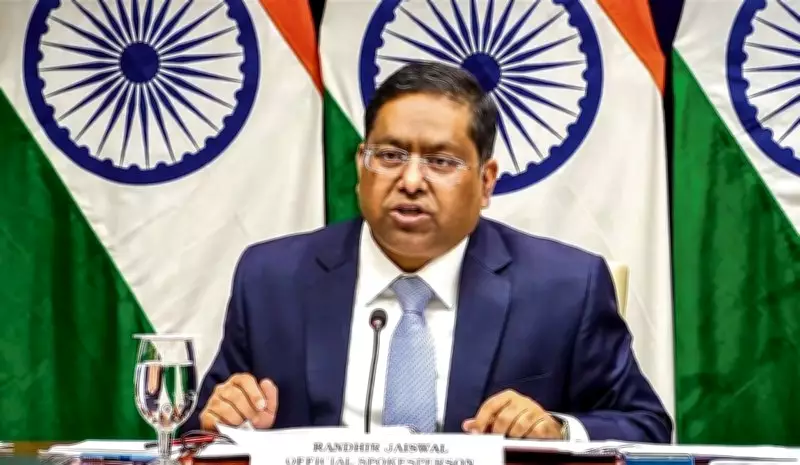
This clash of perspectives was underscored by Ministry of External Affairs spokesperson Randhir Jaiswal during a recent media briefing. Jaiswal noted that the direct involvement of some BRICS members in the West Asia situation has severely impacted the ability to forge a consensus. "This has impacted forging a consensus on a common BRICS position on the ongoing conflict," he stated, highlighting the diplomatic impasse.

India's Role as BRICS Chair in Facilitating Dialogue
As the current chair of BRICS, India has been actively mediating discussions among member states through the "Sherpa channel." A virtual meeting of BRICS Sherpas was held on March 12, aimed at bridging gaps. However, Jaiswal admitted that while the bloc is striving to develop a solution, the "differing positions" have made progress difficult. "But we will continue to engage BRICS member countries so that we can arrive at a position on BRICS," he affirmed, signaling ongoing efforts.
In a related development, External Affairs Minister S. Jaishankar engaged in talks with his Iranian counterpart, Seyed Abbas Araghchi, on Friday. Araghchi urged international and regional organizations, including BRICS, to condemn the "military aggression" against Iran, emphasizing the bloc's importance in global affairs, according to a readout from Tehran.
Broader Geopolitical Alignments Within BRICS
The divisions extend beyond Iran and the UAE. Saudi Arabia, another BRICS member, has also condemned strikes against it, aligning with the UAE's stance. Bilaterally, Russia and China have openly criticized the US-Israel actions, while India has maintained a more measured response, focusing on criticism of attacks affecting Gulf nations.
With Iran, Saudi Arabia, and the UAE all holding conflicting views, achieving a BRICS consensus appears increasingly challenging. The bloc, which now includes Brazil, Russia, India, China, South Africa, Iran, UAE, Saudi Arabia, Ethiopia, Egypt, and Indonesia, is poised for its next annual summit, likely to be hosted by India later this year. This gathering will test the group's ability to navigate complex geopolitical rivalries and present a united front on critical international issues.






