

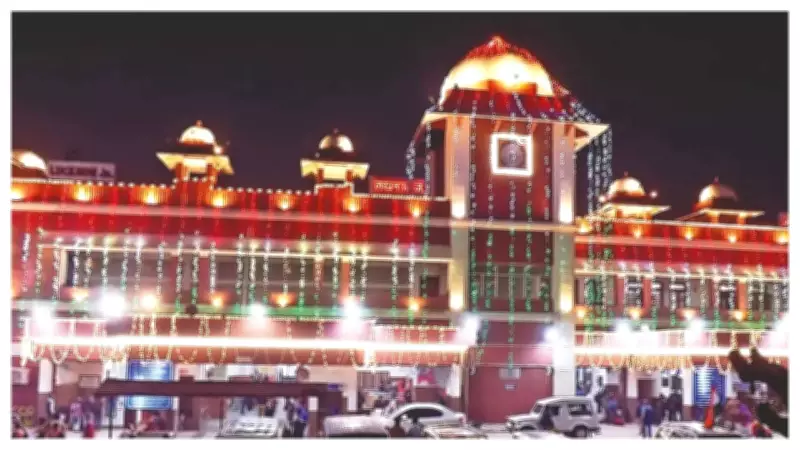
Lucknow's Chhoti Line Railway Station Celebrates a Century of History
In a remarkable milestone, Lucknow Junction Railway Station, affectionately known as the Chhoti Line Station, has reached its 100th anniversary this year. Established in 1926 under the North Eastern Railway (NER) network, this station has been a cornerstone of the city's historic metre-gauge railway routes, earning its nickname "Chhoti Line" from these early connections.
Heritage Exhibition Unveiled to Mark Centenary
To commemorate this centenary, the Lucknow division of NER has launched a comprehensive heritage exhibition within the station premises. This exhibition brings together elements of cinema, railway technology, archival photographs, and interactive installations, offering visitors a vivid recreation of how railway systems operated in past decades.
Cinema and Railway Locations: A Captivating Display
One of the most engaging sections of the exhibition focuses on the intersection of cinema and railway locations. Digital panels installed at the station highlight films and series that have utilized railway sites in the Lucknow division as shooting locations. Divisional Railway Manager (DRM) Gaurav Agarwal of the Lucknow (LJN) division explained the concept behind this installation.

"We have created a dedicated display showcasing films shot at railway locations in our division. For each film, we include details such as the year of shooting, actors involved, specific locations used, and even the exact time frames in the movies where these scenes appear. This allows viewers to identify precise moments when the railway station features in films," Agarwal stated. Notably, Parineeti Chopra's film "Jabaria Jodi" was shot at the Chhoti Line station, adding to its cinematic legacy.
Preserving Operational Tools and Systems
Another section of the exhibition highlights the operational tools and systems historically used by railways. Displays include signalling lamps, couplers, early ticketing systems, token systems, and communication equipment. Agarwal emphasized the educational aspect of these exhibits.
"We aim to show both old and new systems so people can understand the evolution of railway operations. For instance, we display items related to cleaning systems used in stations—often overlooked aspects that are crucial to the railway ecosystem. Different surfaces require specific materials and chemicals for cleaning, and we thought it important to highlight this," he explained.
The exhibition also illustrates the shift from manual to digital processes, such as ticketing, parcel booking, and record-keeping, which have now largely moved to digital platforms. Old documents and tickets issued by the railways are on display, providing a tangible link to the past.
Railway's Canine Unit: Ensuring Passenger Safety
The exhibition sheds light on the role of sniffer dogs used by the railway division for security operations. Agarwal detailed that the Lucknow division maintains a dedicated team of trained sniffer dogs for safety and detection duties.
"These dogs are not just symbolic; they are formally part of our security system, listed on railway rolls and receiving proper care and allowances, similar to other working units in the department," he added.
Protecting Heritage Amid Metro Expansion
Discussions have taken place regarding improving connectivity between Chhoti Line station, Charbagh station, and the metro system. However, Agarwal stressed the importance of preserving the station's historic structure.
"We made it clear that nothing should be demolished or altered in a way that obstructs the view or damages the heritage of the station. Instead, we suggested creating an underground passage for connectivity, as seen in many metro systems, to maintain the historic character while enhancing access," he said.
Opening the Station to Public Initiatives
Looking ahead, Agarwal expressed openness to allowing individuals and organizations to set up activities, stalls, or initiatives within the station premises.
"We are ready to provide space for meaningful setups, whether it's a small stall, cultural activity, craft display, or reading space. The goal is to keep the station lively and interactive," he noted.

Recreating Railway Heritage Through Installations
Many displays in the exhibition recreate historical railway systems. One installation features a manual water-lifting system with a human figure, demonstrating how water was drawn and stored for railway use. Other exhibits explain steam locomotives, metre-gauge trains, and early infrastructure, complemented by archival photographs.
A major attraction is a working miniature railway model that simulates train and track operations, popular among children and families. Additionally, a Hogwarts-style train installation, inspired by the Harry Potter universe, has become a favorite photo spot for visitors.
"It has become one of the most popular photo spots here. People stop there, click pictures, and enjoy the experience," Agarwal remarked.
This centenary celebration not only honors the past but also paves the way for future engagement, ensuring that Lucknow's Chhoti Line Station remains a vibrant part of the city's heritage and community life.





