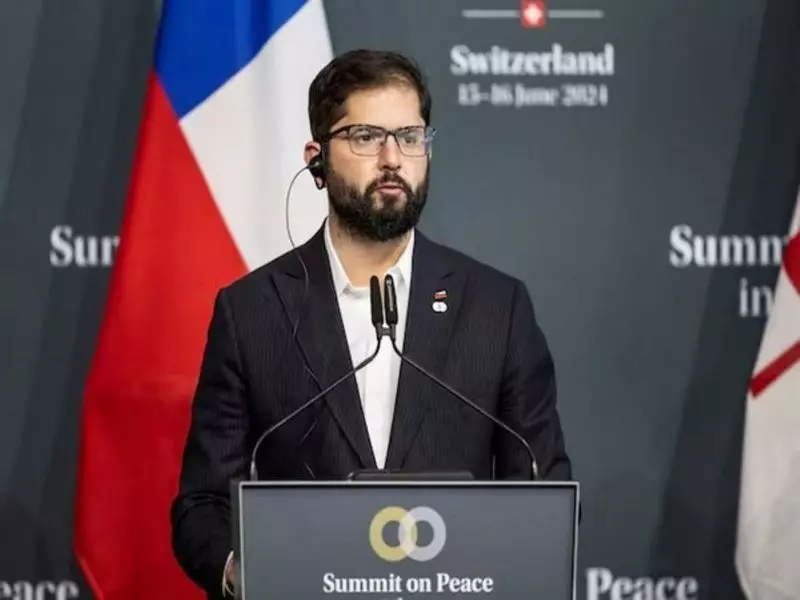
Chilean President Gabriel Boric has issued a strong call for peace and dialogue following recent military actions by the United States in Venezuela. The intervention, confirmed by the US Southern Command, has escalated regional tensions, prompting a diplomatic response from the South American leader who emphasizes resolving conflicts through established international frameworks.
Chile's Firm Stance on Peaceful Conflict Resolution
In a clear and principled statement, President Boric articulated Chile's position on the unfolding situation. He firmly rejected the use of force and military interventions as a means to resolve disputes between nations. Instead, he championed the path of "peaceful resolution through dialogue and multilateralism," underscoring a commitment to the principles of international law and sovereignty.
Boric's appeal is not merely rhetorical but is grounded in a specific call to action. He urged all involved parties to utilize the mechanisms and platforms provided by international organizations. This approach, he argued, is the only legitimate and sustainable way to address and de-escalate conflicts, ensuring stability in the region.

The US Military Action and Regional Repercussions
The catalyst for this diplomatic outcry was the operation carried out by the United States Southern Command (SOUTHCOM). The US military entity released a statement confirming that it had conducted airstrikes within Venezuelan territory. The stated objective of this operation was to disrupt and dismantle what they described as illicit networks operating in the region.
This direct military action on Venezuelan soil represents a significant escalation in the already complex relationship between the US and the government of President Nicolas Maduro. The move has drawn immediate criticism from Venezuela and has put neighboring Latin American nations on high alert, wary of the potential for further instability.
The situation puts a spotlight on the ongoing political and humanitarian crisis in Venezuela and the varied international responses to it. While some nations support pressure on the Maduro administration, others, like Chile under Boric, are cautioning against unilateral actions that could lead to wider conflict.
A Call for Multilateralism in a Divided Region
President Boric's statement serves as a critical reminder of the importance of diplomatic channels. By advocating for multilateral solutions, he is pushing for a collective regional and international response, rather than one driven by a single power. This stance reflects a broader desire in parts of Latin America to assert diplomatic independence and seek solutions that prioritize peace and sovereignty.
The call for dialogue comes at a precarious time. The US airstrikes have undoubtedly raised the stakes, and the response from the Venezuelan government has been one of condemnation. The international community now watches closely to see if this incident will spur renewed diplomatic efforts or lead to a further hardening of positions.
As the leader of a nation with a history of navigating complex international relations, Boric's voice adds significant weight to the discourse. His emphasis on peaceful resolution and institutional conflict resolution sets a clear alternative path forward, one that many hope will be heeded to prevent further escalation in the Americas.