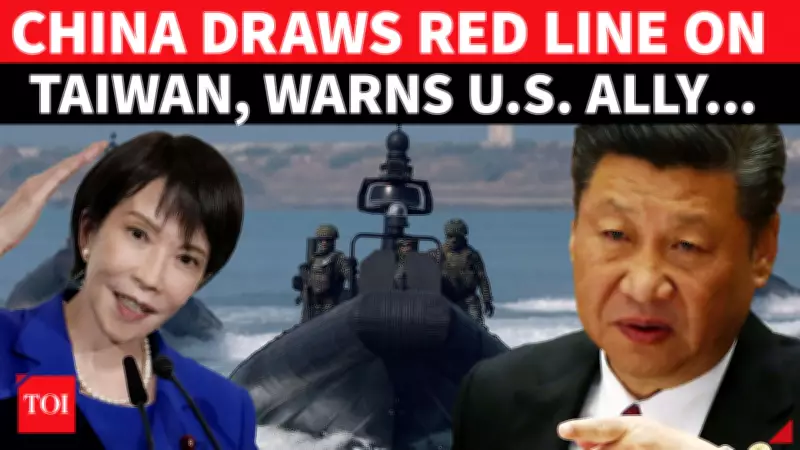
China Issues Sharp Warning to Japan Over Taiwan Remarks at Munich Security Conference
In a dramatic exchange at the Munich Security Conference, Chinese Foreign Minister Wang Yi delivered a forceful rebuke to Japan, directly challenging Tokyo's position on Taiwan. This confrontation underscores escalating geopolitical frictions in the Indo-Pacific region, with potential implications for global stability.
Wang Yi's Stern Message to Tokyo
Wang Yi explicitly warned Japan against undermining China's sovereignty claims over Taiwan, stating in strong terms that any such actions would be met with severe consequences. He emphasized that Taiwan is an inalienable part of Chinese territory, and Beijing will not tolerate external interference in what it considers internal affairs.
The Chinese foreign minister's remarks came in response to comments made by Japanese Prime Minister Sanae Takaichi, who had earlier suggested that a Chinese military attack on Taiwan could threaten Japan's survival and justify collective self-defense measures under international law.

Background of the Rising Tensions
China has consistently viewed Taiwan as a breakaway province that must eventually be reunified with the mainland, by force if necessary. In recent years, Beijing has significantly increased military drills and patrols around the island, showcasing its capability to enforce its claims.
This latest diplomatic clash highlights the deepening rift between China and Japan, two major Asian powers with longstanding historical and territorial disputes. The situation is further complicated by the involvement of the United States, which maintains close ties with both Taiwan and Japan under security agreements.
Broader Regional and Global Implications
The exchange at Munich has fueled concerns about a potential broader crisis in the Indo-Pacific. Key points of tension include:
- Collective Self-Defense: Japan's reference to this principle raises questions about military alliances and responses to regional conflicts.
- U.S. Involvement: With the United States committed to defending Japan and supporting Taiwan, any escalation could draw in American forces.
- Regional Stability: Neighboring countries are closely monitoring the situation, fearing spillover effects on trade and security.
Observers note that such confrontations at international forums like the Munich Security Conference often signal deteriorating diplomatic relations and could precede more aggressive posturing in the region.
Looking Ahead
As China continues to assert its dominance in the Asia-Pacific, interactions like this between Wang Yi and Japanese officials are likely to become more frequent and intense. The international community is urged to engage in dialogue to prevent miscalculations that could lead to conflict.
This incident serves as a stark reminder of the fragile balance of power in the region and the critical need for diplomatic efforts to address sovereignty disputes peacefully.