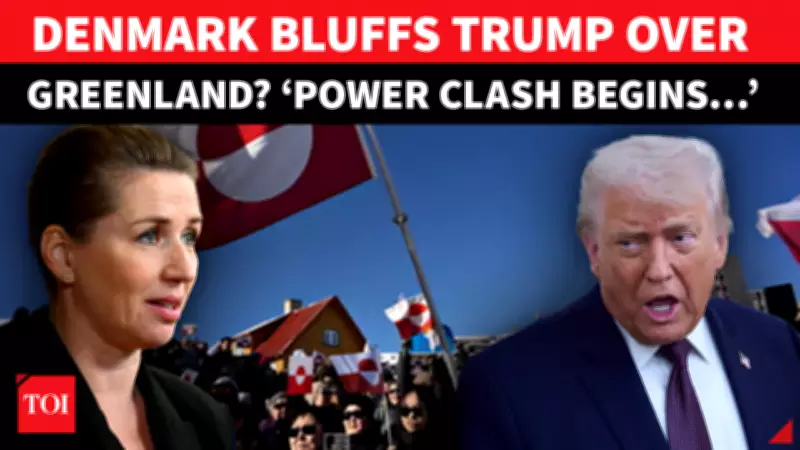
Denmark Sends Junior Diplomats to Engage US Officials Over Greenland Framework Deal
The diplomatic landscape surrounding Greenland has intensified as Denmark has strategically deployed junior diplomats to meet with United States officials, initiating negotiations for a new framework agreement. This move comes in response to mounting pressure from Washington, particularly under President Donald Trump's administration, which has been advocating for an expanded American presence in the Arctic region. The discussions aim to address security cooperation while firmly upholding the territorial integrity of Greenland, a self-governing territory within the Kingdom of Denmark.
Negotiations Focus on Security and Sovereignty Amid Arctic Tensions
High-level talks involving US, Danish, and Greenlandic representatives have centered on enhancing defense and strategic coordination without compromising Greenland's sovereignty. Denmark has unequivocally stated that Greenland is not for sale, emphasizing its commitment to maintaining control over the territory. However, the Danish government has expressed openness to broader collaboration in areas such as military exercises, resource management, and environmental protection. This nuanced approach seeks to balance American interests with Greenlandic autonomy, reflecting the complex geopolitical dynamics at play in the Arctic.
European Powers Rally Behind Denmark and Greenland
As negotiations progress, Danish and Greenlandic leaders are actively seeking support from key European allies, including Germany and France. Diplomatic efforts in Berlin and Paris highlight a concerted push to bolster European backing against potential US encroachment. This strategic outreach underscores the growing importance of Greenland in global politics, driven by its vast natural resources, strategic location for shipping routes, and implications for climate change. European involvement aims to ensure that any agreements align with broader regional security and economic interests, preventing unilateral actions by external powers.

Arctic Geopolitics Reshaped Without Crossing Territorial Red Lines
The ongoing discussions mark a significant diplomatic pivot, reshaping Arctic geopolitics by addressing security concerns without violating territorial boundaries. Greenland's increasing strategic value, fueled by melting ice caps and emerging economic opportunities, has made it a focal point for international attention. By engaging in multilateral talks, Denmark and Greenland are navigating a delicate balance between cooperation and sovereignty, setting a precedent for how smaller nations can assert their interests amid great-power competition. This development highlights the evolving nature of Arctic diplomacy, where dialogue and negotiation are preferred over confrontation.
Implications for Future US-Denmark Relations and Global Stability
The outcome of these negotiations could have far-reaching implications for US-Denmark relations and global stability. A successful framework deal may pave the way for enhanced Arctic collaboration, benefiting all parties involved through shared security measures and economic development. Conversely, failure to reach an agreement could exacerbate tensions, potentially leading to increased militarization in the region. As power brokers across Europe and beyond closely monitor these talks, the diplomatic maneuvers underscore the critical role of Greenland in shaping future international policies and alliances in an increasingly contested Arctic landscape.