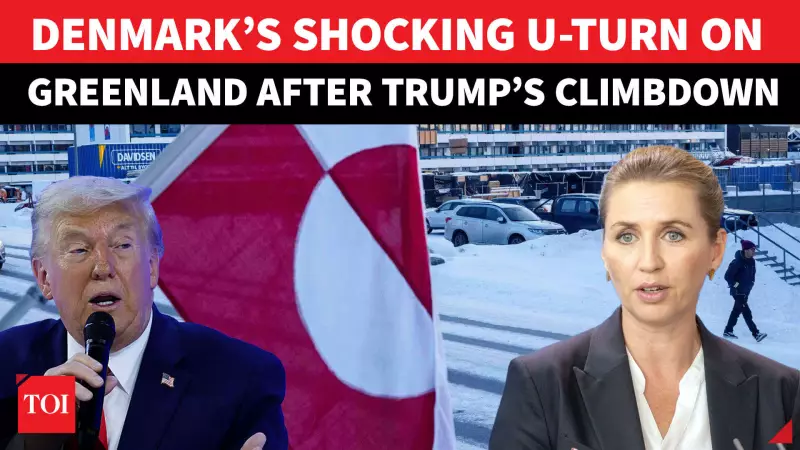
Denmark Revives Greenland Talks with US, Emphasizes NATO's Arctic Role
In a significant diplomatic development, Denmark has announced the resumption of formal discussions with the United States concerning Greenland, following weeks of heightened tensions. This move comes after President Donald Trump stepped back from earlier threats of seizing the strategic island, opting instead for a negotiated approach that involves both Copenhagen and the North Atlantic Treaty Organization (NATO).
From Confrontation to Collaboration: A Shift in Strategy
The decision marks a notable pivot in U.S.-Denmark relations, transitioning from aggressive rhetoric to cooperative dialogue. Danish officials have confirmed that Washington now seeks a solution through diplomacy, rather than unilateral action. This shift was catalyzed by high-level meetings held in Davos and Brussels, where NATO leaders collectively recognized the escalating importance of Arctic security as a core alliance priority.
NATO's Expanding Footprint in the Arctic
Central to the renewed talks is the potential expansion of NATO's military presence around Greenland. Discussions are underway to revisit and possibly enhance long-standing defense agreements that govern U.S. forces stationed on the island. This initiative aims to bolster regional stability and counter growing geopolitical rivalries in the Arctic, a region rich in natural resources and strategic value.

Global Repercussions: Reactions from Russia and China
The strengthened NATO focus on the Arctic has drawn sharp criticism from Russian President Vladimir Putin and Chinese leader Xi Jinping. Both leaders view the alliance's increased involvement as a direct challenge to their interests in the region. Russia, in particular, has long considered the Arctic part of its sphere of influence, while China has been expanding its polar ambitions under the guise of scientific research and economic partnerships.
The move is seen as a strategic win for Western allies, reinforcing NATO's role in safeguarding Arctic territories against potential threats. However, it also risks escalating tensions with Moscow and Beijing, who may perceive this as an encroachment on their strategic domains.
Implications for International Relations
This development underscores the evolving dynamics of global power struggles, with the Arctic emerging as a new frontier for geopolitical competition. By aligning with NATO, Denmark and the U.S. are signaling a commitment to multilateral security frameworks, potentially setting a precedent for how territorial disputes are managed in polar regions.
The outcome of these talks could reshape Arctic governance, influencing everything from military deployments to resource exploitation. As negotiations progress, the world will be watching closely to see how this delicate balance of power unfolds in one of the planet's most remote yet contested areas.