Parliamentary Committee Chairman Accuses UGC of Overlooking Key Anti-Discrimination Measures
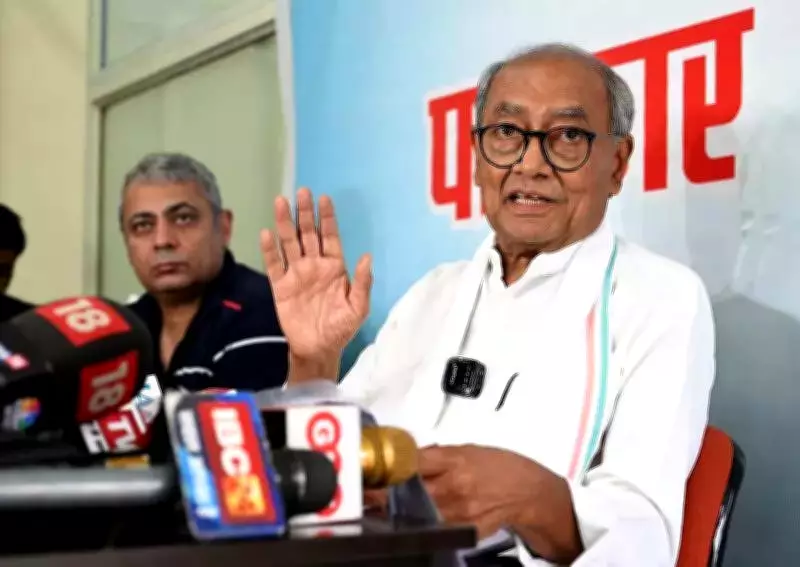
In a significant development from Bhopal, former chief minister and Rajya Sabha MP Digvijaya Singh, who chairs Parliament's Standing Committee on Education, has publicly criticized the University Grants Commission (UGC) for allegedly disregarding crucial recommendations aimed at fortifying new equity guidelines against caste discrimination. Singh expressed his concerns on Thursday, highlighting that the UGC's final regulations, scheduled for implementation in January 2026, have left institutions to handle complaints at their own discretion, potentially weakening protections for marginalized students.
Unanimous Recommendations for Stronger Protections
The parliamentary panel, responding to Supreme Court directives following the tragic suicides of Payal Tadvi and Rohith Vemula, had unanimously urged the UGC to enhance its draft regulations. Key proposals included:
- Explicitly defining caste-based harassment to cover Other Backward Classes (OBCs) under Constitutional Articles 15(4) and 15(5), alongside adding disability as a recognized axis of discrimination.
- Expanding the composition of the 10-member Equity Committee beyond the mandatory one woman, one Scheduled Caste (SC), and one Scheduled Tribe (ST) member to reflect 50% reservations for SCs, STs, and OBCs in both faculty and student bodies.
- Listing specific discriminatory practices, similar to the 2012 rules, to prevent misuse and ensure clarity in identifying violations.
- Mandating annual public disclosure of discrimination cases to promote transparency and accountability.
- Requiring higher education institutions to implement sensitization programs, mental health support, and legal aid services for affected students.
Singh emphasized that these measures were designed to create a more robust framework, yet the UGC's final version rejected the push to clearly identify discrimination instances and boost representation for reserved categories.

Defending the Committee's Stance Amid Controversy
In a detailed defense posted on social media platform X, Digvijaya Singh addressed protests from General category students, who have raised concerns about the removal of provisions penalizing false cases of discrimination. He clarified, "The protests against the Regulations are by General category students and largely concentrated on two issues - The removal of provisions that existed in the draft Regulations which penalised students for lodging false cases of discrimination. General category students believe that this may result in the filing of fake cases of caste bias against General category students and faculty. However, the decision to remove this provision was made by the UGC and had nothing to do with the Parliamentary Committee's report."
He further argued that the UGC Regulations currently list only SC, ST, and OBC as categories eligible to face caste discrimination, leading to claims from General category students that this exclusion implies they are the perpetrators. Singh stated, "General category students claim that by excluding the General category, the UGC Regulations implicitly argue that it is the General category students who commit caste discrimination. The decision to not include General category students was also made by the UGC. The Committee's report made no comment on the inclusion of General category in the list of communities that can face caste discrimination."
Call for Clarity and Resolution
Singh asserted that defining discriminatory acts would not only strengthen protections for vulnerable students but also reduce the potential for misuse of the regulations. He remarked, "In fact, clarifying what acts and instances count as discrimination would not just strengthen protections for students, but also dilute the possibility of the regulations being misused as an instrument to lodge fake cases. This is what the Committee had asked the UGC to do but the UGC chose to ignore. It is now entirely up to the UGC and the Ministry of Education to bring resolution to this issue."

This controversy underscores ongoing tensions in India's higher education sector regarding equity and inclusion, with Singh's accusations highlighting a gap between parliamentary oversight and regulatory implementation. The outcome could significantly impact how caste discrimination is addressed in universities across the country.