

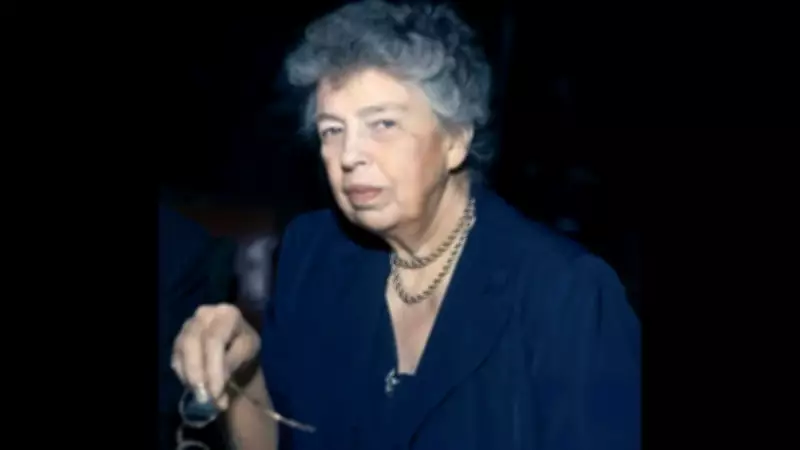
Eleanor Roosevelt's Timeless Insight: Democracy's True Measure Is Serving the People
Democracy is widely celebrated as a system where citizens choose their leaders and shape their nation's destiny. Across the globe, people embrace it for its promises of fairness, representation, and active participation. However, the real strength of democracy extends far beyond mere voting and government formation. Its ultimate worth lies in how effectively it enhances the lives of ordinary individuals. A profound statement from Eleanor Roosevelt, renowned for her public service and human rights advocacy, crystallizes this concept. Her words serve as a reminder that democracy must function for the benefit of the majority. If it fails in this mission, its very essence may be compromised. This message retains immense relevance in contemporary societies as they scrutinize whether their democratic frameworks truly uplift their citizens.
Quote of the Day: Eleanor Roosevelt's Defining Words on Democracy
"I believe that democracy is based on the ability to make democracy serve the good of the majority of the people. If it can’t do that, then it should not survive."
Decoding Eleanor Roosevelt's Quote and Its Core Principle
Eleanor Roosevelt articulated, "I believe that democracy is based on the ability to make democracy serve the good of the majority of the people. If it can’t do that, then it should not survive." This declaration offers a lucid vision of democracy's purpose. It emphasizes that the system's existence alone is insufficient; what truly counts is its practical impact. Democracy must actively advance the welfare of people, particularly the majority, or it forfeits its raison d'être.

Simplifying the Meaning of Eleanor Roosevelt's Quote
The quote underscores that democracy should not remain a theoretical construct. It must operate in ways that tangibly improve daily existence. Citizens expect a democratic system to deliver enhanced living standards, equitable laws, and equal opportunities. When these aspirations go unfulfilled, the system might persist nominally, but it ceases to fulfill its intended role.
Eleanor Roosevelt's insight also reveals that democracy is not a guaranteed outcome. It must continually demonstrate its utility. Public confidence in the system hinges on how well it functions for them. Should that trust erode, the system itself faces existential doubts.
The Critical Importance of Serving the Majority
The concept of serving the majority lies at democracy's heart. In such systems, decisions typically reflect the will of most people. Yet, this transcends mere vote-counting. It encompasses addressing fundamental needs like security, healthcare, education, and employment.
When these necessities are met, people are more inclined to trust the system. Conversely, neglect breeds discontent. A robust democracy safeguards minority rights while simultaneously catering to majority needs. This equilibrium is essential for long-term stability.
Democracy as a System of Outcomes, Not Just Procedures
Eleanor Roosevelt's quote shifts focus from structure to results. Democracy is more than elections, constitutions, or institutions. It concerns whether these mechanisms genuinely operate and effect change in people's lives.
Citizens desire stability, economic prosperity, and justice. They anticipate their voices influencing decisions. Democracy gains significance when these expectations are realized. When they are not, people question its efficacy.
This perspective highlights democracy as a dynamic, functioning entity. It must adapt to emerging needs and persistently address public concerns.
Leadership and Accountability in Democratic Governance
Leadership plays a pivotal role in democracy's effectiveness. Elected representatives bear responsibility for translating public desires into concrete policies. Their actions directly impact whether the system benefits the populace.
Eleanor Roosevelt, deeply engaged in public life, championed social justice and human rights beyond her role as First Lady. She contributed significantly to drafting the Universal Declaration of Human Rights, reflecting her commitment to equality and universal respect.

Her legacy illustrates that democratic leadership involves not merely wielding power but exercising it judiciously.
Consequences When Democracy Fails to Serve the People
The quote raises a crucial issue: what occurs when democracy ceases to benefit most people? In such scenarios, public faith in governance may dwindle. Individuals might feel alienated from the system, potentially reducing participation and fostering resentment.
Over time, this can precipitate instability and heightened social tensions. These outcomes demonstrate that democracy cannot rely solely on its framework. It must remain adaptable and capable of tackling real-world challenges.
Eleanor Roosevelt's words caution that democracy's survival depends on its performance.
Why This Quote Remains Pertinent in Modern Times
The notion that democracy should serve people continues to resonate strongly. Citizens worldwide frequently evaluate their systems based on criteria like equity, public services, and economic prospects.
This idea intertwines with discussions on accountability, transparency, and governance. People demand systems that not only exist but function efficiently. Hence, Eleanor Roosevelt's quote retains its contemporary relevance.
Additional Notable Quotes by Eleanor Roosevelt
- "The very weaknesses of human nature are what make it so important that we keep a constantly watchful eye on our government, and that in turn our government watches us with equal care."
- "When a woman fails, it is much more serious than when a man fails, because the average person attributes that failure not to the individual, but to the fact that she is a woman."
- "Tolerance ought only to be a preliminary step which allows us to get to know other people, and which prevents us from setting up bars, just because they may be of a different race or religion. The real value of any relationship is the fact that we learn to like people in spite of our differences."
- "In political life I have never felt that anything really mattered but the satisfaction of knowing that you stood for the things in which you believed, and had done the best you could."
- "Our obligation to the world is, primarily, an obligation to our own future."
A Broader View on Democracy's Practical Application
Eleanor Roosevelt's exhortation encourages a pragmatic approach to democracy. It is not solely about ideals or definitions but also about everyday impacts. A functional democracy heeds its people, addresses their needs, and ensures equitable decision-making.
This viewpoint aids in comprehending why some systems succeed while others falter. It holds not only leaders but also institutions and society collectively accountable.
How Eleanor Roosevelt's Quote Defines Democracy's Authentic Value
Eleanor Roosevelt's quote provides a clear and robust comprehension of democracy. It reminds us that the system must prove its merit through action. It remains resilient as long as it assists people and ameliorates their lives. Failure to do so renders its purpose ambiguous.
Her statement continues to inform debates on governance and public responsibility. It stresses that democracy entails not merely having a voice but ensuring that voice yields tangible outcomes.





