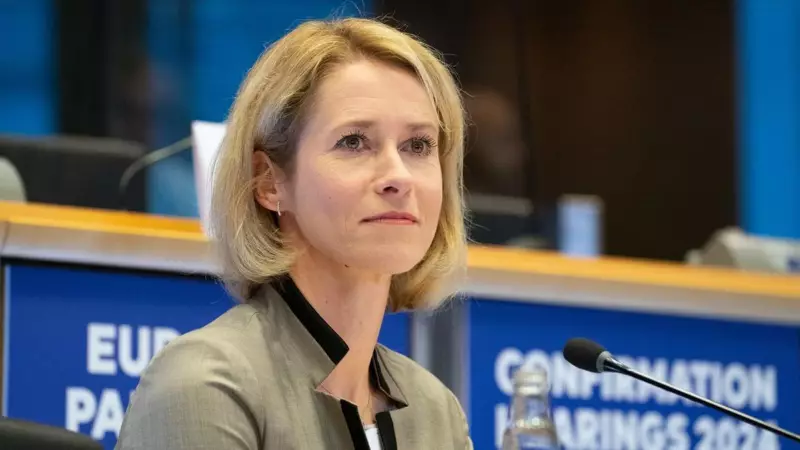
In a significant statement ahead of the India-EU leaders' summit, Kaja Kallas, the High Representative for Foreign Affairs and Security Policy and Vice President of the European Commission, emphasized that the India-EU Free Trade Agreement (FTA) serves as a strategic choice to diminish reliance on China, Russia, and the United States. This comes as the European Union and India prepare to sign a new Security and Defence Partnership on January 27, 2026, marking a pivotal moment in bilateral relations.
Strategic Shift in India-EU Relations
Kallas, in an exclusive interview, highlighted the evolution of India-EU ties from initial dialogue in 2000 to the current era of collaboration on trade, security, and technology. She noted that the invitation for EU leadership to attend India's Republic Day celebrations on January 26 is a profound honor, reflecting genuine trust and signaling that India has transitioned from an important partner to a major strategic ally. This qualitative shift underscores the deepening engagement between the two entities.
Economic and Security Implications of the FTA
The India-EU FTA is poised to create a combined market of approximately 2 billion people, accounting for about one-fourth of global GDP. Kallas explained that this agreement will boost investment, foster growth, strengthen supply chains, and open new opportunities for businesses on both sides. Importantly, it offers a chance to reduce dependence on China, Russia, and the US, especially at a time when free trade faces pressures and supply chains are being weaponized.

On the security front, Kallas announced that the EU and India will sign a new Security and Defence Partnership on January 27. This partnership aims to expand cooperation in areas such as maritime security, counterterrorism, and cyber-defence, while also scaling up defence industry collaboration. She asserted that Europe is a reliable partner, in contrast to Russia, which she described as unreliable, particularly in light of global security challenges.
Addressing Differences and Global Challenges
Kallas addressed concerns over differences regarding the Russia-Ukraine war and US tariffs, stating that while the EU views Russia's actions as an existential threat, it respects India's national interests. She emphasized that Europe is phasing out Russian fossil fuel imports to avoid political blackmail and reduce funding for the war. Additionally, she discussed the China challenge, noting the EU's economic security strategy to counter China's assertive behavior, including weaponized trade and support for Russia.
Technological Collaboration and People-to-People Ties
In the realm of technology, Kallas highlighted the role of the EU-India Trade and Technology Council in aligning approaches to critical technologies like Artificial Intelligence and semiconductors, aiming to reduce dependencies and shape standards. She also expressed a desire to deepen mobility and skills partnerships with India, emphasizing that strong partnerships are built by citizens, not just governments, and welcoming Indian students, professionals, and entrepreneurs to contribute to Europe's economies.
As EU leaders, including European Commission President Ursula von der Leyen and European Council President António Luís Santos da Costa, visit India for the summit and Republic Day celebrations, Kallas's remarks underscore a strategic pivot towards enhanced India-EU cooperation, with the FTA and security partnership at its core.