Sheikh Hasina Issues Five-Point Demand to Restore Democracy in Bangladesh
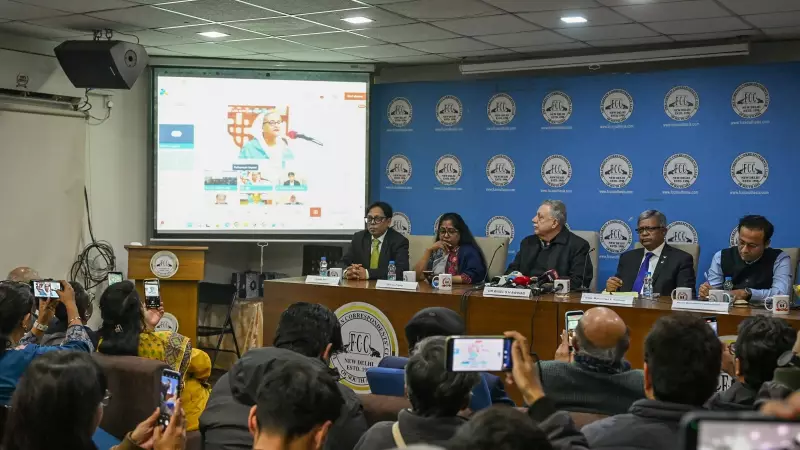
In a significant political development, former Bangladesh Prime Minister Sheikh Hasina has issued a clarion call to voters to overthrow what she terms the "illegal Yunus administration" ahead of the country's parliamentary elections scheduled for February 12. The ousted leader, who has been living in exile in India since fleeing Bangladesh on August 5, 2024, made these demands through a voice-recorded message played at a press conference in New Delhi on Friday.
Exiled Leader's Message from New Delhi
The ten-minute audio message, delivered in both Bangla and English, was played by Hasina's supporters and party members at the Foreign Correspondents' Club of South Asia in the Indian capital. The conference saw participation from several prominent figures, including Bangladesh's former foreign minister A K Abdul Momen, who joined virtually from his current location.
Hasina, addressing what she called "my dear, honest, hardworking, and patriotic people of Bangladesh," declared that the nation is currently "stifled by an unelected violent regime whose false promises have quickly been supplanted by chaos, violence, hatred, and corruption." She emphasized that Bangladeshi citizens are facing daily tests of their courage and strength due to widespread lawlessness and erosion of democratic rights.

The Five-Point Democratic Restoration Plan
The former prime minister outlined a comprehensive five-point plan aimed at restoring what she described as Bangladesh's "proud traditions of democracy and pluralism." The demands represent her most detailed political roadmap since going into exile.
- Remove the Muhammad Yunus-led government: Hasina asserted that Bangladesh cannot experience free and fair elections until what she called "the shadow of the Yunus clique" is lifted from the people. She emphasized that only after removing this administration can power truly return to the Bangladeshi people through inclusive processes involving her Awami League party.
- End street violence and restore economic stability: The second demand calls for immediate cessation of daily acts of violence on Bangladeshi streets and restoration of proper civic services. Hasina stressed that these measures are essential for the country's economy to "once again thrive" after what she described as significant disruption.
- Ensure safety for religious minorities and vulnerable groups: In her third point, Hasina demanded "ironclad guarantees" for the safety of religious minority groups, women, girls, and the most vulnerable members of Bangladeshi society. This demand notably echoes concerns previously expressed by the Indian government regarding the safety of Hindu communities in Bangladesh.
- Stop politically motivated legal actions: The fourth demand addresses what Hasina termed "politically motivated acts of lawfare" used to intimidate, silence, and jail journalists along with members of the Bangladesh Awami League and opposition political parties.
- United Nations investigation into 2024 events: Finally, Hasina called for the United Nations to conduct a "truly impartial investigation" into the events of July-August 2024 that led to her ouster from power. She emphasized the need for "purification of truth" to enable national reconciliation and healing.
Historical Context and Strong Rhetoric
Invoking the legacy of her father, Bangladesh's founding father Bangabandhu Sheikh Mujibur Rahman, Hasina delivered particularly strong rhetoric against the current administration. She described Muhammad Yunus as "a usurer, a money launderer, a plunderer, and a corrupt, power-hungry traitor" who has "bled our nation dry."
The former prime minister painted a dire picture of contemporary Bangladesh, stating that "the entire country has become a vast prison, an execution ground, a valley of death" under what she called "the monstrous onslaught of extremist communal forces and foreign perpetrators." She further accused the Yunus government of engaging in "a treacherous plot to barter away the territory and resources of Bangladesh to foreign interests."

Strategic Significance and Timing
This message represents Hasina's first audio statement directed specifically at an Indian audience since beginning her exile one-and-a-half years ago. While she has made similar recorded statements to Bangladeshi audiences and Awami League members both within and outside Bangladesh, this New Delhi press conference marks a strategic escalation in her international advocacy efforts.
The timing is particularly significant, coming just one day after official campaigning began for Bangladesh's February 12 parliamentary elections. Hasina's five-point plan positions her as continuing to lead democratic resistance from exile while framing the upcoming elections as fundamentally compromised under the current administration.
Her characterization of the Awami League as "independent Bangladesh's oldest and most important political party" that is "inexplicably interwoven with our country's culture and democracy" reinforces her party's historical legitimacy while challenging the current government's democratic credentials.
As Bangladesh approaches crucial elections, Hasina's message from Indian soil adds an international dimension to the country's political turmoil, with implications for regional diplomacy and the future of democratic processes in South Asia.