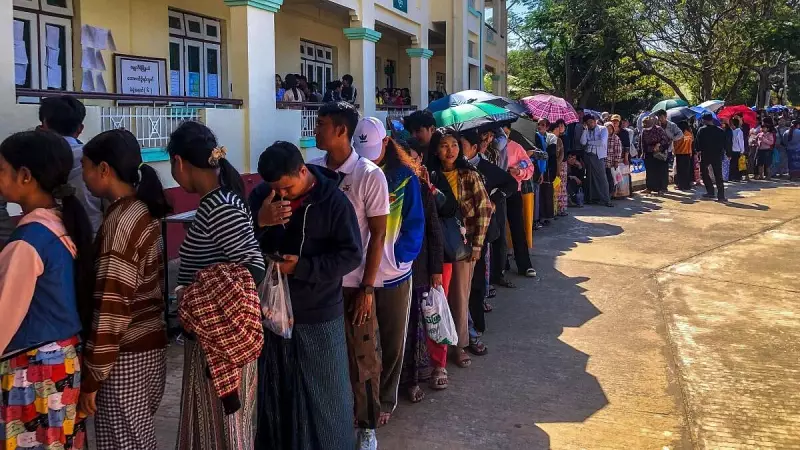
In a significant development for regional diplomacy, India has articulated its position on the upcoming political process in Myanmar, emphasizing support for free and inclusive elections. This stance finds a notable parallel with China's long-standing emphasis on stability and non-interference, creating a distinct regional approach that contrasts with Western pressures.
A Shared Regional Priority: Stability and Sovereignty
Analyst M K Bhadrakumar, in his commentary dated 31 December 2025, frames this convergence within the broader geopolitical canvas of Asia. While Western nations often advocate for rapid democratic transitions, both India and China appear to prioritize a stable and orderly process in Myanmar. For New Delhi, a chaotic neighbor poses direct security and strategic challenges, making stability a paramount concern.
India's Balancing Act in Myanmar
India's support for inclusive polls underscores its commitment to democratic principles, but it is carefully calibrated. The country's approach is shaped by its vital national interests, which include securing its northeastern borders, countering insurgency, and managing strategic projects. Unlike more distant Western powers, India cannot afford a volatile or failed state on its doorstep. Therefore, its policy seeks a balance between advocating for political inclusivity and ensuring the transition does not lead to collapse.

China's influence in Myanmar, driven by massive economic investments and strategic partnerships, is a key factor in the regional equation. Beijing's primary objective is the protection of its assets and the maintenance of a friendly government that ensures stability along its southern periphery. The alignment between Indian and Chinese positions, though not a formal alliance, suggests a pragmatic regional consensus on handling Myanmar's complex transition.
The Implications for Regional Geopolitics
This developing scenario has profound implications. It highlights a growing capability within Asia to address regional issues without necessarily adhering to Western-led prescriptions. The India-China dynamic, often marked by competition, finds a rare point of tactical overlap in Myanmar. This does not mean their strategies are identical; India's democratic ethos and China's authoritarian leanings create different tones and methods. However, the shared end goal of preventing chaos creates a powerful incentive for parallel action.
The outcome in Myanmar will be a critical test of this regional framing. Success could empower other Asian nations to seek locally-brokered solutions. Conversely, failure could invite greater external intervention. As M K Bhadrakumar notes, the evolving situation demands that India skillfully navigates its relationships with both Myanmar's internal factions and major powers like China, all while protecting its own substantial stakes in the country's future.