India-EU FTA Transforms into Broader Geopolitical Alliance Amid Global Challenges
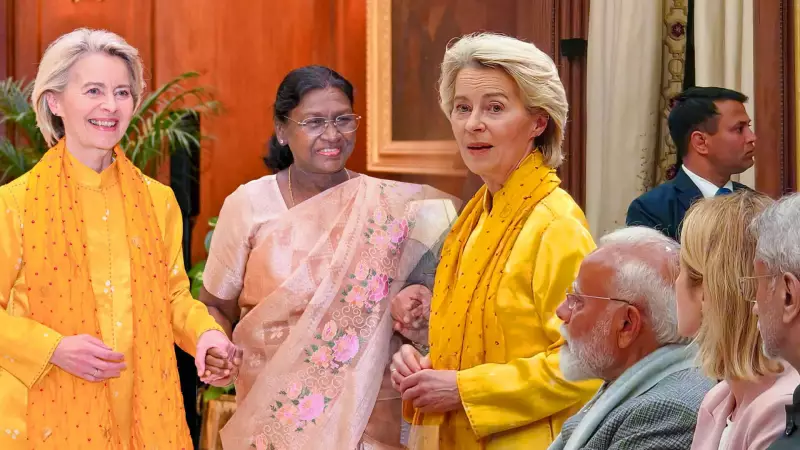
The historic Free Trade Agreement between India and the European Union has evolved into a significant geopolitical partnership, as highlighted during a formal banquet hosted by President Droupadi Murmu at Rashtrapati Bhavan. This event, held in honour of European leaders following the conclusion of the FTA, underscored the deepening strategic ties between the two regions.
Von Der Leyen Hails India's Global Rise and Strategic Turning Point
European Commission President Ursula von der Leyen emphasized that Europe warmly welcomes India's emergence as a formidable global power. She described the newly concluded Free Trade Agreement as a pivotal turning point in bilateral relations, marking a new chapter in India-EU cooperation.
In her address, von der Leyen stressed the importance of stability and resilience in the face of global uncertainty. She articulated that India and Europe are jointly sending a powerful message of collaboration and mutual support to the international community, reinforcing their commitment to a rules-based global order.

President Murmu Highlights Shared Democratic Values and Institutional Reforms
President Droupadi Murmu, in her remarks, focused on the shared foundational values that bind India and the European Union. She highlighted democracy, pluralism, and the urgent need for reforming global institutions as common principles guiding this enhanced partnership.
The discussions during the evening spanned a wide array of critical areas, including trade, security, mobility, and the joint 2030 strategic agenda. This comprehensive dialogue illustrated how the India-EU FTA has transcended its initial economic framework to become a multifaceted geopolitical alliance.
Broadening Horizons: From Trade to Comprehensive Strategic Engagement
The banquet at Rashtrapati Bhavan served as a symbolic platform to demonstrate the strengthened political and strategic dimensions of the India-EU relationship. Key aspects of this expanded partnership include:
- Enhanced Trade and Economic Cooperation: Building on the FTA to boost bilateral trade and investment flows.
- Security Collaboration: Addressing shared security challenges and promoting regional stability.
- Mobility and People-to-People Ties: Facilitating easier movement of professionals, students, and tourists.
- Joint Strategic Agenda for 2030: Aligning long-term goals in technology, climate action, and sustainable development.
This evolving partnership positions India and the EU as key players in shaping global governance and addressing contemporary challenges, from economic volatility to geopolitical tensions.
The India-EU FTA, therefore, represents not just a commercial milestone but a strategic alignment that reinforces both regions' roles as pillars of stability and cooperation in an increasingly uncertain world.