In a significant diplomatic and security move, India has indefinitely suspended all visa operations at its application centre in Chittagong, Bangladesh. The decision, announced on Sunday, December 22, 2025, follows a direct security incident at the Assistant High Commission of India (AHCI) located in Bangladesh's second-largest city.
Unrest Triggered by Political Leader's Death
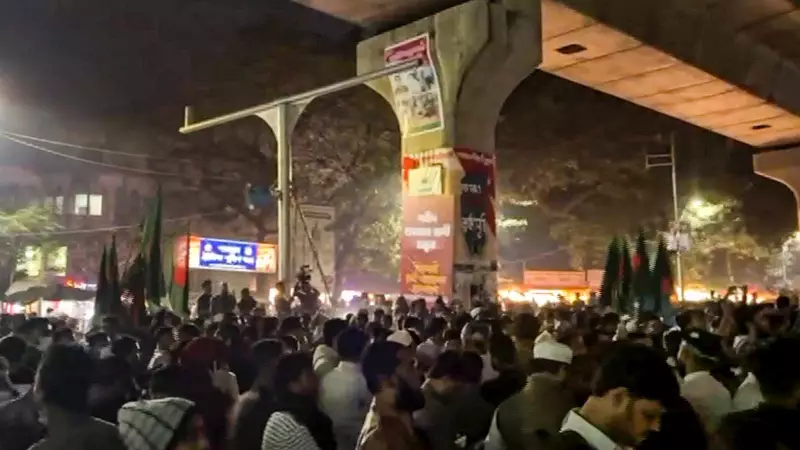
The suspension of services comes against a backdrop of severe political turmoil and violence across Bangladesh. The unrest was ignited by the death of Sharif Osman Hadi, a prominent leader of the student-led protests that resulted in the ouster of Prime Minister Sheikh Hasina and her Awami League government in 2024.
Hadi, who was a candidate for the upcoming national elections scheduled for February 12, 2026, was shot in the head by masked gunmen in Dhaka on December 12, 2025. He succumbed to his injuries while undergoing treatment in Singapore on December 18. His death sparked waves of protests, attacks, and incidents of vandalism in multiple cities, including Chittagong.

Official Statements and Diplomatic Tensions
The Indian Visa Application Centre (IVAC) Bangladesh issued a clear statement regarding the closure. It cited the "recent security incident at AHCI Chittagong" as the reason for halting operations from December 21, 2025, until further notice. The centre emphasised that any decision to resume services would be contingent upon a thorough review of the local security environment.
In New Delhi, the Ministry of External Affairs (MEA) confirmed it is keeping a "close watch on the evolving situation" in its neighbouring country. MEA spokesperson Randhir Jaiswal stated that Indian officials remain in touch with Bangladeshi authorities and have conveyed "strong concerns" regarding attacks on minority communities.
Jaiswal also addressed a reported demonstration outside the Bangladesh High Commission in New Delhi on December 20. He clarified that a small group of 20-25 youth had gathered peacefully to protest the killing of a Hindu youth in Bangladesh and call for minority protection. He dismissed reports in sections of Bangladeshi media as "misleading propaganda," asserting there was no security breach and that police dispersed the group swiftly.
Violence Against Minorities and Bangladesh's Response
The MEA's concerns reference the brutal killing of Dipu Chandra Das, a 27-year-old Hindu youth, in Mymensingh. Das was beaten to death by a mob over alleged blasphemy on December 18, and his body was set on fire. In response, Bangladesh's interim government head, Muhammad Yunus, announced via social media platform X that ten individuals had been arrested in connection with the murder.
However, the diplomatic friction intensified when Bangladesh "entirely" rejected India's characterisation of the New Delhi protest. M Touhid Hossain, the interim government's foreign affairs adviser, questioned at a media briefing how protesters could access the secured diplomatic enclave. He labelled the Indian statement as "oversimplified" and insisted that reports in Bangladeshi newspapers were accurate.
The situation remains fluid, with India's visa suspension in Chittagong serving as a tangible indicator of the heightened security apprehensions. The resumption of consular services is now directly linked to the restoration of calm and stability in the region, casting a shadow over cross-border mobility ahead of Bangladesh's critical electoral period.