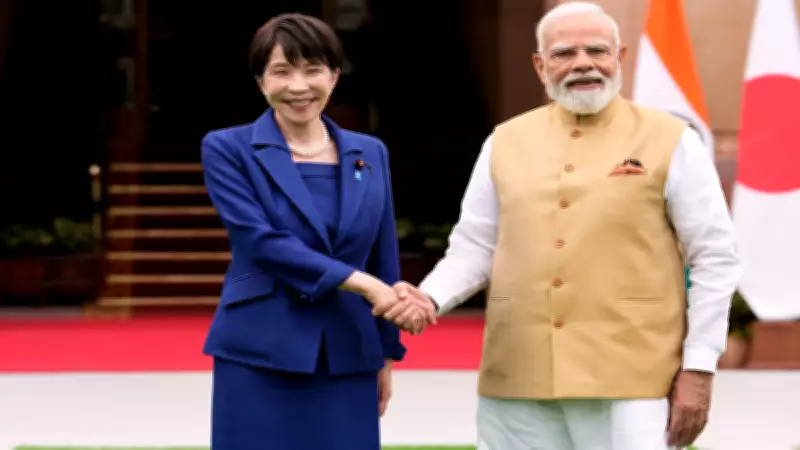
India and Japan have set a target of ¥10 trillion in investment over the next 10 years, as announced by Prime Minister Narendra Modi following a summit with Japanese Prime Minister Fumio Kishida. This ambitious goal underscores the deepening economic and strategic partnership between the two nations.
Investment target and economic cooperation
The ¥10 trillion (approximately $90 billion) investment target is a significant increase from the previous ¥5 trillion goal set in 2014, which was achieved ahead of schedule. The new target reflects the growing confidence of Japanese businesses in India's economic potential and reforms. PM Modi stated, "Our partnership is not just about investment; it's about building a secure and prosperous future for the Indo-Pacific region."
Japanese companies have already invested heavily in India, with over 1,400 Japanese firms operating in the country. Key sectors include automotive, electronics, pharmaceuticals, and infrastructure. The investment target is expected to create millions of jobs and boost India's manufacturing capabilities under the 'Make in India' initiative.

Strategic and defense ties
Beyond economics, the two leaders discussed enhancing defense and security cooperation. India and Japan are part of the Quadrilateral Security Dialogue (Quad) along with the United States and Australia, focusing on a free and open Indo-Pacific. PM Modi emphasized, "Our strategic partnership is crucial for regional stability."
Both countries agreed to conduct joint military exercises, including the bilateral naval exercise 'Malabar,' and enhance cooperation in maritime security, cybersecurity, and space. Japan also expressed support for India's permanent membership in the United Nations Security Council.
Infrastructure and connectivity projects
The leaders reviewed ongoing infrastructure projects, including the Mumbai-Ahmedabad High-Speed Rail corridor, which is being built with Japanese technology and financing. The project, worth about ¥1 trillion, is expected to be operational by 2028. Additionally, they discussed connectivity initiatives in Africa and the Indo-Pacific, such as the Asia-Africa Growth Corridor.
Japan's Official Development Assistance (ODA) to India continues, with new projects in northeast India, including road and power transmission projects. The two sides also signed agreements on digital health, skill development, and renewable energy.
Global and regional issues
PM Modi and PM Kishida exchanged views on global challenges, including climate change, the situation in Ukraine, and the need for reform of multilateral institutions. They reiterated their commitment to a rules-based international order and called for peaceful resolution of disputes.
On the sidelines of the summit, several memoranda of understanding (MoUs) were signed in areas such as agriculture, food processing, and cultural exchange. The two leaders also launched a 'Japan-India Startup Platform' to foster innovation and entrepreneurship.