India Participates as Observer in First Meeting of Trump's Board of Peace Initiative
India took part in the inaugural session of US President Donald Trump's newly established "Board of Peace" on Thursday, joining nearly 50 nations in discussions centered on managing the Gaza ceasefire and rebuilding territories devastated by the ongoing Israel-Hamas conflict. The country participated with observer status rather than full membership, maintaining a strategic diplomatic position while engaging with this international peace initiative.
Diplomatic Representation and Meeting Details
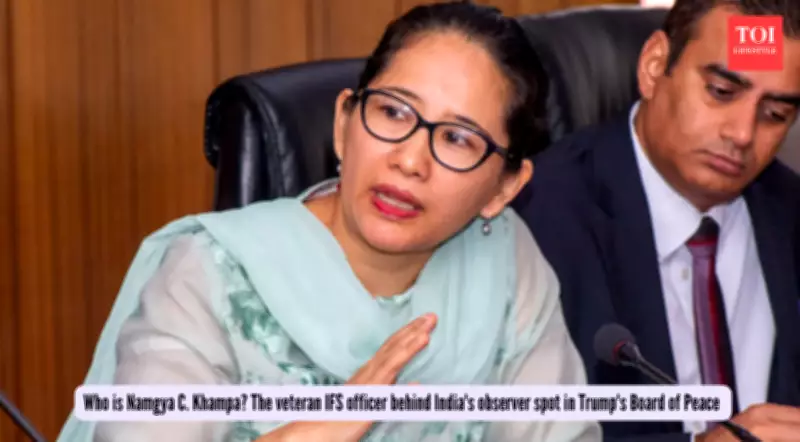
The Indian delegation was represented by Namgya Khampa, the Chargé d'Affaires at the Indian Embassy in Washington, DC, according to PTI reports that cited official attendee lists. The meeting saw participation from approximately 50 countries, with 27 nations joining as formal members while others, including India and the European Union, attended in observer capacity.
This selective participation approach allows India to monitor developments while preserving flexibility in its foreign policy decisions regarding Middle East peace processes.

Who is Namgya C. Khampa?
Namgya C. Khampa, born in 1977, is a distinguished 2000-batch Indian Foreign Service officer who has steadily advanced through diplomatic ranks over more than two decades of service. Her career has positioned her at crucial international postings spanning from Beijing to New York, demonstrating consistent excellence in representing India's interests on global platforms.
Currently serving as the Chargé d'Affaires at India's Embassy in Washington, DC, Khampa manages critical aspects of US-India bilateral relations during a period of significant geopolitical developments, including President Trump's ambitious international peace initiatives.
Professional Background and Diplomatic Expertise
Khampa joined the Indian Foreign Service in 2000 and brings over 25 years of specialized diplomatic experience, as officially confirmed by the Ministry of External Affairs. According to NDTV reports, "Born in 1977, Khampa is a 2000-batch officer of the Indian Foreign Service (IFS). She has over two decades of experience in Indian diplomacy." The Sunday Guardian further notes her academic credentials include Master's and MPhil degrees in International Relations.
Key Career Postings and International Achievements
Khampa's diplomatic journey includes several significant assignments:
- She served twice in India's China missions between 2002-2006 and 2013-2016, contributing substantially to bilateral relationship development during critical periods
- From 2009-2013, she was posted at India's Permanent Mission to the United Nations in New York, where she achieved election to the prestigious UN Advisory Committee on Administrative and Budgetary Questions (ACABQ) for the 2011-2013 term
- Moneycontrol reports confirm, "She was at India’s Permanent Mission to the United Nations in New York from 2009 to 2013. During that period, she was elected as a member of the United Nations Advisory Committee on Administrative and Budgetary Questions (ACABQ) for the 2011-2013 term."
Her subsequent assignments included serving as Deputy Chief of Mission in Kathmandu, Nepal, followed by appointment as High Commissioner to Kenya with additional accreditation to Somalia, where she strengthened bilateral ties and enhanced trade relationships.
At Ministry of External Affairs headquarters, Khampa managed crucial diplomatic desks including those for the United States, Sri Lanka, and Myanmar. From 2016-2018, she served on deputation to the Prime Minister's Office, and between 2018-2020, she led the Development Partnership Division responsible for coordinating assistance to neighboring countries.
About the Board of Peace Initiative
President Trump unveiled this peace initiative last month during the World Economic Forum in Davos, expressing his vision that "everyone should be part" of this diplomatic body while suggesting it might eventually develop into an organization rivaling the United Nations in global influence. India's decision to participate as observer rather than full member reflects careful consideration of this new international framework while maintaining established diplomatic relationships and peace process engagements.