

India Firmly Rejects China's Baseless Claims on Arunachal Pradesh
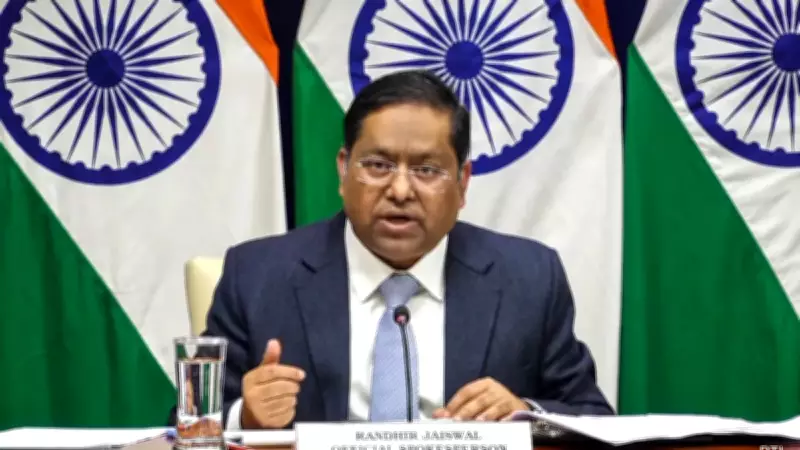
In a strong and unequivocal response, the Ministry of External Affairs (MEA) of India has categorically dismissed China's recent actions of assigning fictitious names to places in Arunachal Pradesh. The MEA emphasized that such false claims and the manufacturing of baseless narratives by China cannot, under any circumstances, alter the ground reality of Arunachal Pradesh being an integral and inalienable part of India.
China's Provocative Move and India's Swift Rebuttal
The controversy erupted when China, in a move seen as highly provocative, announced the renaming of several locations within the Indian state of Arunachal Pradesh. This action is part of a longstanding pattern where China has attempted to assert its unfounded territorial claims over the region. The MEA was quick to respond, labeling these claims as entirely fabricated and without any historical or legal basis.
The ministry stated that Arunachal Pradesh has always been, and will remain, a sovereign part of India. It further criticized China for engaging in what it described as "manufacturing baseless narratives" that serve only to create unnecessary tensions between the two neighboring nations.

Historical Context and Ongoing Disputes
Arunachal Pradesh, a northeastern state of India, shares a long border with China, and the territorial dispute over this region dates back decades. China refers to Arunachal Pradesh as "Zangnan" and claims it as part of southern Tibet, a stance that India has consistently rejected. Previous incidents have included military standoffs and diplomatic spats, but India maintains a firm position on its sovereignty.
The MEA's response underscores India's commitment to protecting its territorial integrity and rejecting any external attempts to undermine it. Officials highlighted that such actions by China do not contribute to peace and stability in the region, urging instead for respect of established boundaries and international norms.
Implications for Bilateral Relations
This latest episode adds to the existing strains in India-China relations, which have been tense following border clashes in recent years. The MEA's statement serves as a reminder of India's resolve to counter any misinformation or aggressive posturing. It also calls into question China's adherence to diplomatic protocols and its respect for the sovereignty of other nations.
Key points from the MEA's response include:
- Rejection of China's fictitious naming as baseless and unfounded.
- Assertion that Arunachal Pradesh is an inseparable part of India.
- Criticism of China for creating narratives that distort reality.
- Emphasis on the need for peaceful resolution of disputes through dialogue.
Looking Ahead: Diplomatic Pathways
Despite the strong wording, the MEA did not close the door on diplomacy. It reiterated India's willingness to engage in constructive dialogue to resolve outstanding issues, but only on the basis of mutual respect and recognition of each other's territorial integrity. The ball is now in China's court to refrain from such provocative actions and work towards de-escalation.
In conclusion, India's firm stance sends a clear message that it will not tolerate any attempts to challenge its sovereignty. The MEA's response is a testament to India's diplomatic strength and its unwavering commitment to safeguarding its national interests in the face of baseless claims.






