

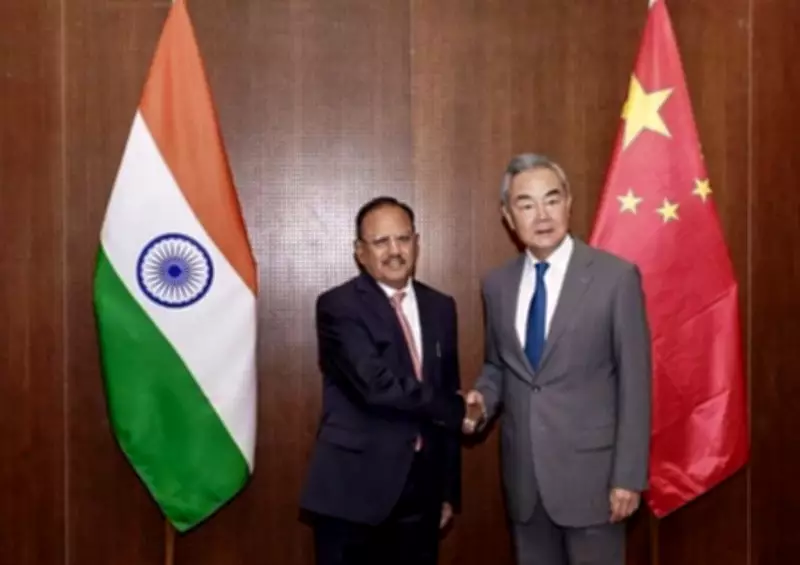
India underscored the need for mutual sensitivity on issues of core concern during talks between National Security Adviser Ajit Doval and Chinese Foreign Minister Wang Yi, as the two sides sought to consolidate the ongoing thaw in bilateral ties, the Ministry of External Affairs informed on Tuesday.
Doval Emphasises Stable and Predictable Relations
Official Spokesperson Randhir Jaiswal said Doval during his meeting with Wang Yi on the sidelines of the BRICS National Security Advisers’ meeting emphasised that stable, predictable and constructive bilateral relations will contribute to enhanced trust and deeper understanding between the two sides.
The NSA also highlighted the importance of sensitivity being consistently displayed to each other’s issues of core concern, adding that such an approach would be in keeping with the principles of mutual sensitivity, mutual interests and mutual respect, Jaiswal added.

China’s Readout: Relations Gradually Emerging from Low Point
According to the Chinese readout of the meeting, Wang Yi said relations between the two neighbours had gradually emerged from their low point and returned to a path of recovery and improvement under the guidance of President Xi Jinping and Prime Minister Narendra Modi. He said both countries had reached a strategic consensus that they are partners, not competitors, and should view bilateral ties from a long-term and global perspective.
Wang also said the progress achieved in restoring exchanges and maintaining peace along the border was hard-won and should be cherished. He called for respecting each other’s core interests, properly handling sensitive issues and ensuring that differences over the boundary question do not affect the overall trajectory of ties.
Advocating Restoration of Dialogue Mechanisms
The Chinese Foreign Minister advocated restoring dialogue mechanisms and expanding cooperation in areas such as trade, finance, law enforcement and media, while also calling for efforts to build public support for improved relations.
According to Beijing’s account, Doval said the meetings between the leaders of the two countries in Kazan and Tianjin had provided direction for bilateral ties and that a stable relationship was in the common interest of both sides.
Exchange on Regional and International Developments
The two leaders also exchanged views on regional and international developments and discussed cooperation within BRICS, where China backed India’s chairmanship for 2026.
Significance of Doval-Wang Interaction
The Doval-Wang interaction assumes significance as New Delhi and Beijing continue their cautious efforts to stabilise relations after the prolonged military standoff in eastern Ladakh and subsequent disengagement measures. Both sides have in recent months resumed several dialogue mechanisms and stepped up diplomatic engagement aimed at restoring normalcy in bilateral ties.






